Epoxy vs Polyurethane Floors
Written by the crew that installs it
Epoxy is the harder, cheaper resin floor and belongs indoors. Polyurethane is more flexible, more abrasion resistant and holds its color in sun, and it carries a modest premium per square foot over epoxy. A common build uses an epoxy base coat for adhesion and a polyurethane top coat for wear, so the 2 resins work together rather than compete. Neither is a good barefoot surface outdoors in Florida, where poured rubber from 8 dollars per square foot stays cooler and grips when wet.
Epoxy and polyurethane are the 2 resin systems behind almost every seamless floor sold as a self leveling or 3D floor. They look similar once cured and behave very differently over a 10 year life.
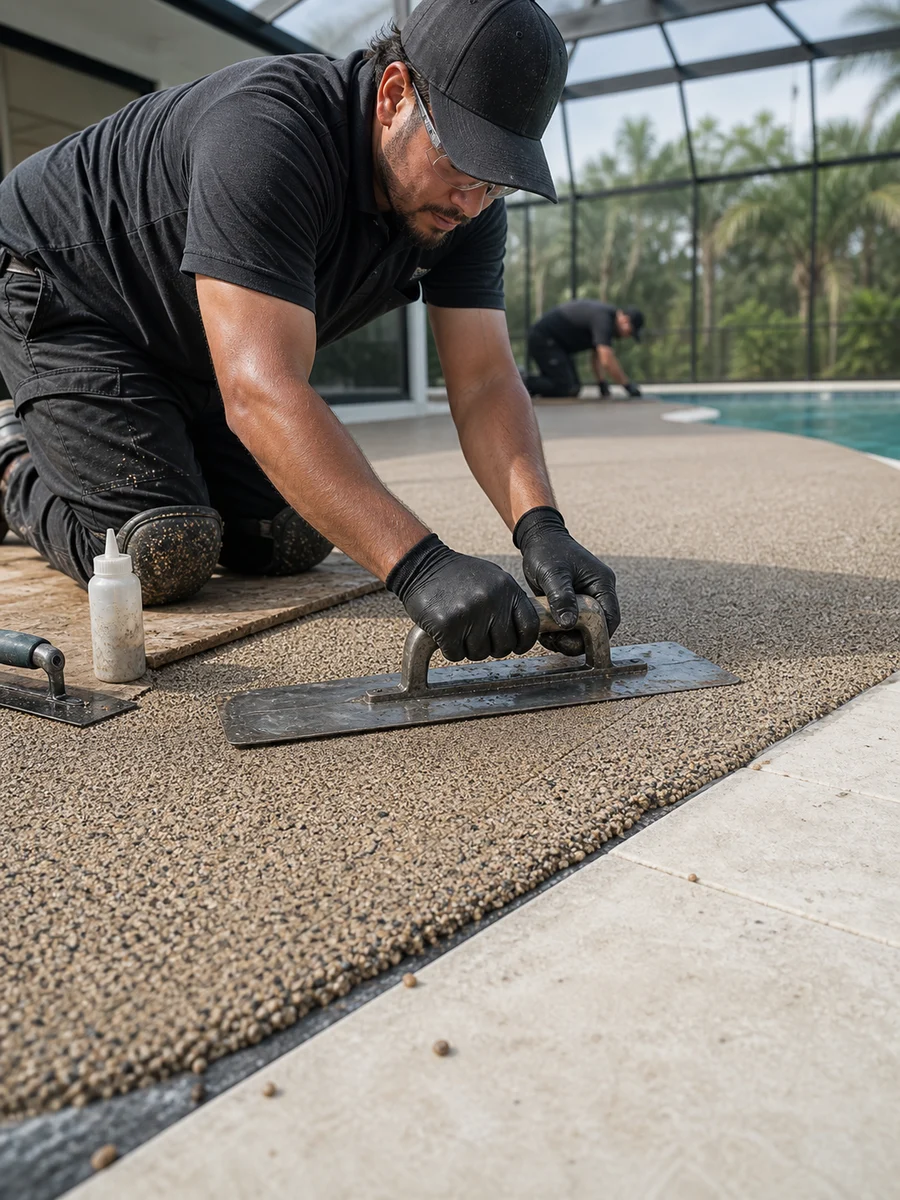
The choice comes down to where the floor sits, how much sun it takes, how much the slab moves and whether anyone walks on it barefoot.
What an epoxy floor actually is
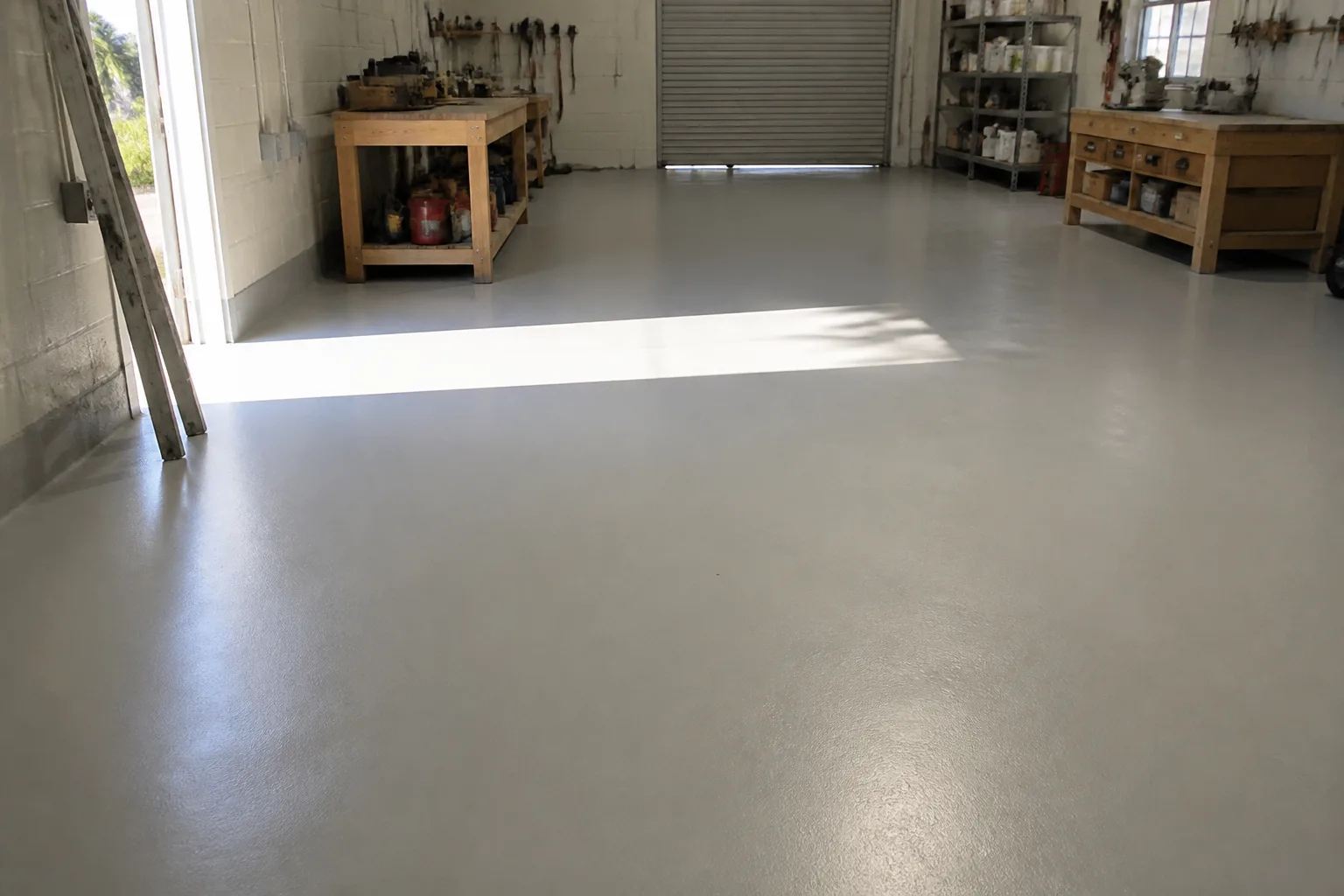
An epoxy floor is a 2 part resin and hardener poured over prepared concrete, usually built between 0.08 and 0.25 inch thick. It cures into a rigid, glass hard film bonded tightly to the slab.
Its strengths are compressive strength, chemical resistance and adhesion. Epoxy handles forklift traffic, oil, most solvents and daily washdown better than almost anything else at the price.
Its weaknesses come from the same rigidity. Epoxy has very little give, so a slab that cracks will telegraph that crack straight through the floor, and impact on a hard point can chip it.
Under ultraviolet light epoxy ambers and then chalks. The film stays sound underfoot while the surface dulls and shifts color, which is why epoxy is specified for garages, warehouses, kitchens and showrooms rather than open decks.
What a polyurethane floor is
A polyurethane floor uses the same install method with a different chemistry. It is normally laid thinner, from 0.02 to 0.08 inch, either on its own or over an epoxy base coat.
The cured film stays slightly elastic. That elasticity absorbs impact, tolerates a slab that expands and contracts through the day, and bridges hairline movement that would crack epoxy.
Polyurethane also wears better under foot traffic and scuffing, and it takes thermal swings without going brittle. On a slab that runs from 70 degrees F at dawn to 130 degrees F under a skylight, that matters.
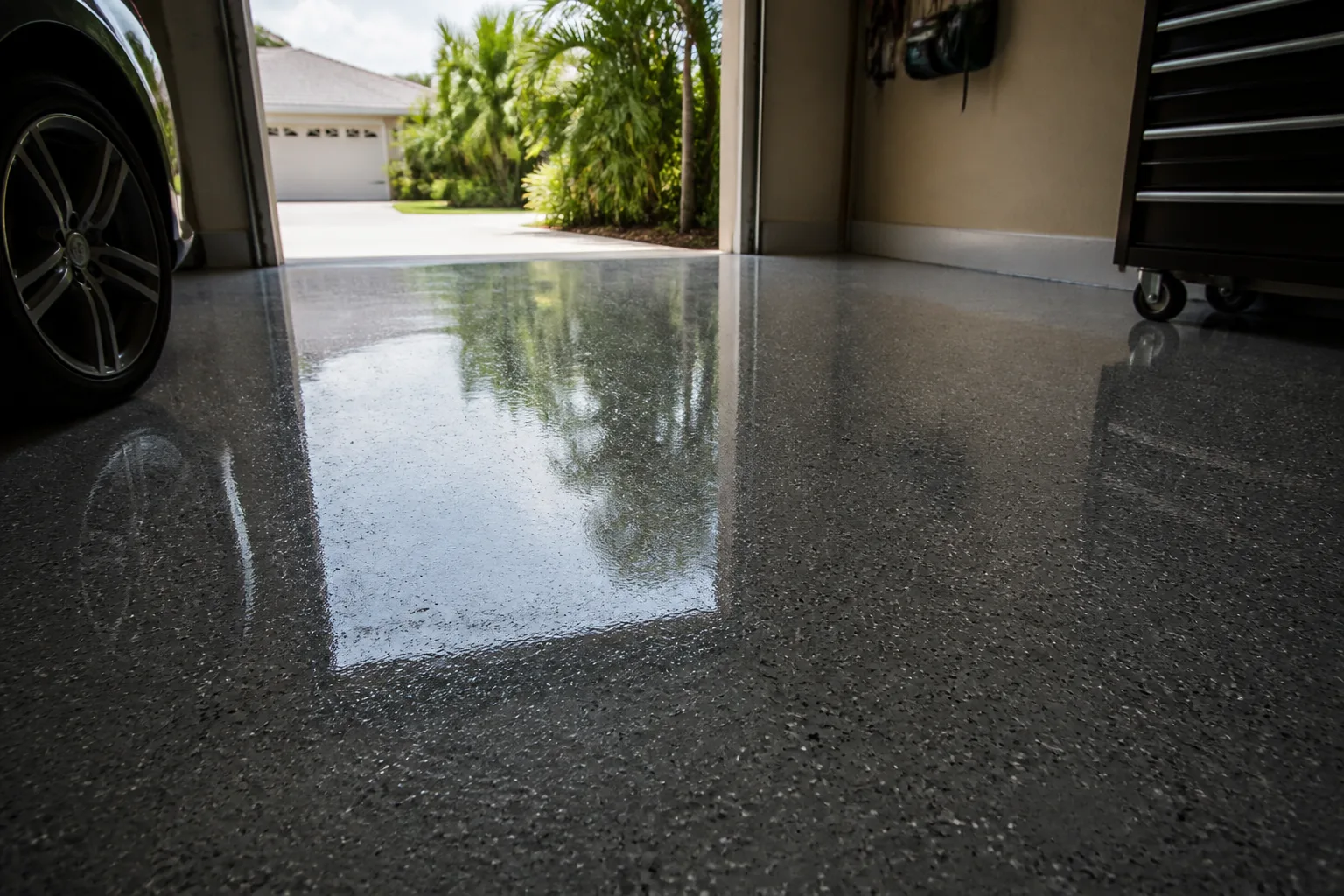
Aliphatic polyurethane is the version that holds color in sun. It does not amber, which is why the outdoor and semi outdoor work in Florida is polyurethane based and the interior industrial work is usually epoxy.
How epoxy and polyurethane compare
Side by side on the points that decide a specification.
| Parameter | Epoxy | Polyurethane |
|---|---|---|
| Typical build | 0.08 to 0.25 inch | 0.02 to 0.08 inch |
| Hardness | Rigid | Slightly elastic |
| Abrasion resistance | Good | Better |
| Impact and vibration | Can chip | Absorbs it |
| Color under sun | Ambers and chalks | Holds color |
| Chemical resistance | Very high | Good |
| Installed cost per sq ft | Lower | Moderate |
| Typical role | Indoor base coat | Wear and top coat |
Read the last row first. On most jobs the 2 resins are not rivals, they are layers, with epoxy providing the grip on concrete and polyurethane providing the surface that takes the abuse.
Which one survives Florida sun
South Florida runs close to 3000 hours of sunshine a year with a high ultraviolet index for 9 months of it, and that is the single condition that separates these materials.
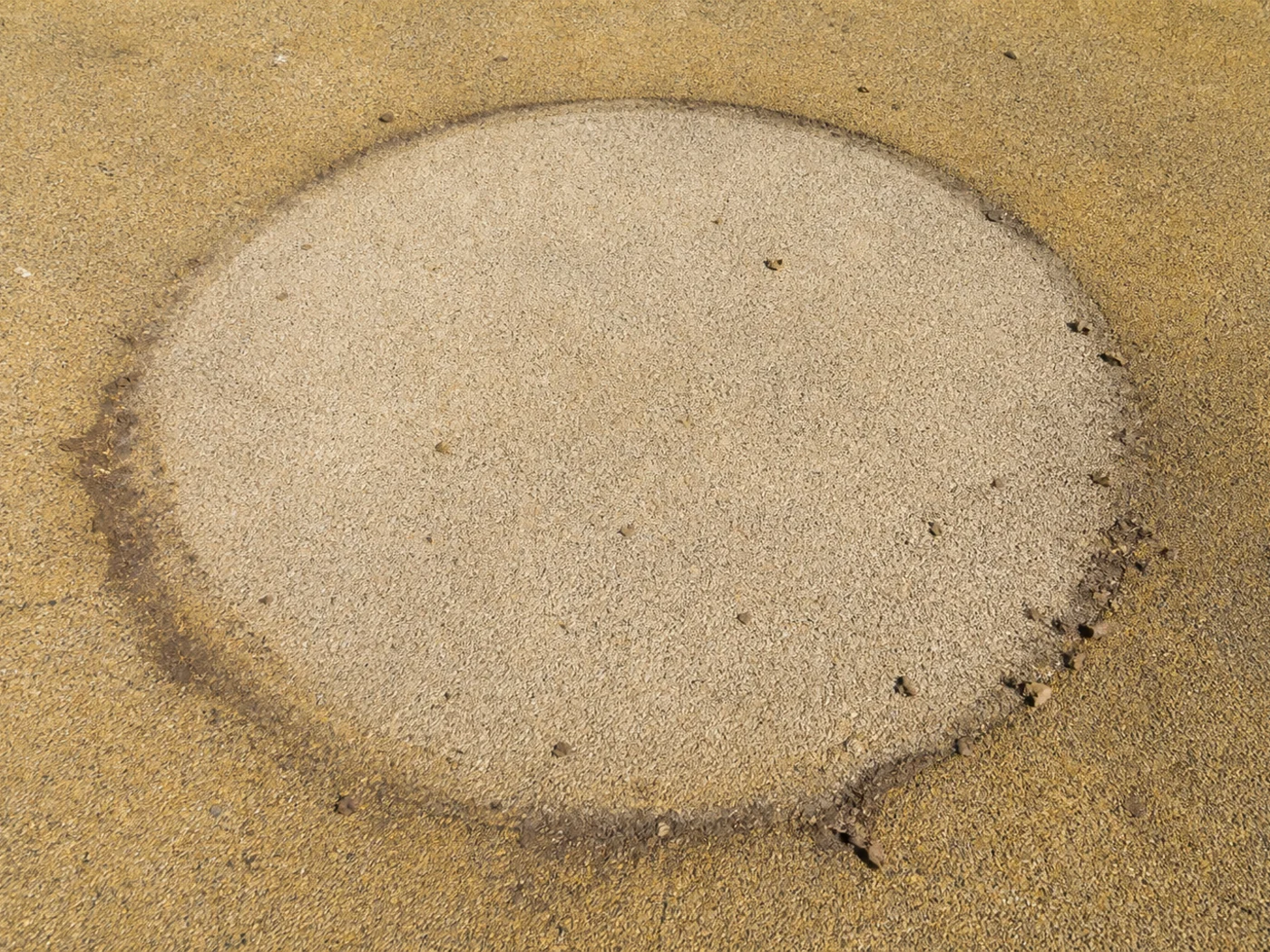
Epoxy exposed to direct sun starts to amber inside 6 to 12 months. A gray floor goes warm gray, a white floor goes cream, and the surface develops a fine chalk that comes off on a wet hand. The floor is still bonded, but it no longer looks like the sample.
Aliphatic polyurethane under the same exposure holds its color for 8 to 10 years, and a clear top coat can be renewed at year 5 to 7 without stripping the whole system.
Humidity is the second Florida factor. Both resins fail the same way over a damp slab, so residual moisture has to be tested and a moisture barrier primer used where the reading calls for it.
What each floor costs per square foot
Epoxy is the lower installed rate per square foot in South Florida and polyurethane sits above it, with a combined epoxy base and polyurethane top coat landing at the top of that range. Rates move with slab condition, so a measured quote is the only reliable number.
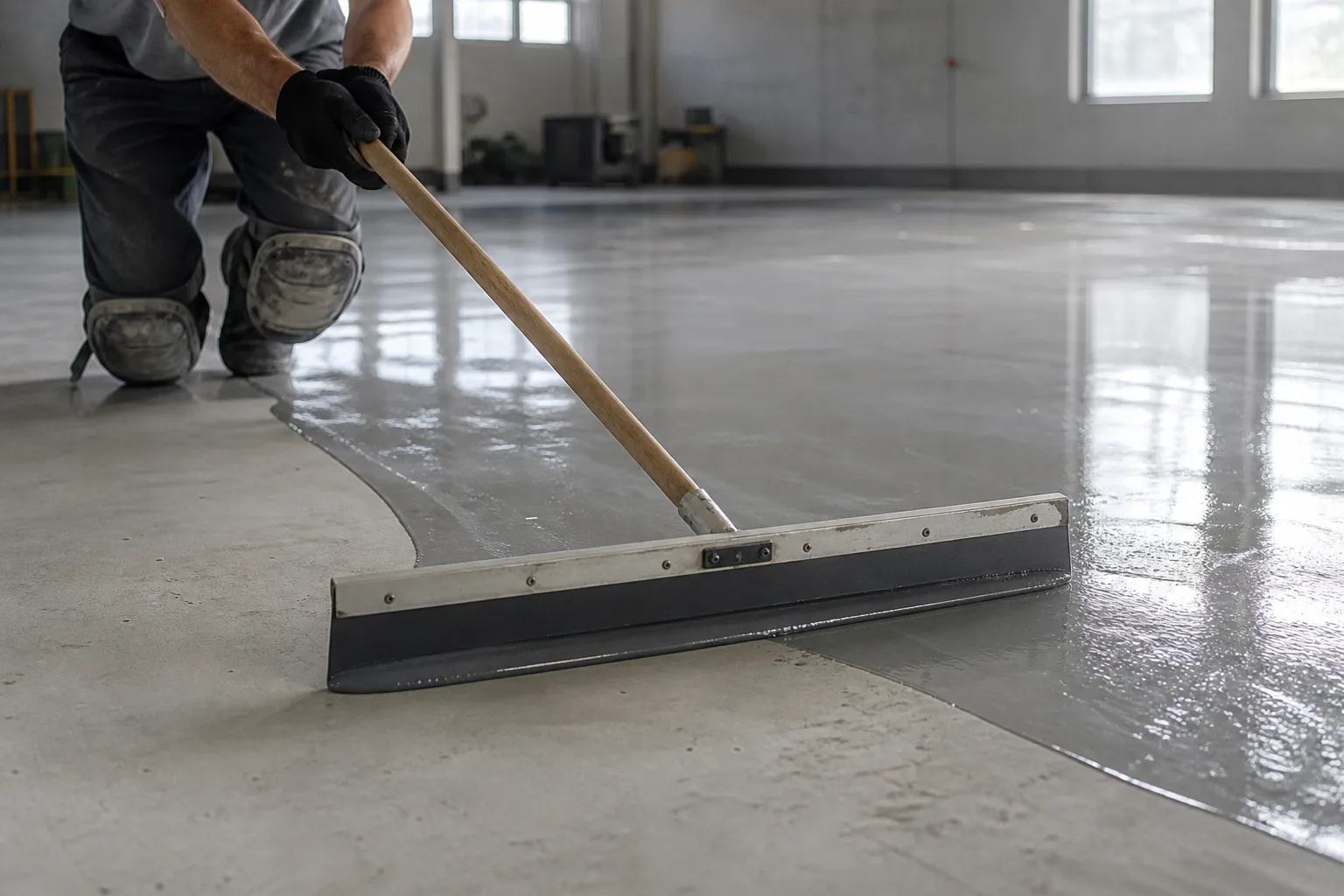
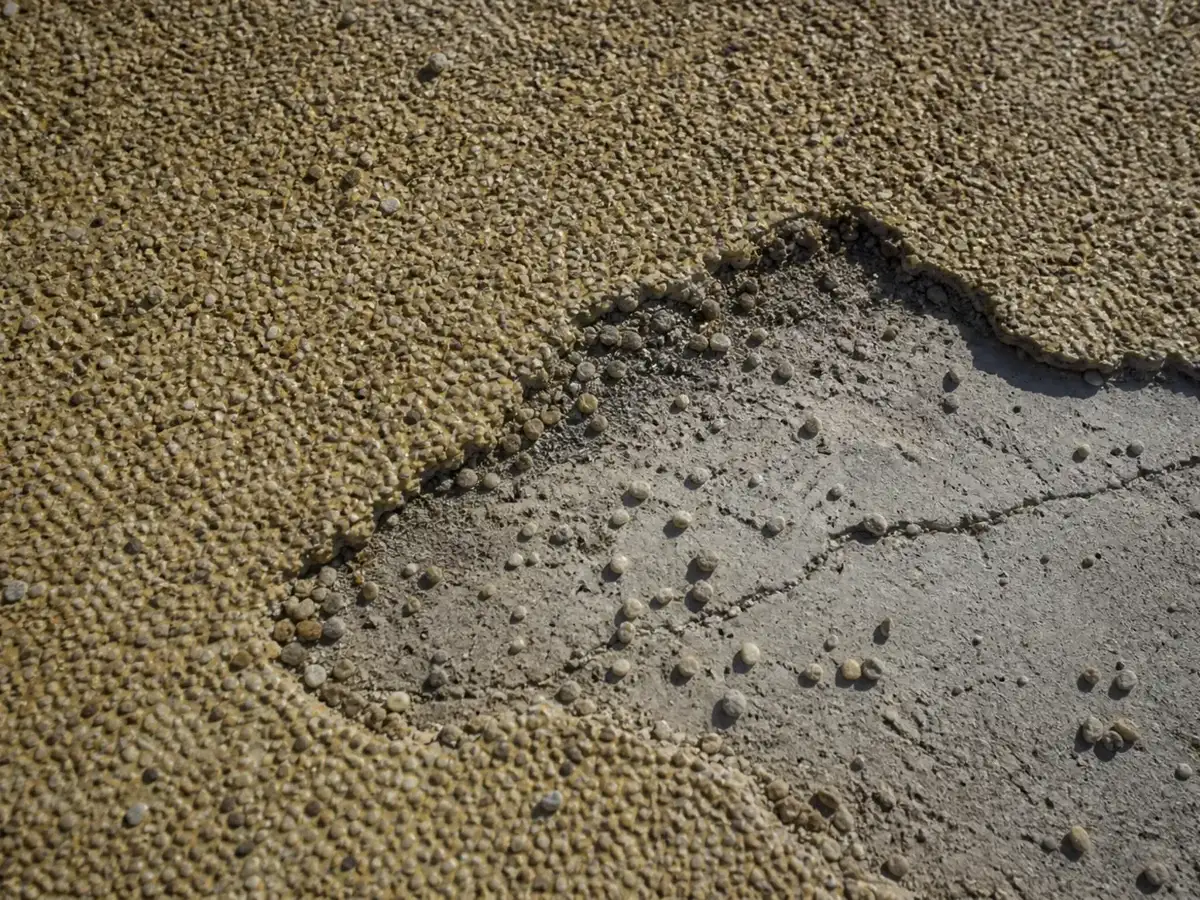
Surface preparation is the variable that moves those numbers most. Diamond grinding, crack repair and patching add a meaningful amount per square foot on an older slab, and skipping that work is why cheap resin floors delaminate.
Service life is where the comparison settles. An interior epoxy floor holds up 10 to 15 years, a polyurethane top coat in traffic goes 8 to 12 before it needs a refresh, and an epoxy floor left in sun looks tired in 2.
| Measure | Epoxy | Polyurethane |
|---|---|---|
| Color in direct sun | Ambers and chalks | Holds color |
| Time to visible change | 6 to 12 months | 8 to 10 years |
| Life indoors | 10 to 15 years | 8 to 12 years in traffic |
| Life in open sun | Tired in 2 years | Top coat renewed at year 5 to 7 |
| Barefoot outdoors | Not suitable | Not suitable |
Epoxy stays indoors because it ambers within a year of open sun. Polyurethane holds color 8 to 10 years. Neither belongs under bare feet outdoors, where poured rubber does.
Any quote should state the system, the film build in inches and the preparation method. A price with none of those is not comparable to one that has them.
Where poured rubber beats both
Neither resin floor is the right answer outdoors on a surface people use barefoot or where anyone can fall.
A resin floor is hard, so it offers no impact attenuation. Playground surfaces are rated under ASTM F1292, which yields a critical height, the fall height below which a life threatening head injury would not be expected. Epoxy and polyurethane films have no meaningful rating at any thickness.
A resin floor is also dense and dark absorbing, so it stores heat, and it turns slick under a film of water. Poured rubber stays cooler underfoot, drains through, and grips when wet.
Poured in place rubber starts at 8 dollars per square foot installed. It costs more than either resin and it is the correct material for pool decks, patios, playgrounds and sports courts.
Common questions on resin floors
Can epoxy be used outdoors at all
It can, under permanent cover such as a carport or a screened lanai. In open sun it ambers within a year.
Can polyurethane go straight onto concrete
Yes, over the correct primer. Many specifications still use an epoxy base coat because it grips fresh ground concrete slightly better.
How long before a resin floor can be used
Foot traffic at 24 hours, light rolling loads at 3 days, full chemical and heavy service at 7 days.
Can either be laid over a cracked slab
Cracks have to be routed and filled first. Polyurethane bridges hairline movement afterwards, epoxy does not.
What to take away
Epoxy is the hard, chemical resistant, indoor material. Polyurethane is the flexible, abrasion resistant, sun stable one. The strongest interior floors use both, epoxy underneath and polyurethane on top.
Outdoors in South Florida, neither is the right surface where people walk barefoot or children play. That work belongs to poured rubber, which is rated for falls, drains through and stays cool enough to stand on.
 How a poured floor goes down
 Mistakes that cost twice