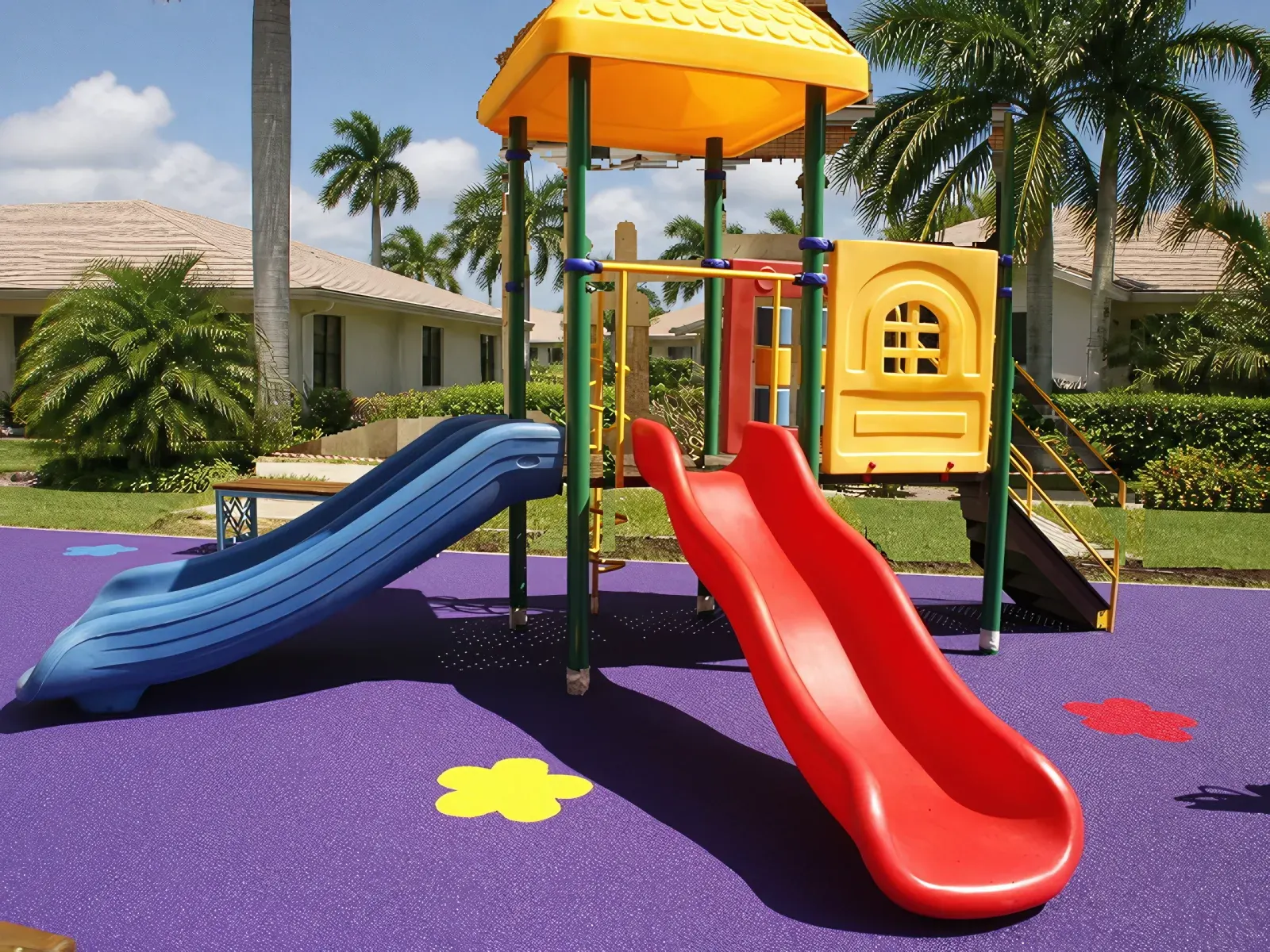
Rubber crumb goes down in one continuous pour, SBR cushion under a colored EPDM wear layer, from 8 dollars per sq ft installed. Nothing lifts and nothing catches a toe, and it reads 99 F underfoot where concrete reads 155 F.
✓One continuous pour. No seams, no joints, nothing to lift or catch a toe.
✓Cushion to spec. Thickness set by fall height under the equipment.
✓Cooler underfoot. Does not load up with heat the way bare concrete does.
✓Any color, any shape. Blends, insets and logos poured in, not cut in.
Poured rubber crumb is two layers mixed and laid on your property. A black SBR cushion goes down first for depth and give, then a colored EPDM wear layer on top for grip and color. It cures into one continuous sheet with no seams and no joints. Pricing for installed work begins at 8 dollars per sq ft.
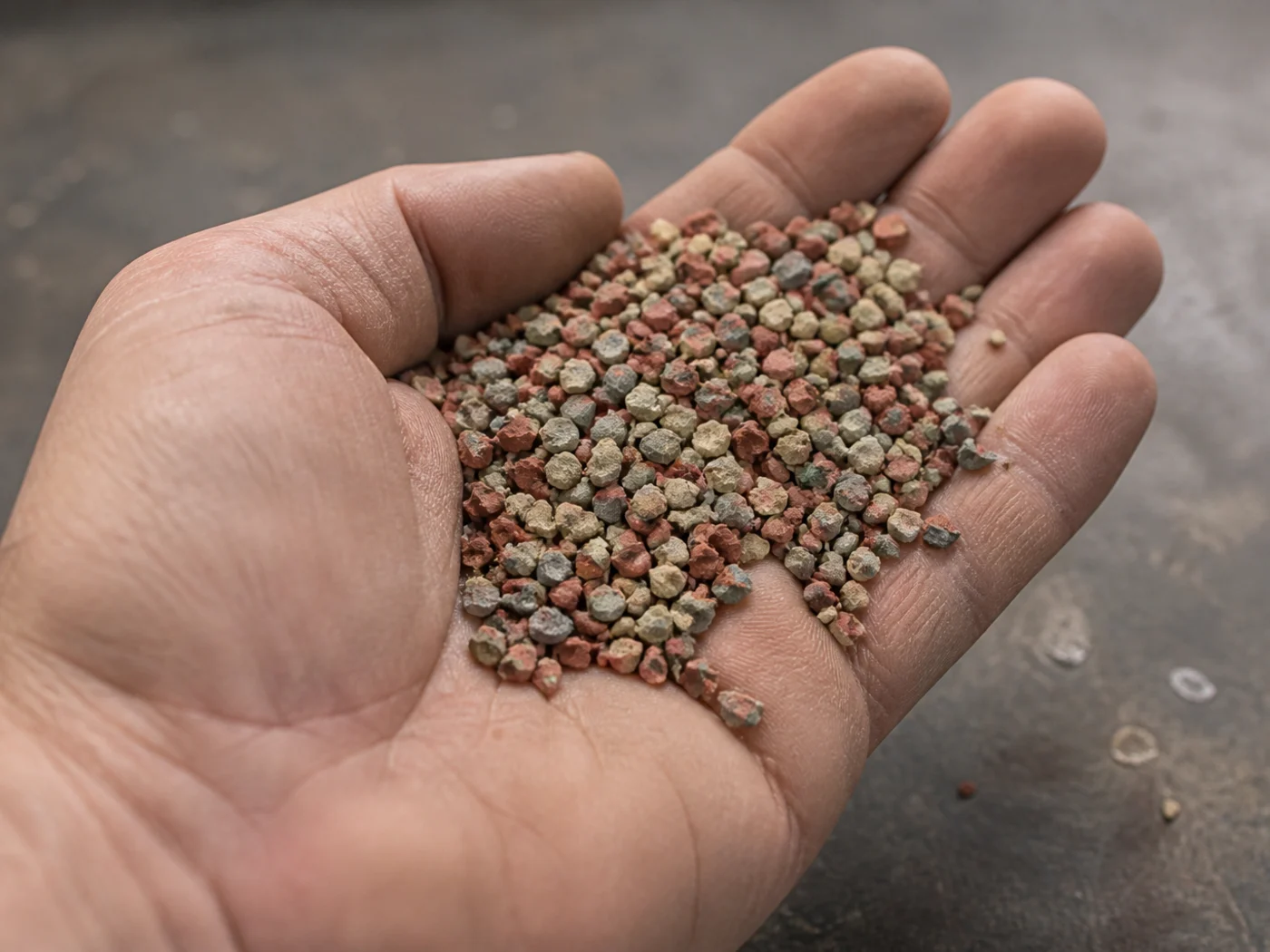
SBR is recycled black rubber, ground down and screened. It is the cushion. It is cheap, it is springy and it does not care about being buried, but leave it in Florida sun as a top layer and it goes grey and chalky in a season. EPDM is a virgin colored rubber granule made for the outdoors. It holds its color through summer after summer of direct UV, and it is the layer your feet actually touch. So the stack is SBR underneath doing the work nobody sees and EPDM on top doing the work everybody sees. A single layer of straight EPDM is possible on thin applications over sound concrete. On a playground, where the cushion has to be deep, the two layer build is the one that makes sense.
EPDM is the granule that keeps its color through one Florida summer after another.
Why seams fail in Florida
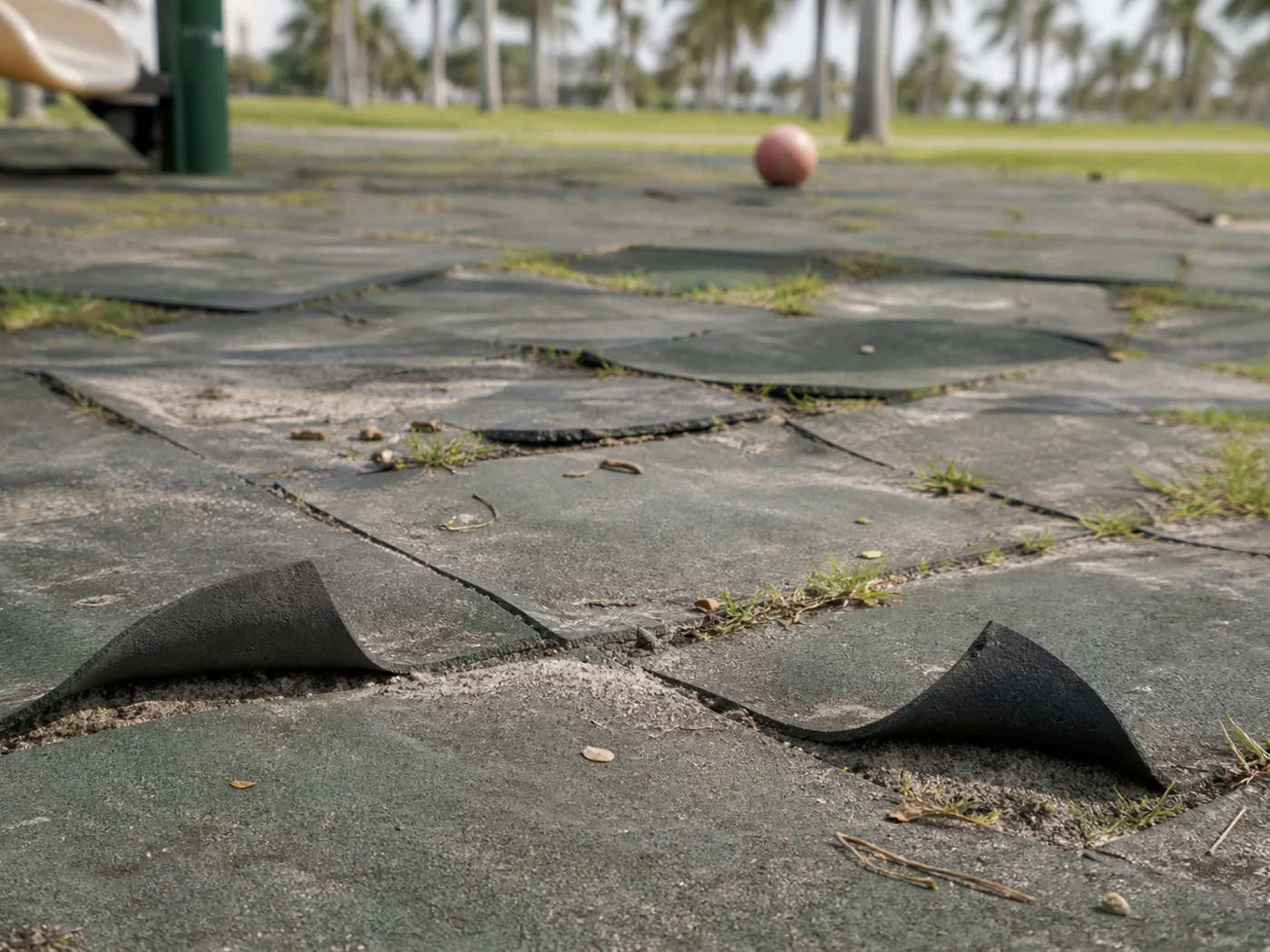
Every tile deck we have torn out failed the same way. Water gets into the joint, the adhesive lets go under it, the corner curls and then the whole tile lifts. In Florida that clock runs fast, because the deck is wet almost daily from June through October and the slab underneath moves with the heat. Loose fill has its own version of the problem. It migrates. The wood chips end up in the grass, the fall zone under the swing goes thin and nobody notices until somebody lands on it. A poured surface has nothing to open. It bonds to the base as one sheet and the edges are trowelled closed into the concrete. Water runs across it and off it, which is exactly what it should do here.
Every tile deck opens at the joints eventually, and water gets in there first.
Where we pour it
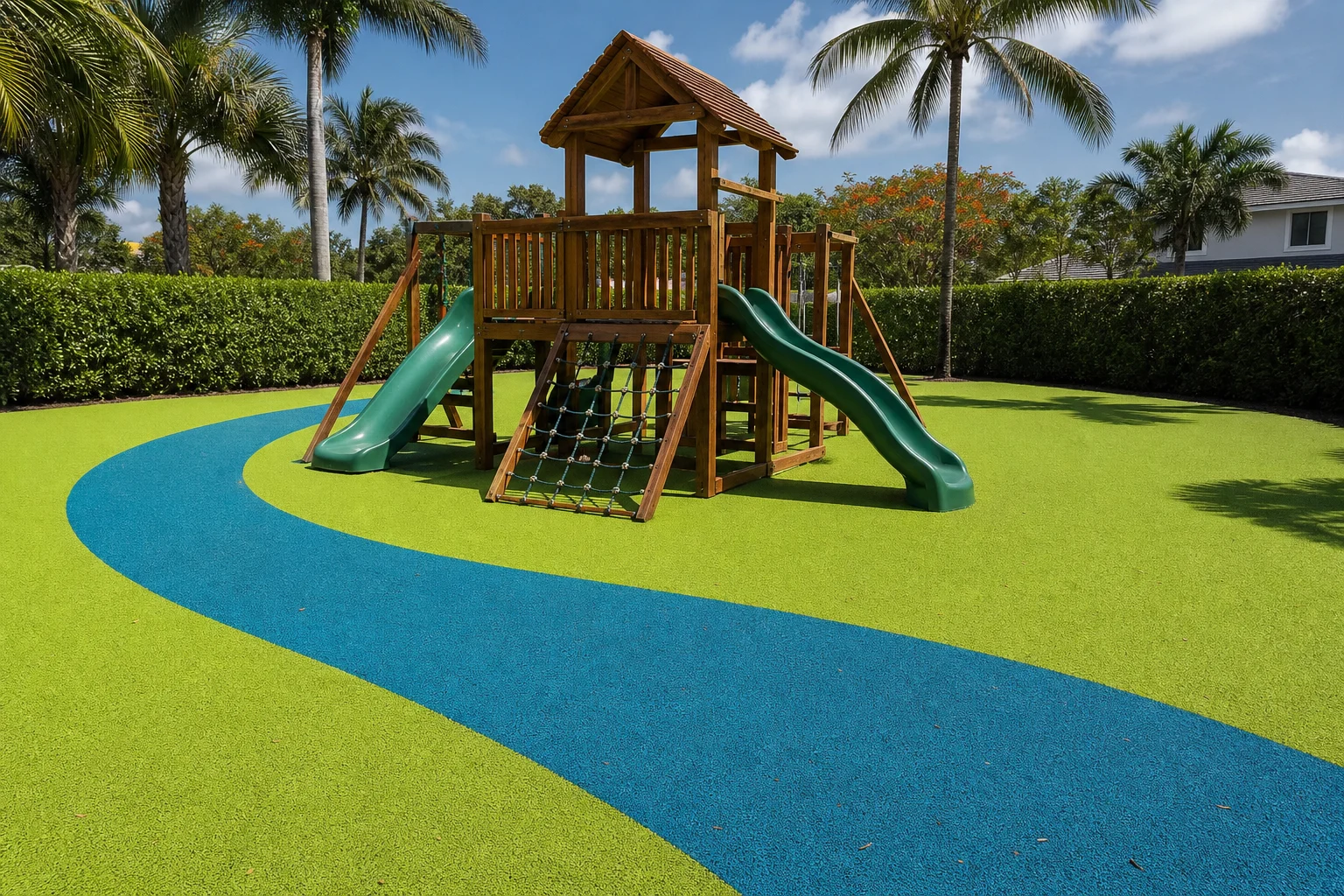
Playgrounds are the biggest use, because the cushion depth can be set to the fall height of whatever equipment is going in. Pool decks are the second, because bare concrete at two in the afternoon is unwalkable and this is not, and it grips when it is wet. After that it is splash pads, dog runs, roof terraces, gym floors, barn aprons and the walkway between the house and the dock. The base can be concrete or asphalt. It has to be sound and it has to drain, and we tell you at the free measurement if it is not. Colors get picked from samples on your own slab, in your own light, before anything is mixed. Blends, borders, insets and a logo all get poured in on the day.
Two tone crumb surface on a play area.
How it works
1
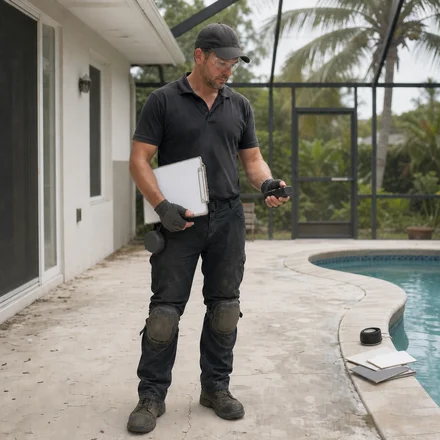
Free on-site measurement
We visit within 24 hours, measure and hand you a fixed price.
2
Design and colour choice
Pick the blend and the depth. We repair the base so it holds.
3
Installed in 1 to 3 days
Poured, cured and walkable in 24 to 48 hours.
What it costs
from $8per sq ft installed
✔ Base prep, crack treatment and priming included
✔ 2 year workmanship warranty included
✔ Fixed number after the free measurement
Already collecting quotes? Bring them to our visit. We go through them line by line, where they are padded, where they are fair, and where someone left out base prep that costs you in year two. You keep that breakdown either way.
Questions we get
How thick does the rubber need to be for a playground?
It is set by the fall height of your equipment, not by preference. Taller the deck on the play structure, deeper the SBR cushion under it. We measure the highest standing surface at the free visit and the required depth goes on your written spec before you sign. Nobody should be quoting you a playground depth over the phone.
Does it get hot in the Florida sun?
It warms up, everything does out here in July. It does not get to the point where bare concrete does, and the lighter blends run cooler than the dark ones. If barefoot comfort is the whole reason you are calling, tell us at the measurement and we will steer you toward a lighter color when you pick from the samples.
Can you pour it over my existing pool deck?
Usually yes, that is most of what we do. The old slab gets ground, cracks get bridged and the whole thing gets primed, then the rubber goes on top. You keep your deck height at the door threshold and you skip demolition. If the slab is heaving or holding water, we say so at the measurement and put the fix on the quote first.
How do I clean it and does it grow mold in the rainy season?
Hose it. A blower for leaves, a hose or a light pressure wash for anything else. It is porous, so water goes through instead of sitting on it, which is what keeps mildew from taking hold. Under a big shade tree in August you may still see green, same as on any surface here. Mild cleaner and a stiff brush handles it.
How much does rubber surfacing cost per square foot?
Poured rubber surfacing starts at 8 dollars per sq ft installed in South Florida, material and labor included. Most jobs land between 8 and 15 depending on prep, thickness and how many colors go into the mix. The rubber is not the variable, the slab is. Cleaning and priming a sound slab sits at the low end. Grinding off a failed acrylic coating, filling cracks and correcting a spot that ponds water sits at the high end. Anything under about 200 sq ft is priced as a minimum job, because the mixer setup and cure time are the same. B-Cool measures on site free within 24 hours.
How much do rubber pavers cost?
Rubber pavers are precast at 20 by 20 inches, and on a small square area they land below poured rubber surfacing per sq ft. The gap closes fast. Base preparation is the same work either way, and cutting and fitting pavers around curves, steps, drains and pool coping is labor that a continuous pour absorbs at no extra cost, so on anything shaped the 2 formats meet. Edge restraint and adhesive go on top of the paver number. Poured rubber surfacing starts at 8 dollars per sq ft installed in South Florida under a 2 year workmanship warranty, and arrives with no joints to open.
What do you put under rubber pavers?
Rubber pavers need 1 thing above all, a base that does not move. In practice that is either an existing concrete slab or a compacted crushed stone bed screeded level with sand, edged so the field cannot creep outward. Any settlement under the pavers shows up as a lipped edge between two of them, and a lipped edge is both a trip hazard and the place rain gets underneath. That base work is most of the labor and most of the cost. Poured rubber surfacing needs the same prep but bonds to it, so surface and base act as one piece with no joints to open.
If the cushion is going under play equipment, the build and the depths are covered on the playground systems page.
 1
1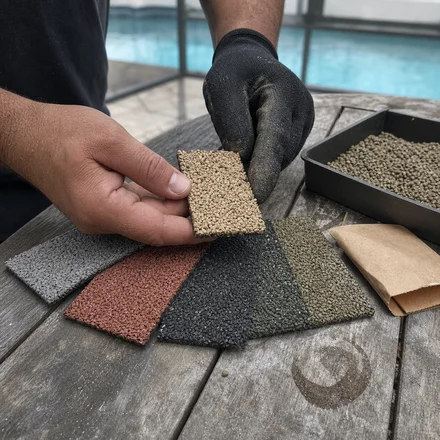 2
2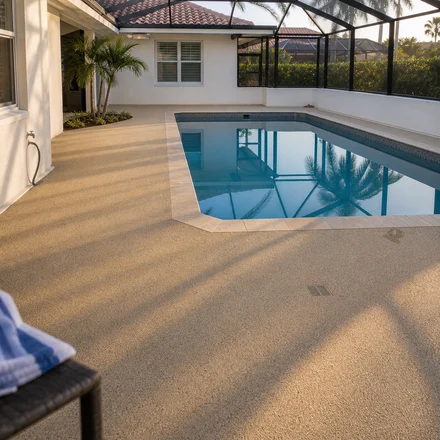 3
3