What we build with
Two part epoxy for stone and repairs
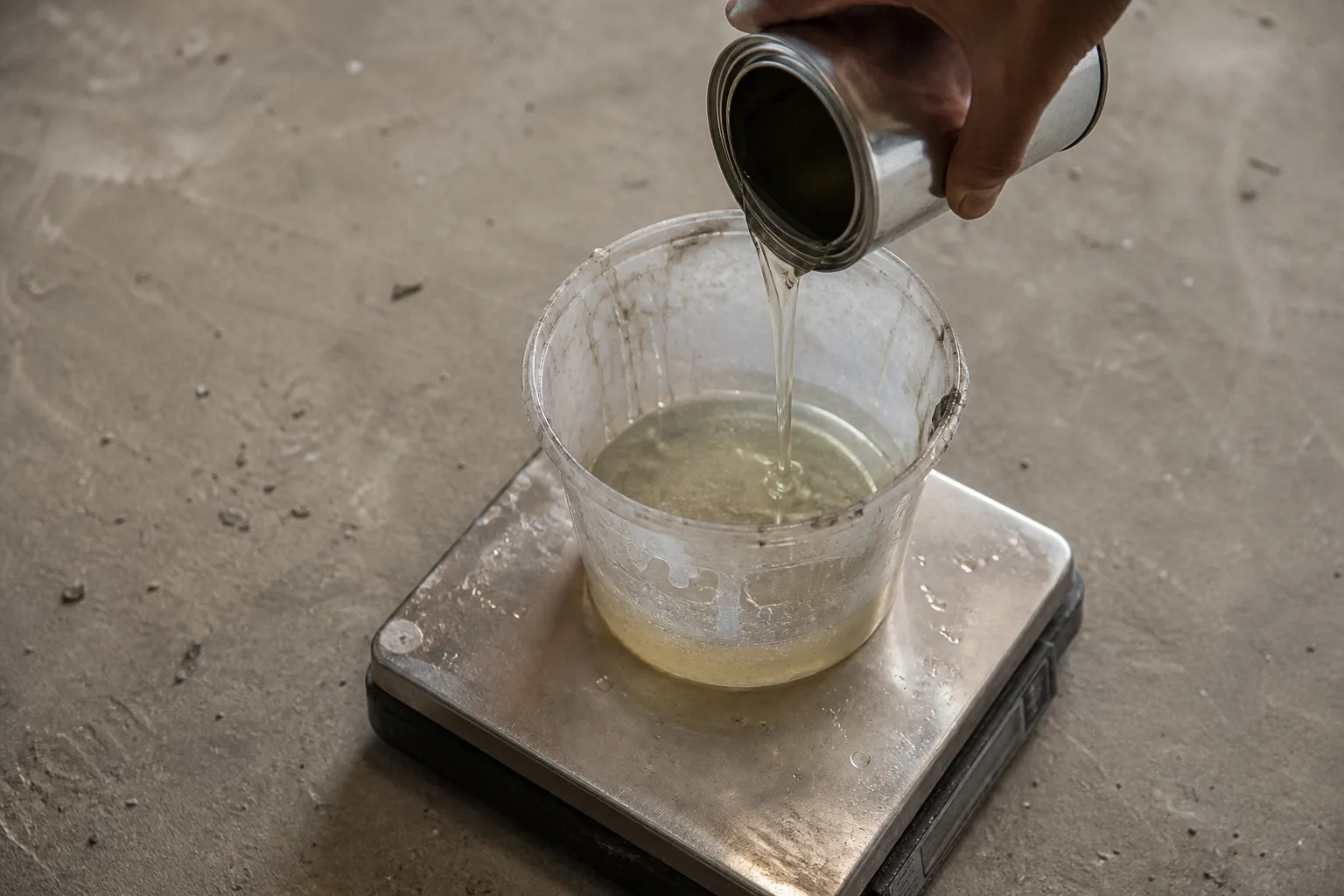
Matched resin and hardener sets, weighed on site, for stone carpet and patch work.
Matched resin and hardener sets, weighed on site, for stone carpet and patch work.
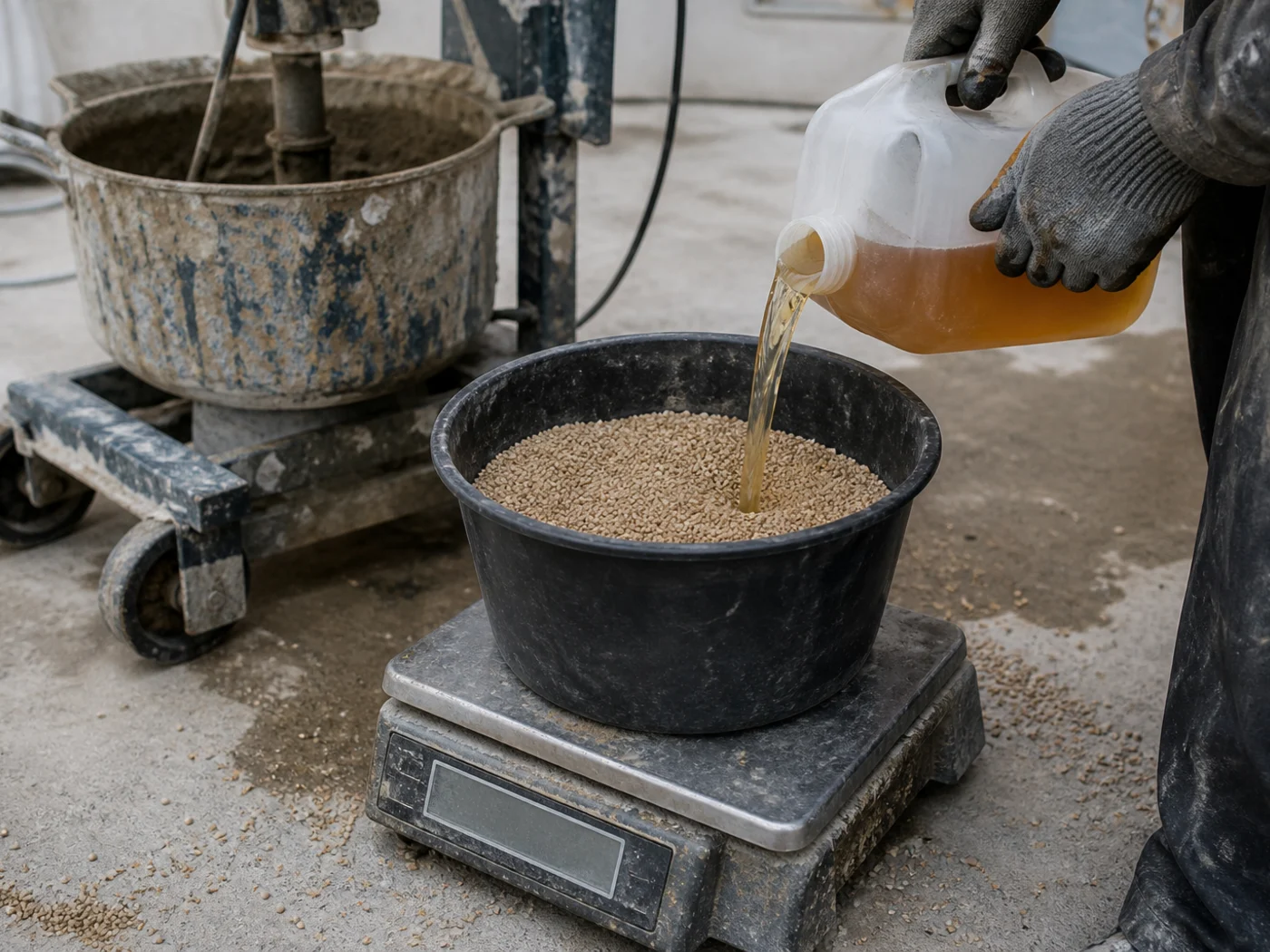
Resin and hardener are designed against each other. The hardener is not a generic catalyst you swap for whatever the store had on the shelf. Buy the two apart, or top one half up from a different brand, and the chemistry goes off. You get a floor that feels hard in the middle of the room and stays soft in the corner where the ratio drifted. That soft patch picks up dirt, prints under a chair leg, and eventually tears. Our epoxy comes in matched kits and both cans are opened at the same time. Nothing gets decanted, nothing gets saved for the next job in an open pail. On a humid Broward morning an opened can of hardener starts reacting with the air before it ever reaches the floor.
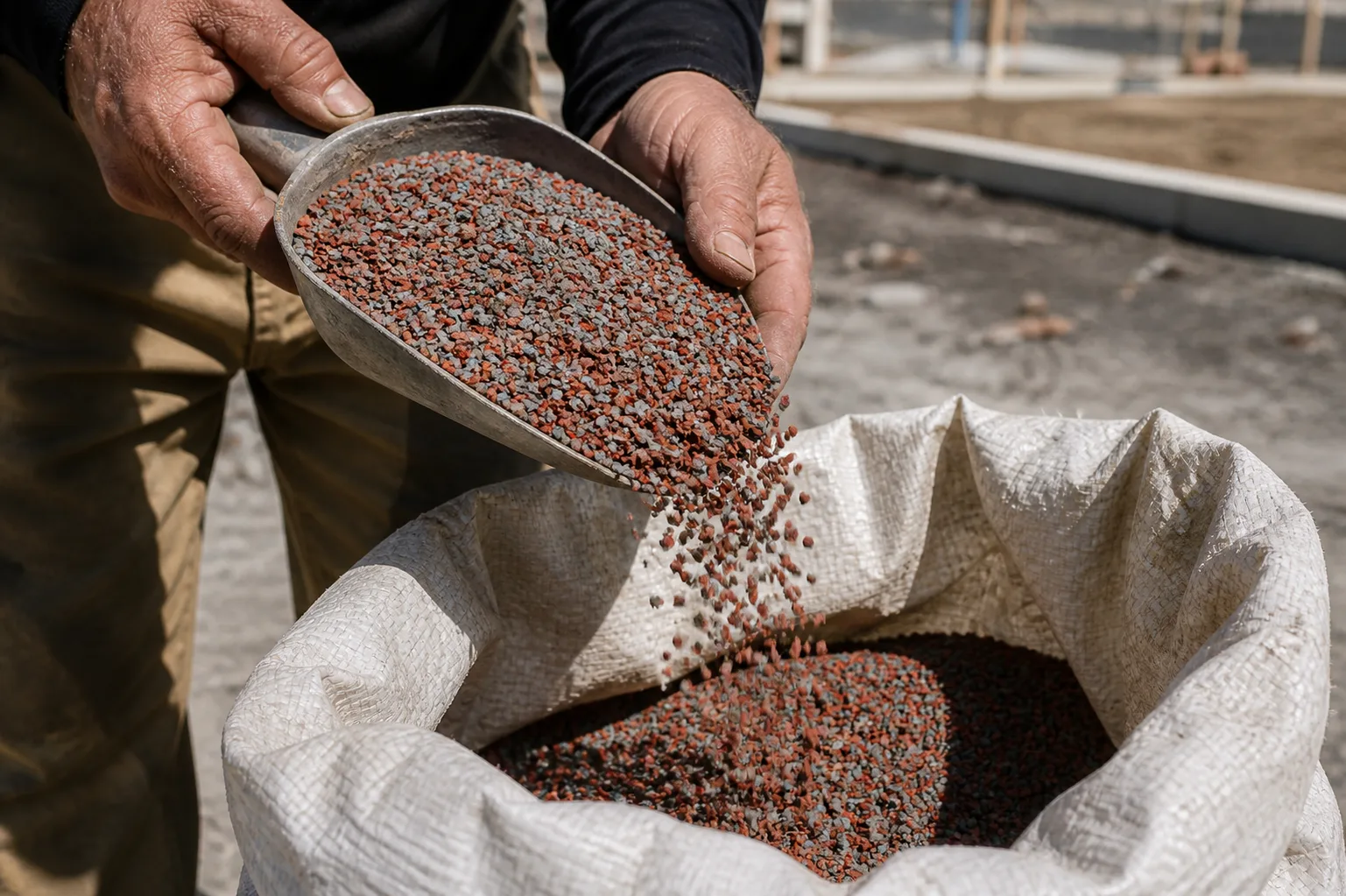
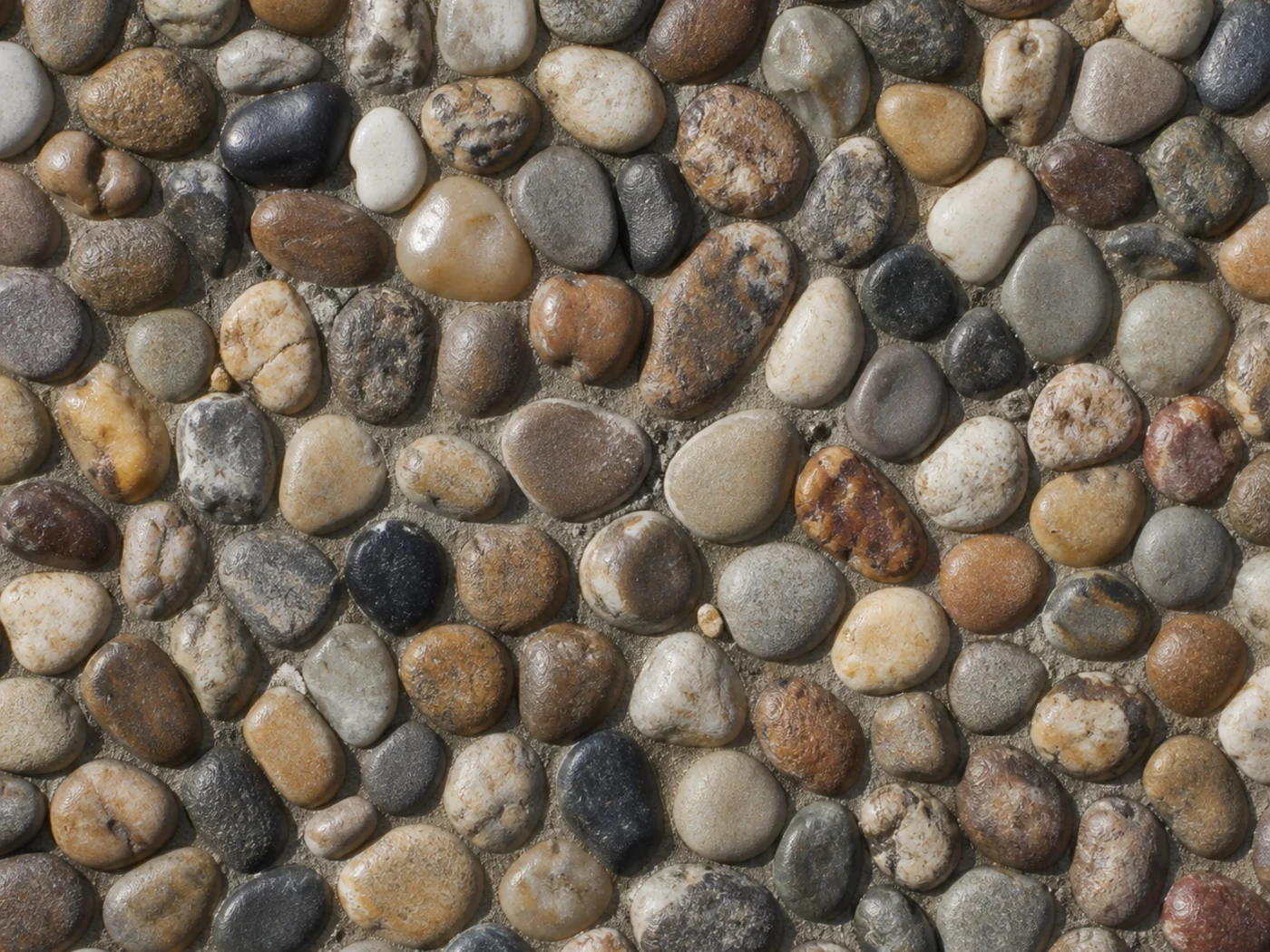
Stone carpet is a different problem from rubber. The stone is the finish, so the resin around it has to disappear. Any amber in that film and your white marble reads cream, your gray pebble reads brown. Stone work gets a clear grade for that reason, not a general purpose resin. Clear also lets us see whether the stone is wetted out all the way to the bottom of the layer, which is exactly where a stone carpet fails when it is rushed. On a pool deck the layer has to stay open enough for water to drain through rather than sit on top in a sheet. Too much resin seals it, then rain and splash out stand there in the sun.
A repair is small and urgent, which is the worst combination when the material has to be ordered in. A cracked corner or a section lifted by a planter is an hour of work and three weeks of waiting if nobody has resin on the shelf. We keep working stock in Hollywood. A callback inside the 2 year workmanship warranty gets handled on our schedule, not on a supplier schedule. It matters most after a storm. Hurricane season sends the whole county hunting the same materials in the same week and lead times stretch out. Having it already on the shelf is the difference between a patched deck in days and a taped off corner all season.
 1
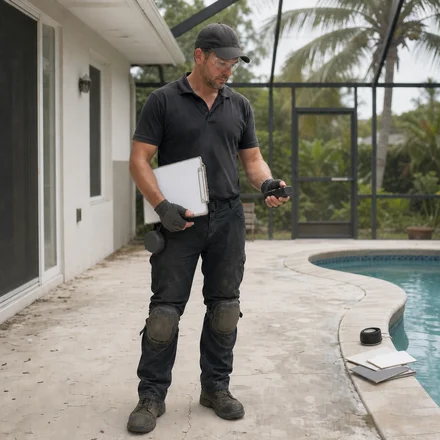
1We visit within 24 hours, measure and hand you a fixed price.
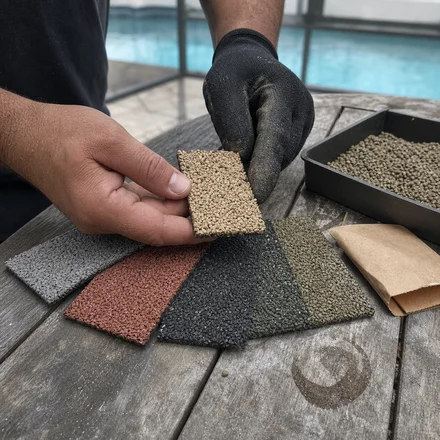 2
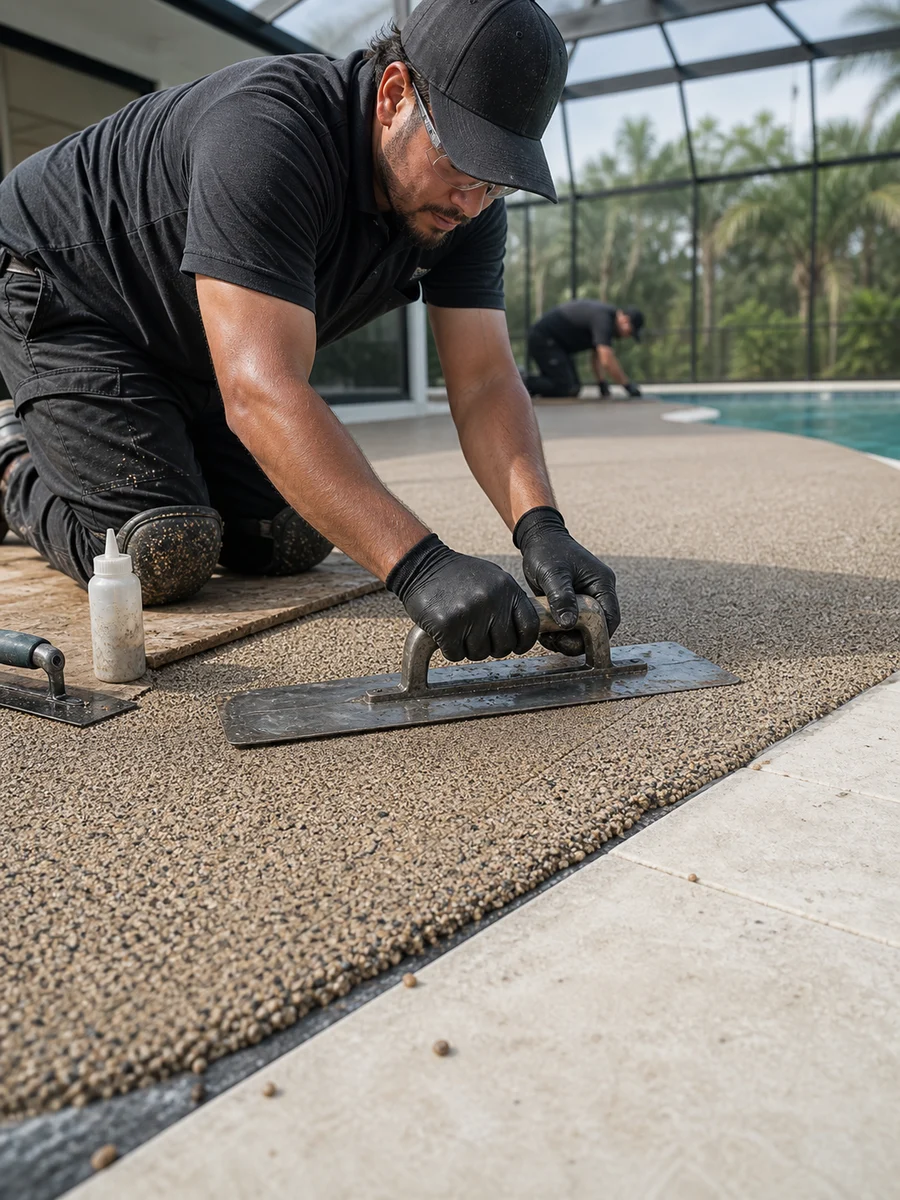
2Pick the blend and the depth. We repair the base so it holds.
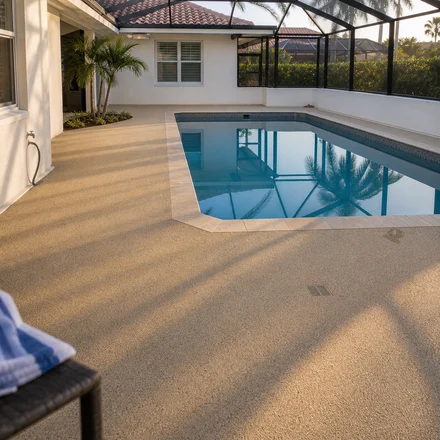 3
3Poured, cured and walkable in 24 to 48 hours.
Almost always a ratio problem. Somebody poured the hardener by eye, or scraped a pail without remixing what had settled on the sides of it. That corner never got enough hardener, so it never cured. It does not fix itself with time either. The soft area has to come off and go back down properly, which is why every batch we mix goes on a scale.
For stone carpet, yes, with a clear grade built for sun. Plain epoxy on its own is not what we put on an open deck here, because standard epoxy grades chalk under Florida ultraviolet within a season or two. Indoors is a different story entirely. Tell us where the deck sits and how much shade it gets and we will tell you what belongs there.
Heat does not stop us, it changes which hardener we open. A hot slab in the afternoon shortens the working window, so we either use a slower grade or start at first light and stay ahead of the sun. What we will not do is open a fast grade on a slab baking at midday, because it goes off in the pail before it reaches the floor.
No. We are installers, so the epoxy is part of the job and part of the fixed written price you sign. You never order cans, chase a shortfall halfway through, or end up with half a kit sitting in the garage. Prep, material, and labor are quoted together, and the quote you sign is the invoice you pay.
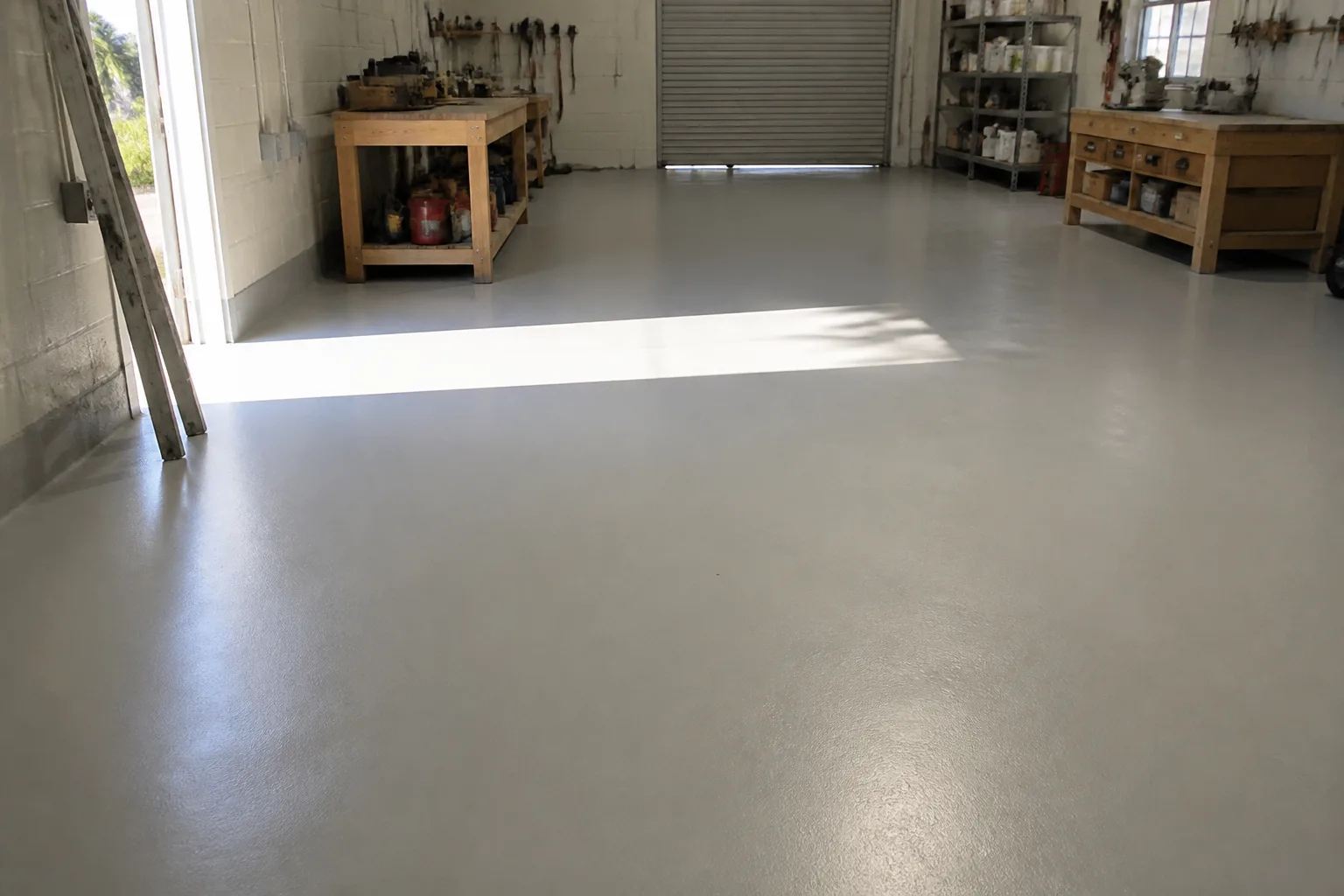
Slab floors indoors take a different build entirely, and the whole stack is on the polymer floor page.
Same surface, other components. Each one named on your written quote.
Free on-site measurement within 24 hours. No obligation.