What we build with
Floor paint that does not peel
Why hardware store paint lifts, and what we put on a working slab instead.
Why hardware store paint lifts, and what we put on a working slab instead.
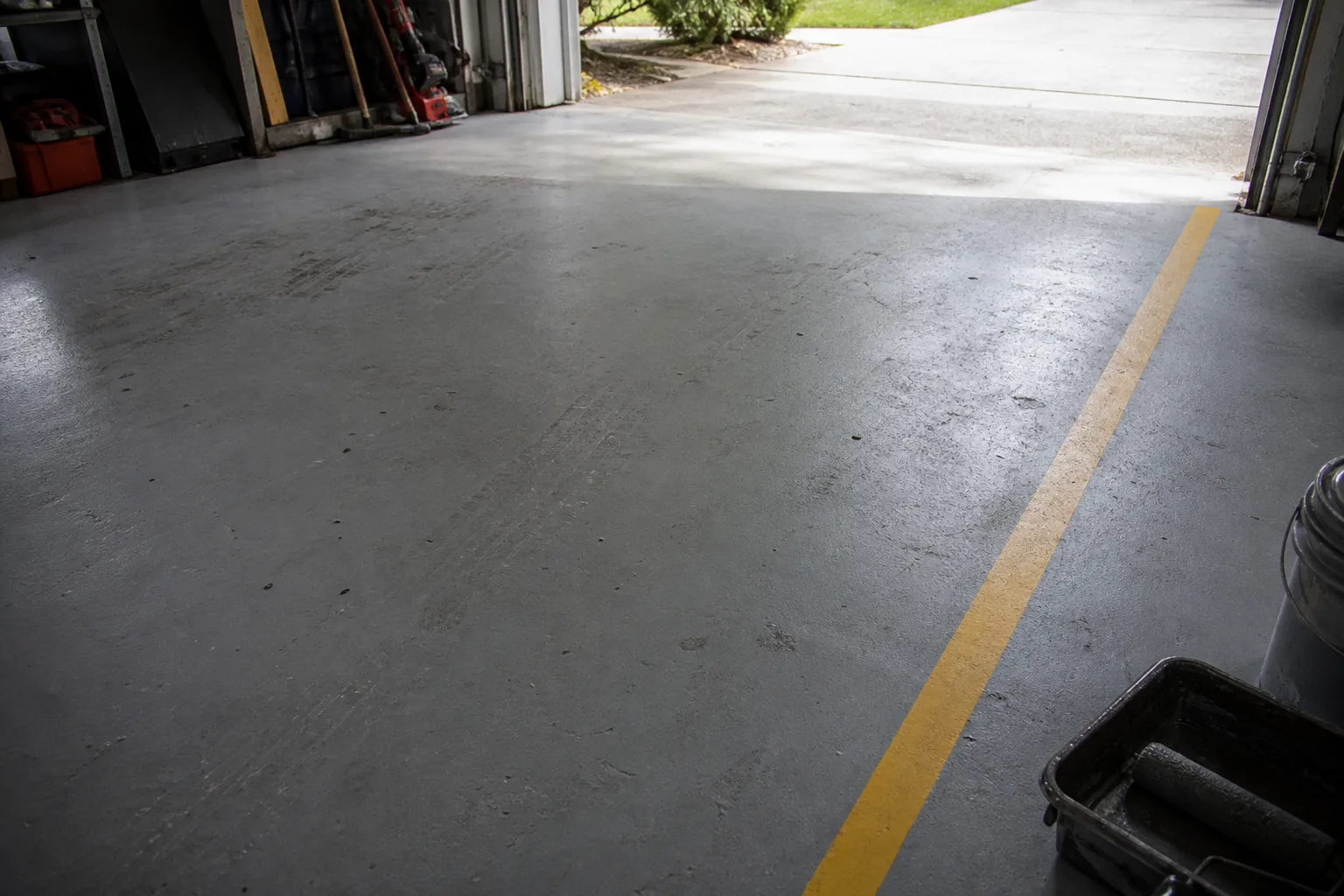
Look at a failed garage floor and the paint is gone in two stripes exactly where the front tires sit. That is hot tire pickup. A tire comes off the highway in July at road temperature, parks on the paint, softens it, then grabs and pulls the film up when you back out the next morning. Bucket floor paint from a big box store has no answer to that. Neither does paint rolled onto a slab that was only swept and rinsed first. The fix is a grade built for the load, on a slab ground open so the coating anchors into the concrete instead of lying on top of it. Once it is anchored, a hot tire pulls at it and nothing moves.
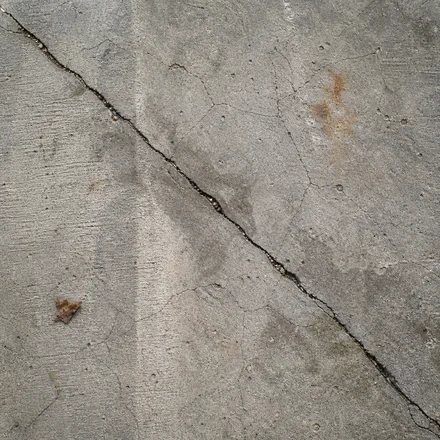
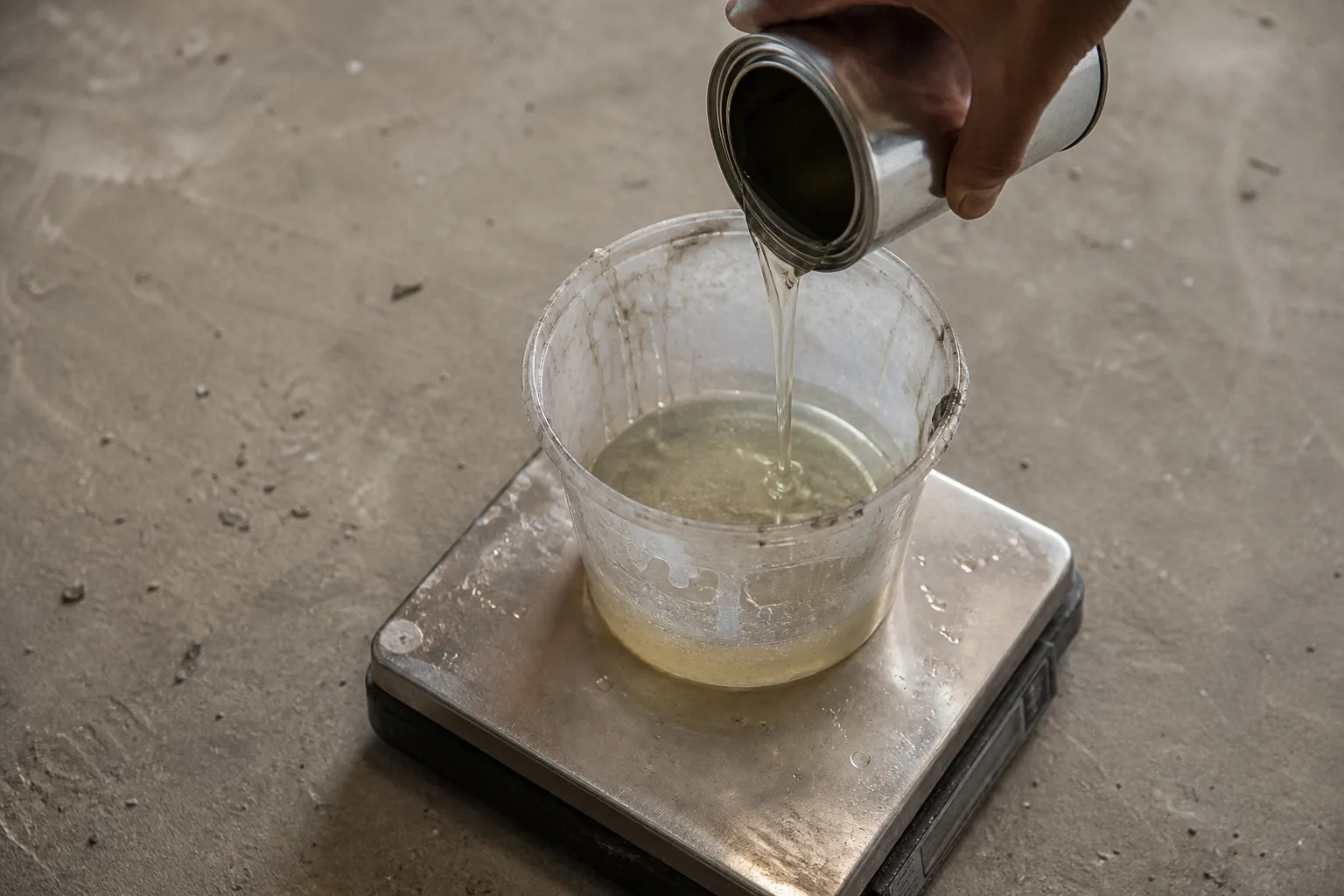
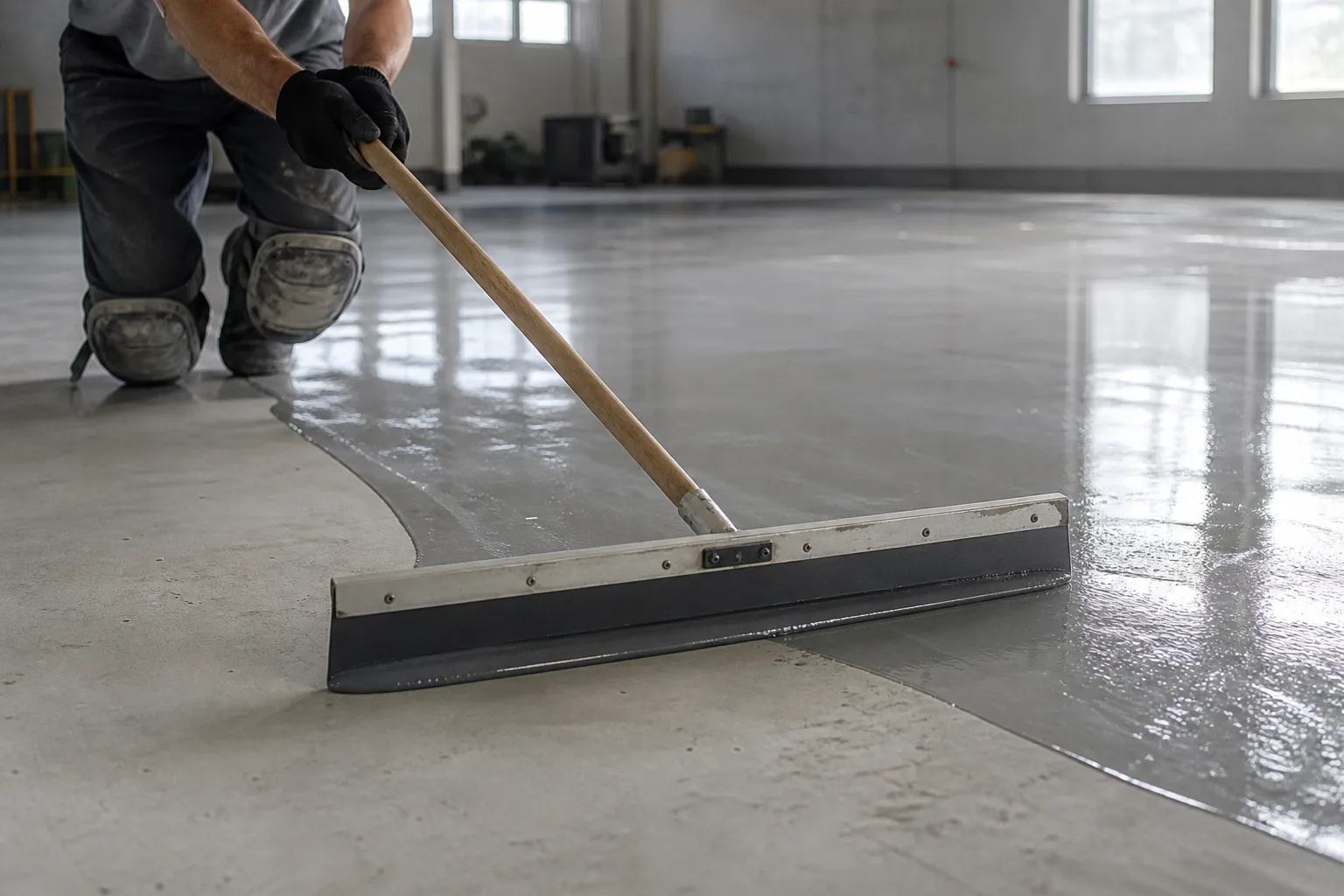
Two grades cover most of what people ask us for. Epoxy is the harder film. It takes tires, pallet jacks, and dropped tools, and it wipes clean after a spill instead of staining. It also carries more smell while it cures, which matters if people are working in the room. Water based grades are low odor and go into occupied buildings, HOA garages, storage rooms, and shops that cannot shut down for two days. They are not as tough, so we put them where the traffic is lighter. Sometimes the answer is both, an epoxy build in the drive lane and a water based finish through the rest of it. We ask what the room is used for before recommending either.
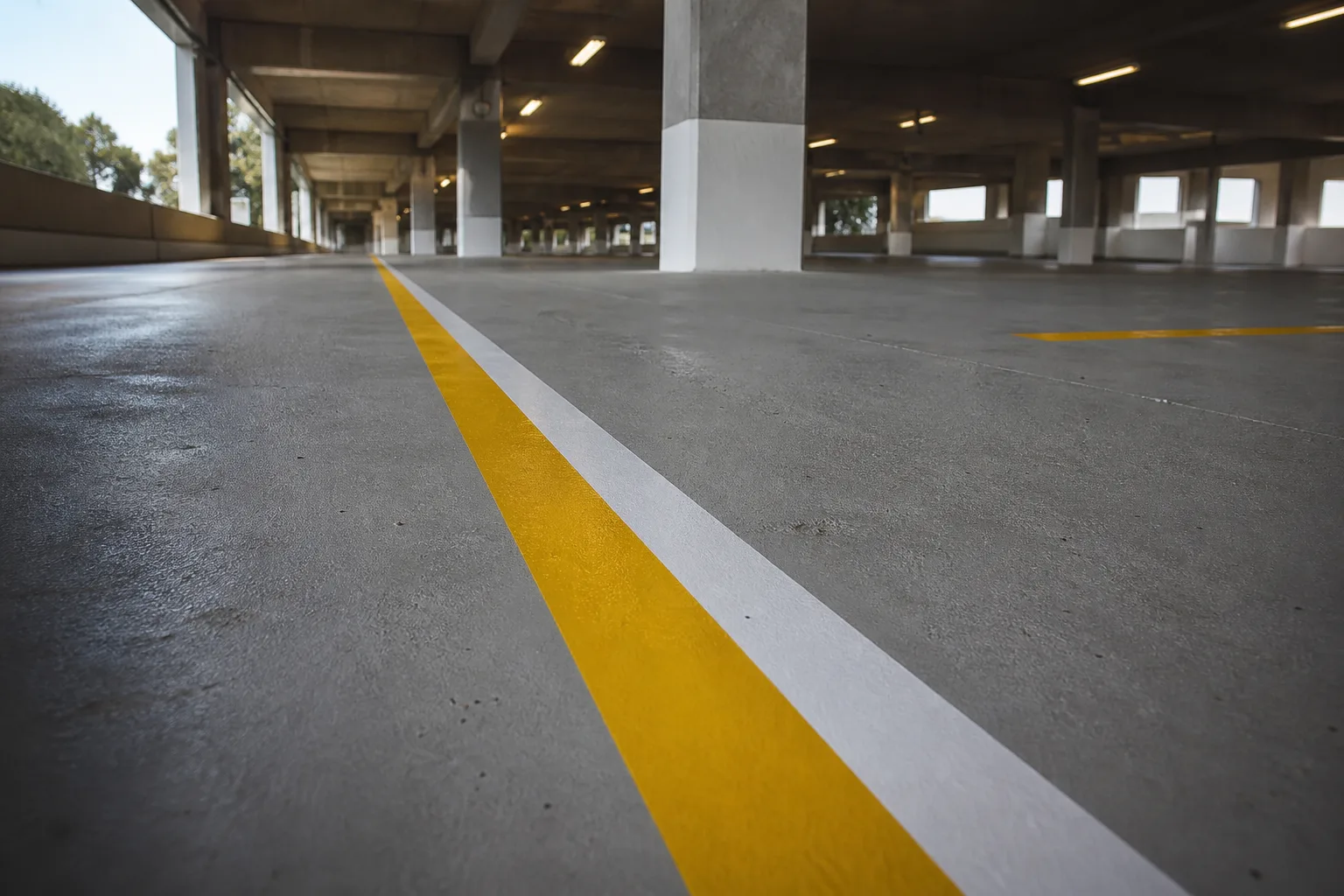
Painted lines wear out faster than the floor they sit on, because everything crosses them. Bay lines, safety lanes, arrows, and numbers take the same tires every day at the same angle. Lines rolled on top of a finished floor start scuffing within months. We lay the markings into the system instead, then run a clear coat over the top so traffic wears the clear and not the line underneath. It costs a little more on day one and it saves you a repaint. HOA boards ask about this detail more than any other, because a garage with faded numbers looks neglected from the ground floor to the roof and residents notice it first.
 1
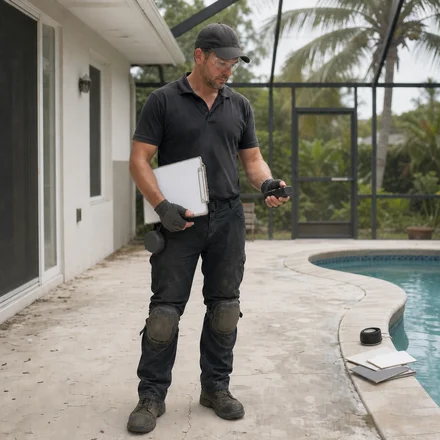
1We visit within 24 hours, measure and hand you a fixed price.
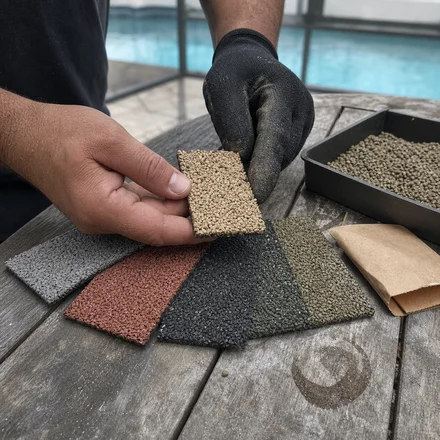 2
2Pick the blend and the depth. We repair the base so it holds.
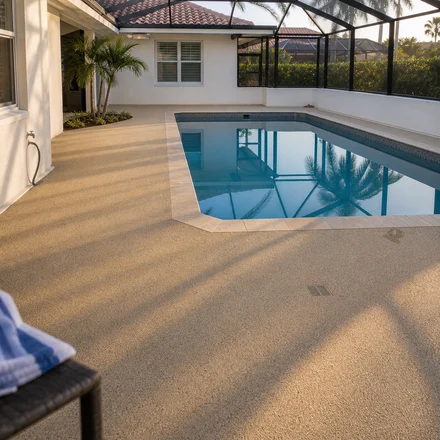 3
3Poured, cured and walkable in 24 to 48 hours.
You can, and it will look good for a season. The part almost everyone skips is grinding, and grinding is the part that decides whether it lasts. Without it the paint sits on the slab skin and comes up with the first hot tire in summer. If you are set on doing it yourself, rent a grinder rather than buying a bottle of etch.
With a water based grade it is mild and it clears the same day with the doors open. Epoxy carries more of it while it cures. If the room has to stay occupied we plan the sections and the hours around your people, and we say at the measurement which grade keeps the building working. For most commercial jobs that decision is the whole conversation.
Sun through a skylight or an open bay door will chalk cheap floor paint to gray. We use grades made to hold their color, and where the light lands hard on one part of the floor we say so before you settle on a shade. Mid tones hold up better than a bright color sitting in a strip of direct Florida sun.
Installed work starts at 8 dollars per sq ft, and where your floor lands depends on the shape the slab is in and how much grinding it needs. We measure free within 24 hours, then you get a fixed written price. The quote you sign is the invoice you pay, and the 2 year workmanship warranty is written into it.
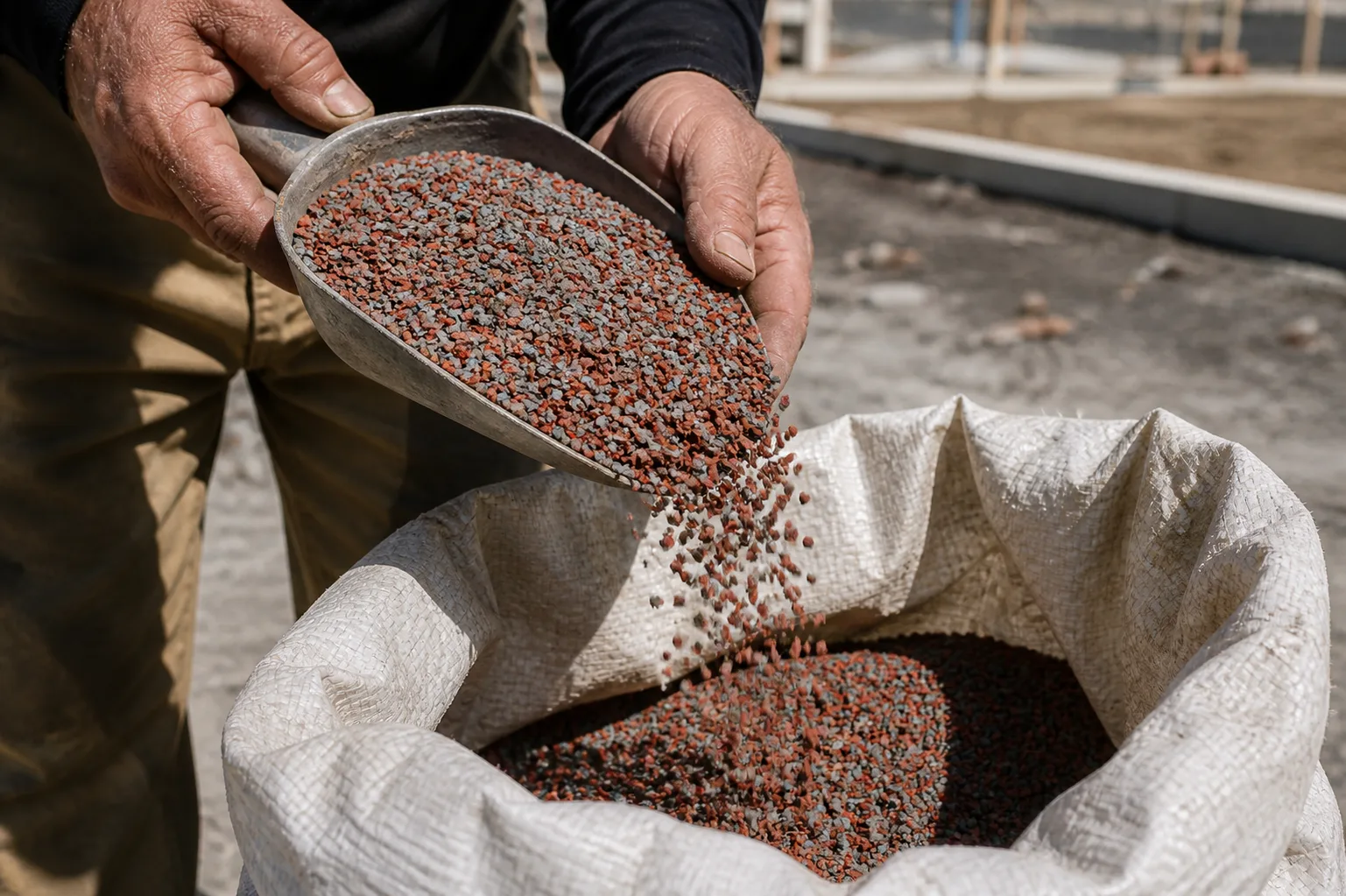
The granule surfaces we pour outdoors work on a completely different principle, and they start with rubber granules.
Same surface, other components. Each one named on your written quote.
Free on-site measurement within 24 hours. No obligation.