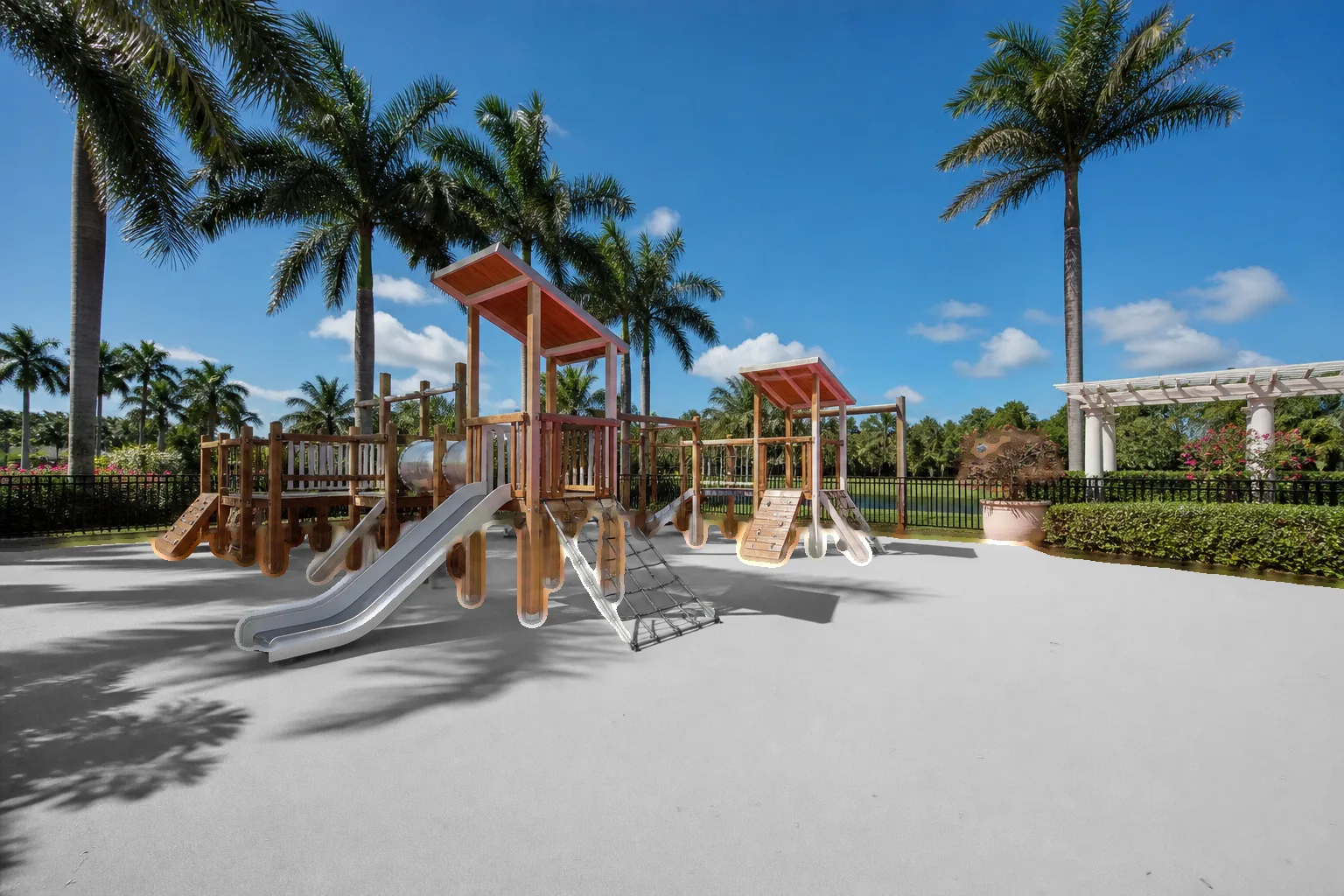
Playground systems
Poured play surfacing, depth agreed first
Seamless rubber around your equipment, with the depth written down before we pour it.
Seamless rubber around your equipment, with the depth written down before we pour it.
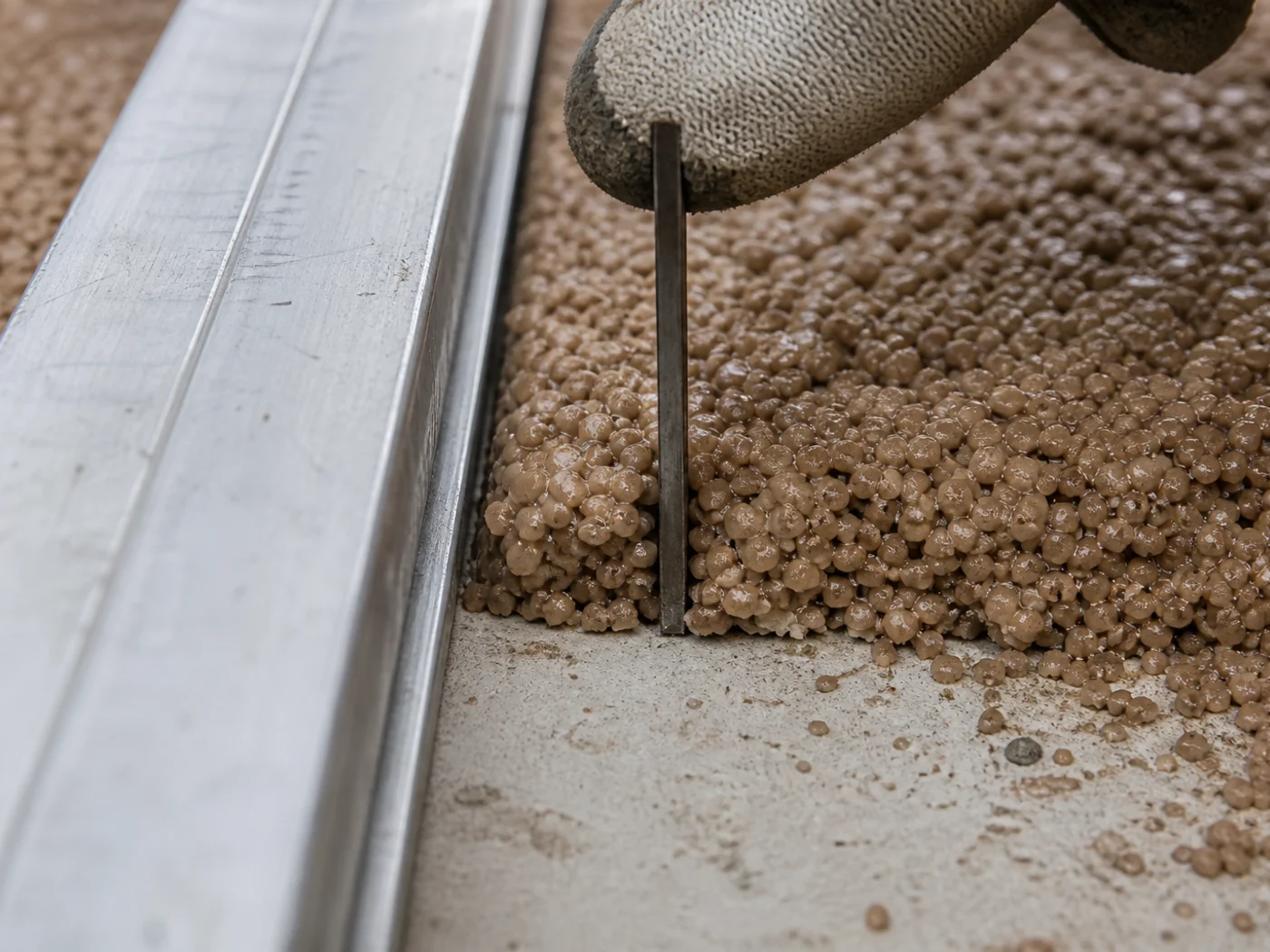
The first thing we do on a playground is look up. The equipment decides the surface, not the other way around. A low toddler frame and a tall climber sitting on the same lot do not get the same build, so the depth changes across the site and we mark on the drawing where it changes. Whatever we agree goes into the written quote before anything is mixed, so nothing rests on somebody remembering a conversation once the crew is on site. During the pour the depth is checked with a gauge in the wet material, bay by bay, rather than measured once at the edge and assumed for the rest of the lot. Bring the equipment paperwork to the measurement. It shortens the whole conversation.
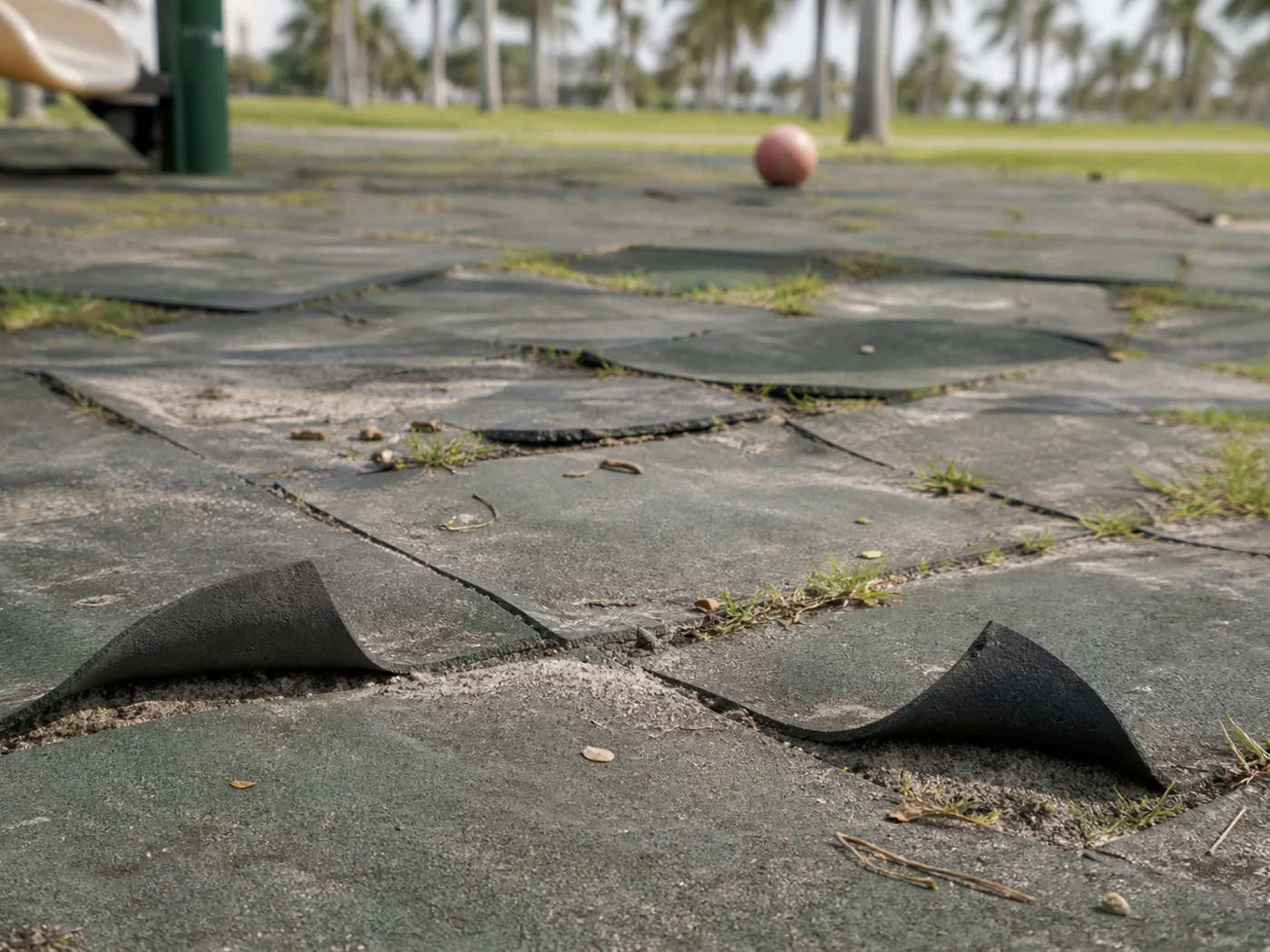
Mulch moves. It gets kicked out of the landing zones, it floats in a downpour, and somebody has to rake it back every week for the life of the playground. Tiles look tidy for a season, then the joints start to open. Every joint is a place for water to get under, for a toe to catch and for the adhesive to let go, and our rain and heat find those joints quickly. Once one corner lifts, the rest follow it. A poured surface has no joints to open, because it is laid as one piece around the posts, the borders and the edges. Water drains through it instead of sitting on top, so the play area is usable again soon after a storm passes.
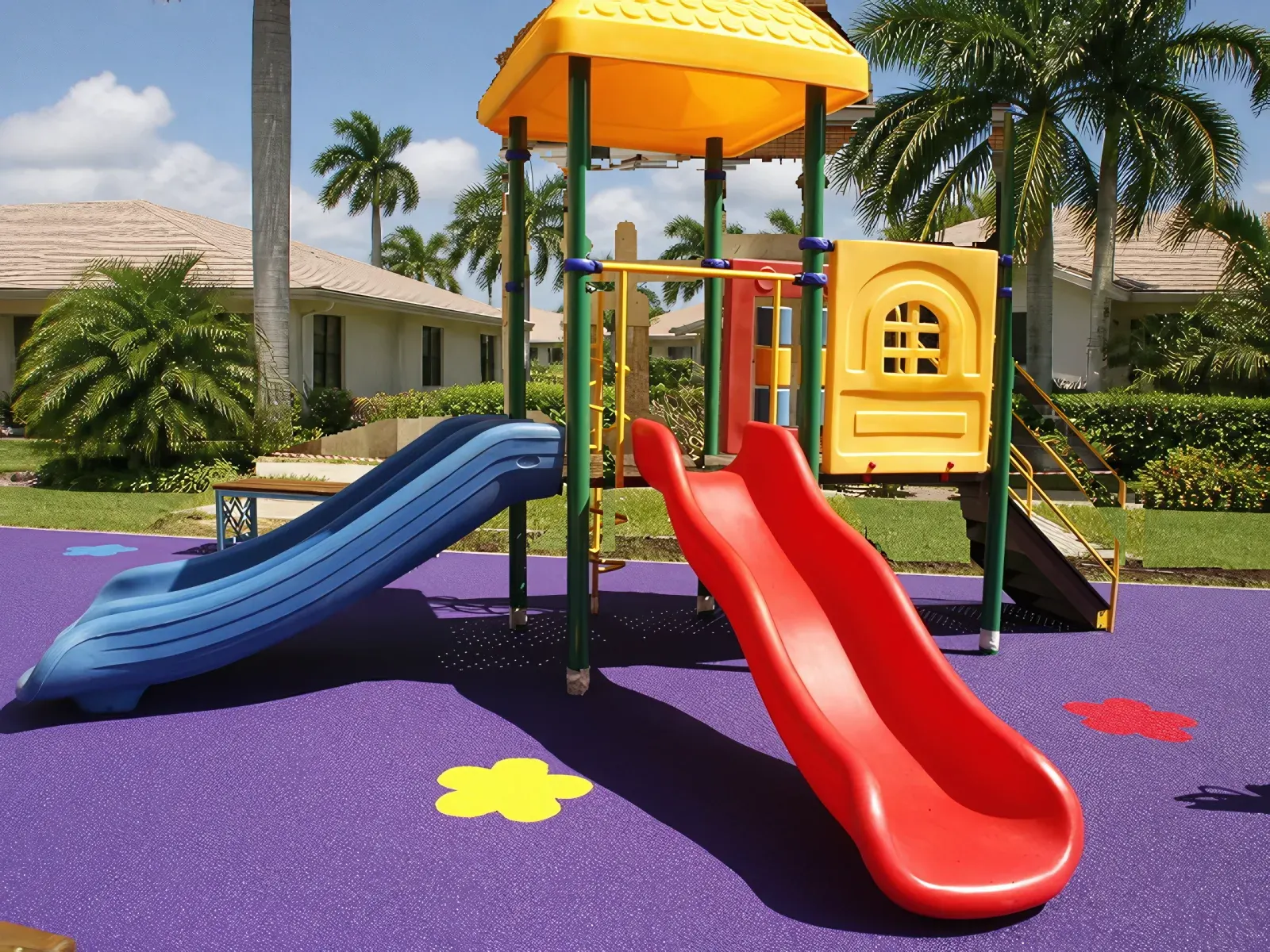
Color goes into the surface, not onto it. Hopscotch grids, running loops, animals and a school logo can be poured in as part of the same job rather than painted on to fade by spring. Choose the layout at the design stage and it adds very little, because the crew is already there and already mixing. Upkeep asks almost nothing of you. Rinse it, blow the leaves off it, keep the drains clear. There is no annual top up and no raking, which is where most of the saving against mulch actually sits. Mid tone colors hold their look longer under our sun, and dark colors run hotter in July, which matters on an open lot with no shade over it.
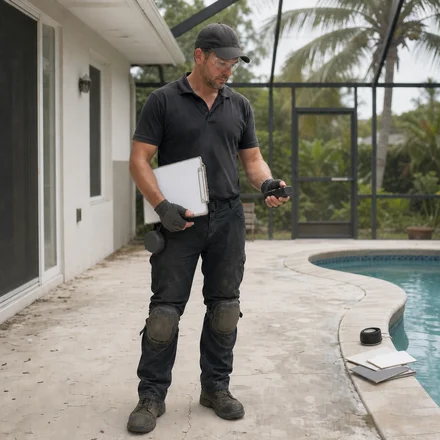 1
1We visit within 24 hours, measure and hand you a fixed price.
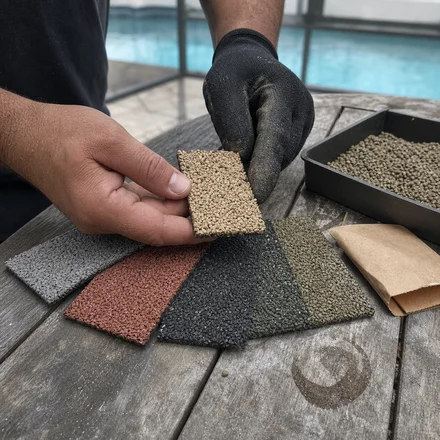 2
2Pick the blend and the depth. We repair the base so it holds.
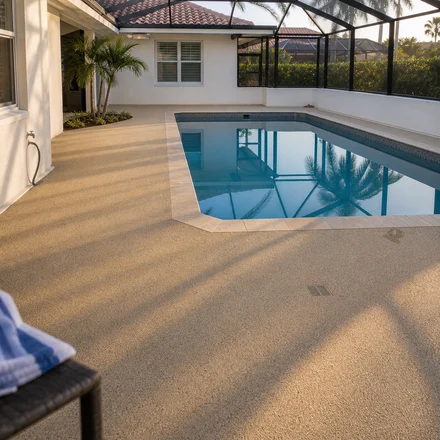 3
3Poured, cured and walkable in 24 to 48 hours.
There is no single answer, and anyone giving you one over the phone has not looked at your equipment. The depth is set by the fall height of what is installed above the surface, and it can change from one area of a playground to another. We measure the equipment on site, agree the depth with you, and put that depth into the written quote before we pour anything.
A poured surface is firm, continuous and flat, so wheels roll across it instead of sinking into it the way they do in loose mulch. There is no raised tile edge to bump over and no gap to catch a caster. We pour the route in as part of the same surface, so there is no changeover point between the path and the play area itself.
No. Loose fill comes out and old tiles come up, because a poured surface needs a solid, drained base under it. That removal is part of the job and it sits in the price you sign, not on top of it later. Underneath is usually crushed stone, asphalt or concrete, and we check the condition of it at the free measurement.
The pour is 1 to 3 days on site for most play areas, and the surface needs 24 to 48 hours of curing before children are back on it. So the usual answer is a long weekend. Schools tend to book us into a break week, HOAs into the quietest weekend they have. Tell us your reopening date at the measurement and we work to it.
The same crew and the same seamless build go into our track and court surfacing work.
Free on-site measurement within 24 hours. No obligation.