What we build with
Polymer floors for garages and warehouses
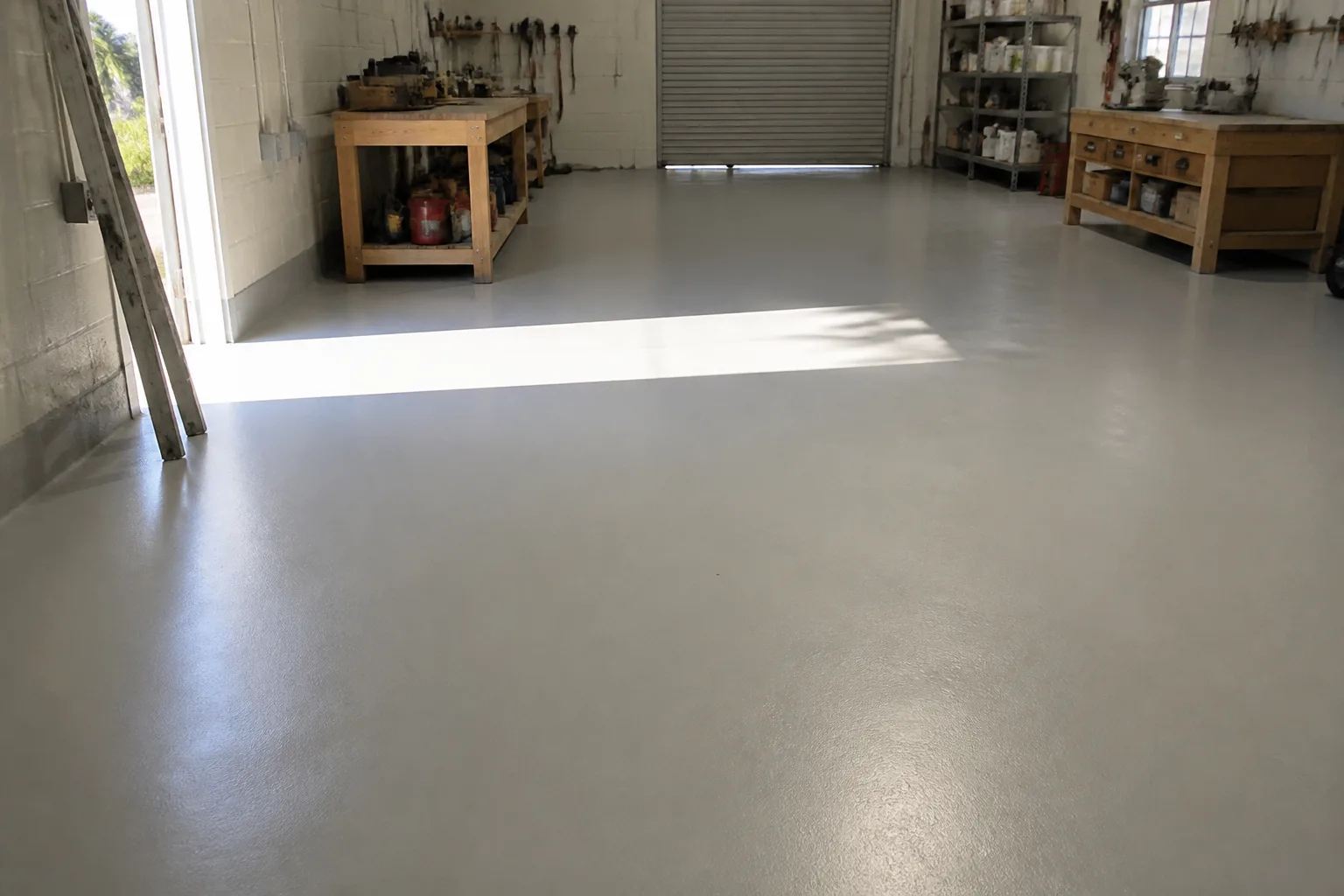
Primer, body coat, and topcoat built as one stack on a slab that is ready.
Primer, body coat, and topcoat built as one stack on a slab that is ready.
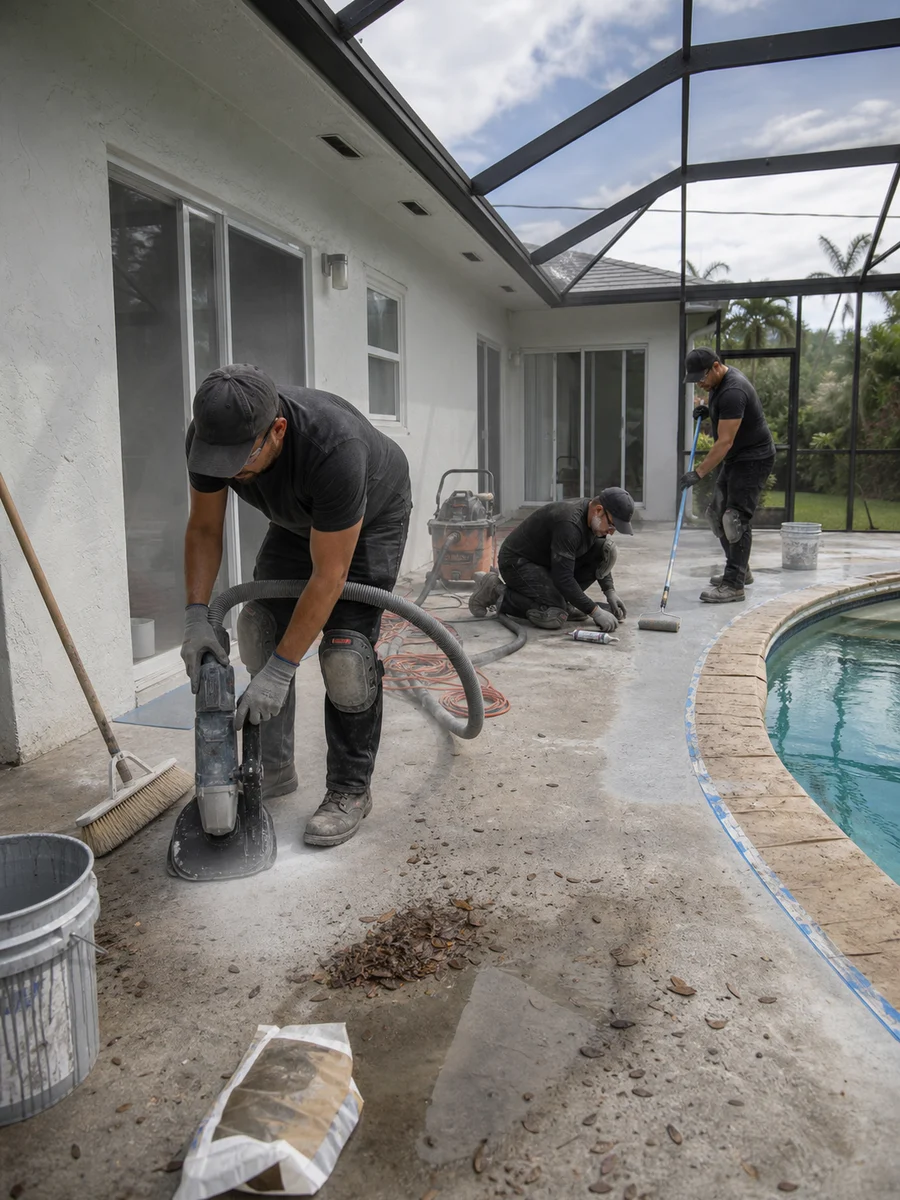
A slab that has been sitting for years is not a clean surface. It has a hard smooth skin on top from the original finish, plus oil where a car parked, tire rubber, old sealer, and dust. Roll a coating straight onto that and you have bonded to the dirt, not to the concrete. It looks perfect for a month and lifts in sheets by the summer. We grind the slab open first so the coating has something to key into, vacuum it, then prime while the surface is still clean. That one step decides whether a floor lasts, and it is the step most cheap quotes leave out. Grinding also finds the cracks and soft spots the dirt was hiding.
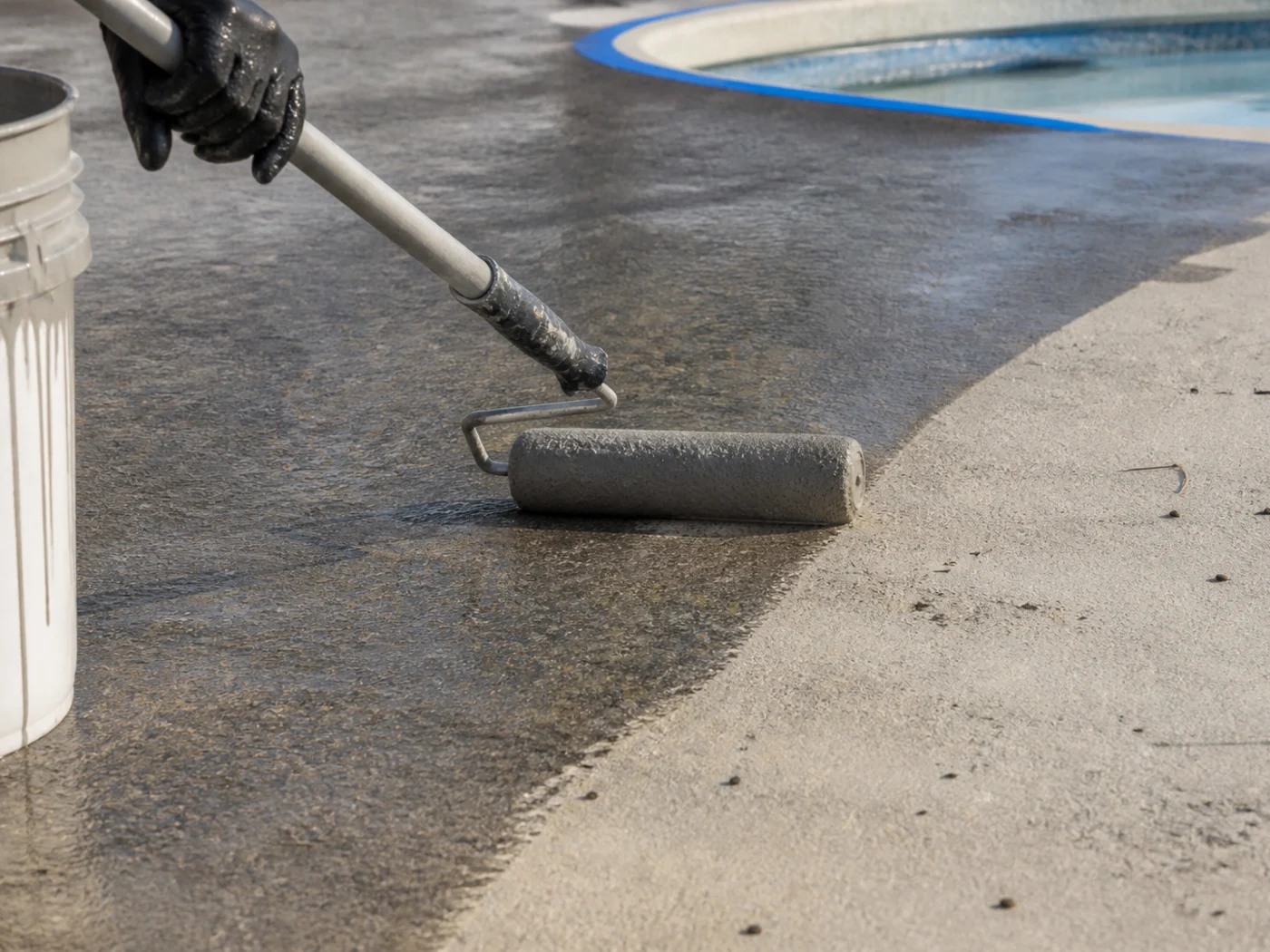
Florida slabs move water. Most sit on grade with a high water table under them, and plenty of the older ones went down with a thin vapor barrier or none at all. Water vapor pushes up through the concrete all day long. Seal that in under a tight coating and the pressure lifts the film off in blisters, usually in a low corner or near a door. You see it as dinner plate bubbles that pop under a tire. We check the slab before quoting and use a vapor permeable primer where the concrete is still giving off moisture, so the floor breathes instead of blowing itself off the slab. Garages backing onto a lawn with sprinklers are the usual suspects.
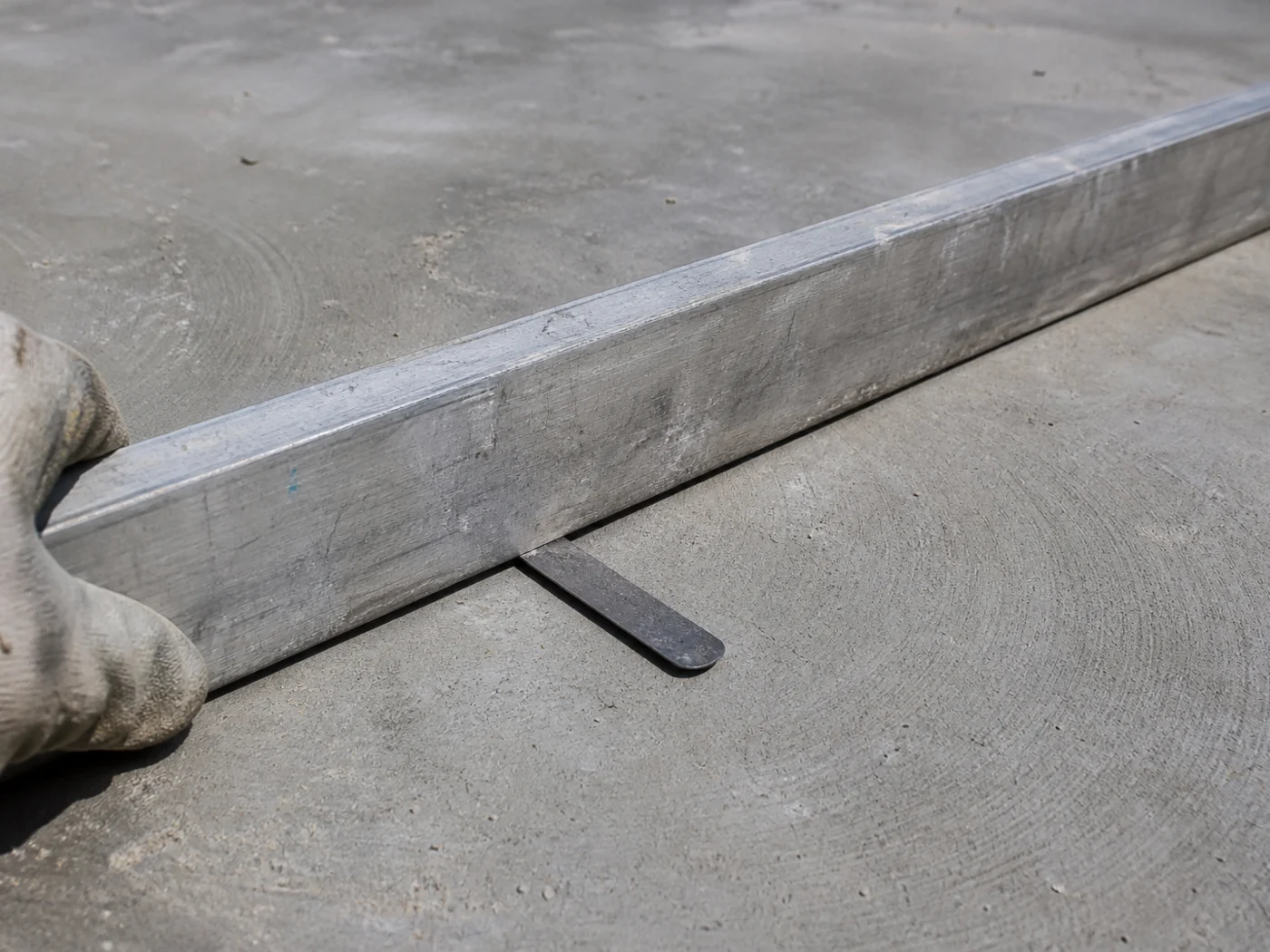
A coating follows whatever shape the slab already has. It does not level anything by itself. So before the body coat goes down we run a straightedge across the floor and mark the low spots. Water finds them later, and a low area in a warehouse holds wash water and picks up tire marks that never clean off. Lows get filled and feathered first, then the body coat goes on at an even build. That even build matters most where the traffic is. A forklift or a pallet jack wears a coating at the turns and at the dock door, and a floor that is thin in those spots goes through to concrete in a season while the rest still looks new.
 1
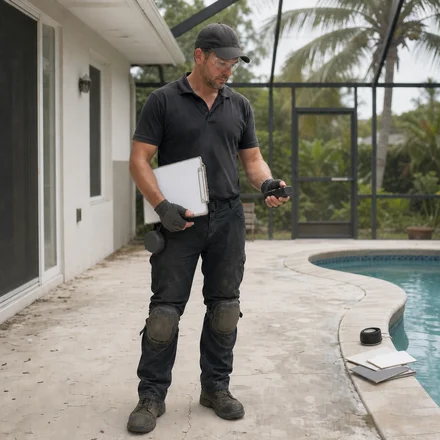
1We visit within 24 hours, measure and hand you a fixed price.
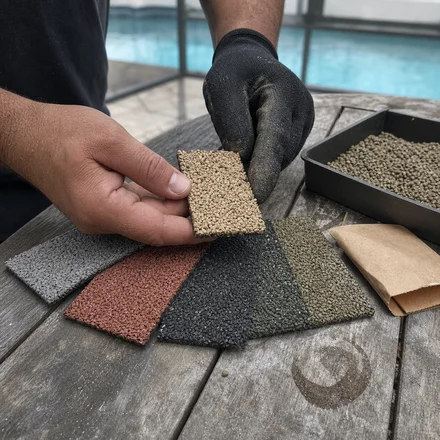 2
2Pick the blend and the depth. We repair the base so it holds.
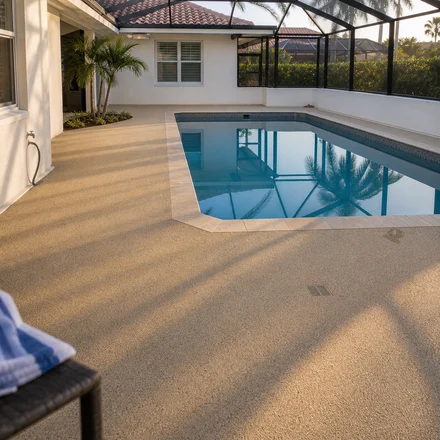 3
3Poured, cured and walkable in 24 to 48 hours.
Yes. An enclosed garage in August is hot and humid, so we start early and manage the air in the room while it cures. What we will not do is coat a slab that is still wet from a washdown the night before. If the concrete needs time to dry out, we tell you that at the measurement and plan the days around it.
You can walk on it after 24 to 48 hours of curing. Tires are far heavier than feet, and hot tires are harder on a fresh floor, so vehicles wait longer than foot traffic does. We give you the exact hold time in writing when we finish, based on the system we used and the weather that week.
Usually yes, at least everywhere it has lost its grip. A new coating over a loose one just buys you the old floor failing again with your money on top of it. We grind the failed material off, test the edges of whatever is still sound, and rebuild from the slab. That work is priced before we start, so nothing changes mid job.
A smooth gloss floor is slick with water on it, and in a Florida summer water gets tracked in every afternoon. We build grip into the topcoat where it is needed, at doorways, ramps, and wash bays. It changes the feel underfoot a little and it makes the floor safe to walk. Tell us where the wet traffic goes and we work it in.
When a slab needs a hard wearing coat rather than a full build, look at paints for concrete.
Same surface, other components. Each one named on your written quote.
Free on-site measurement within 24 hours. No obligation.