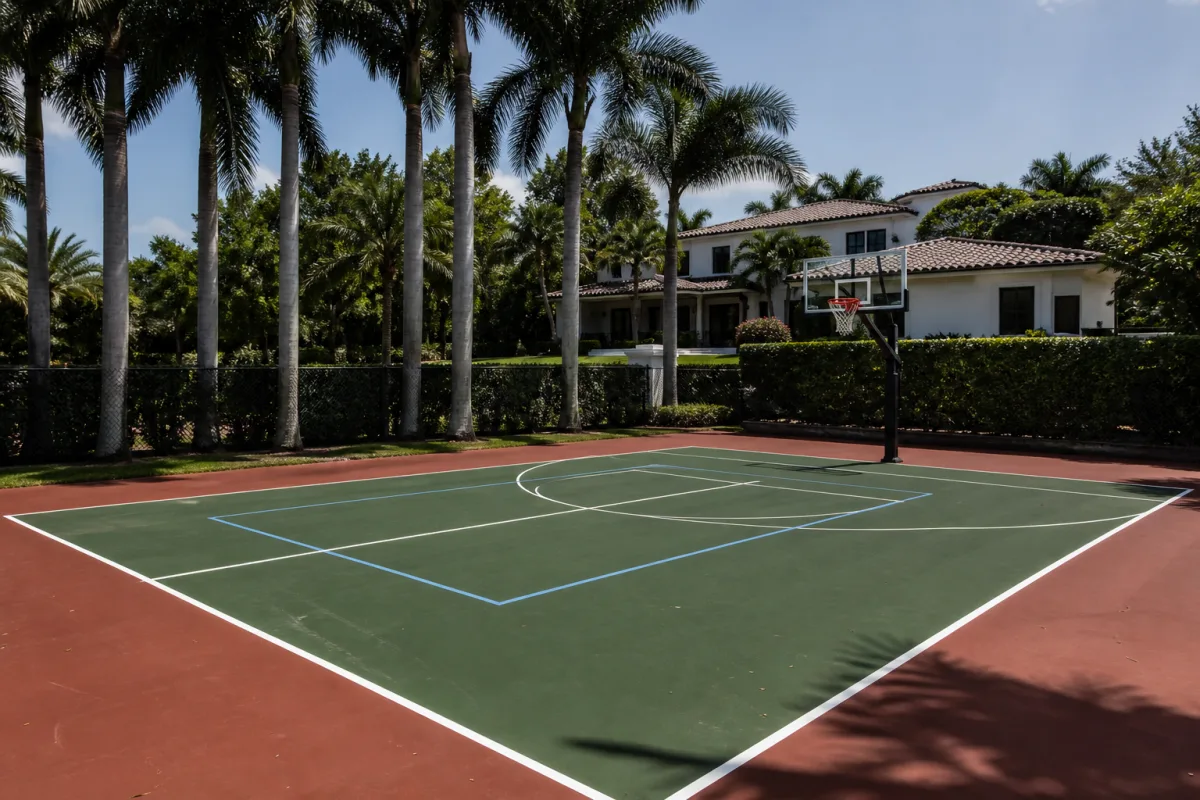
Court systems
Poured court systems built over your slab
One seamless build over asphalt or concrete, marked for the games you actually play.
One seamless build over asphalt or concrete, marked for the games you actually play.
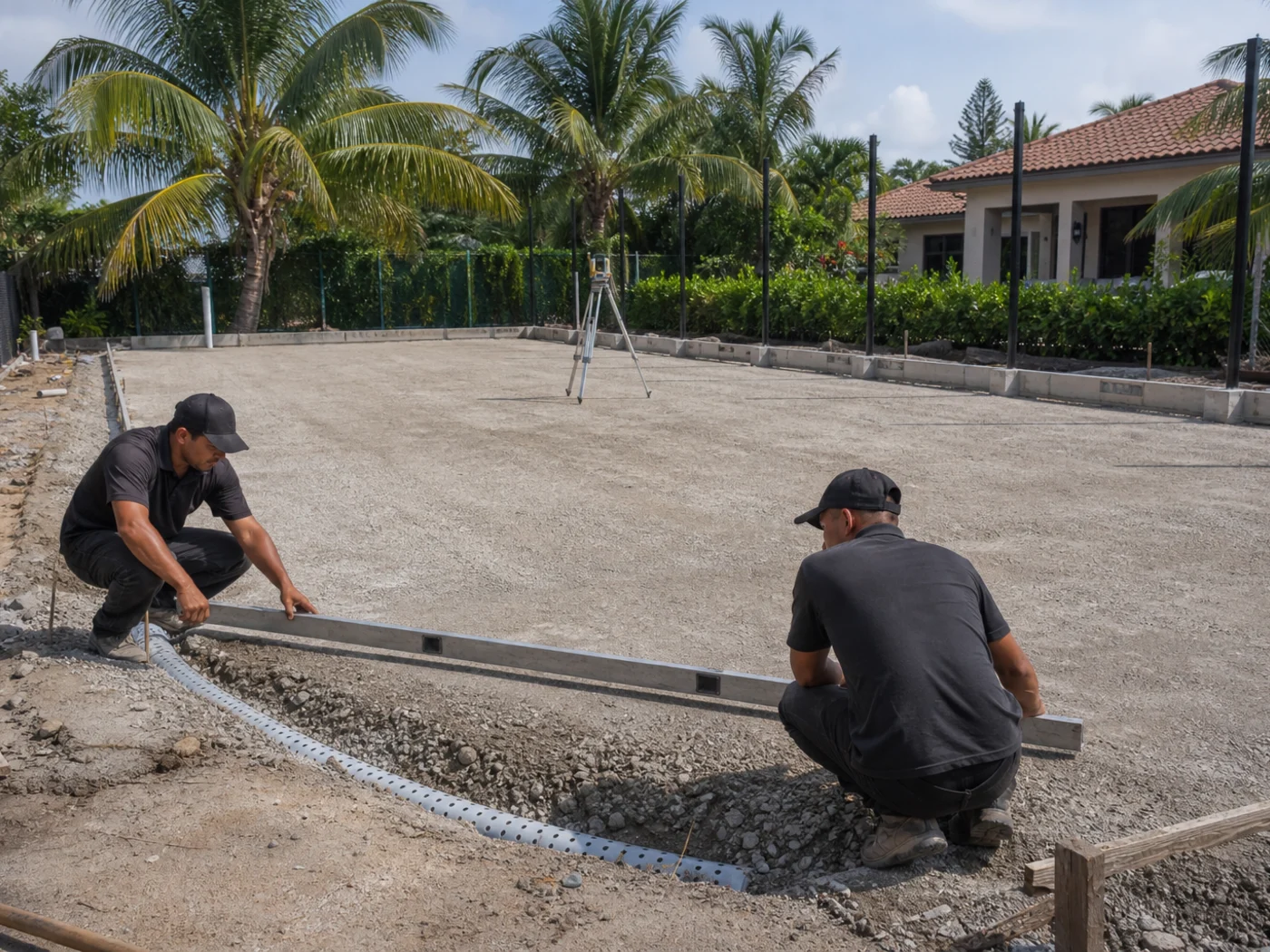
Nothing goes down until we know what is underneath. Asphalt and concrete behave differently, so each one gets its own prep. Concrete is ground and primed so the system bonds instead of floating on a sealed slab. Asphalt gets checked for shoving and soft spots, because heat has already been working on it for years down here. After prep comes the primer, then the elastic body of bound rubber granule, then the sealed wear coat that takes the shoes and the ball. All of it goes down wet and cures into one piece, so there is no board joint, no tile edge and no bead of sealant waiting to fail. You see that whole build once, during construction, and never again.
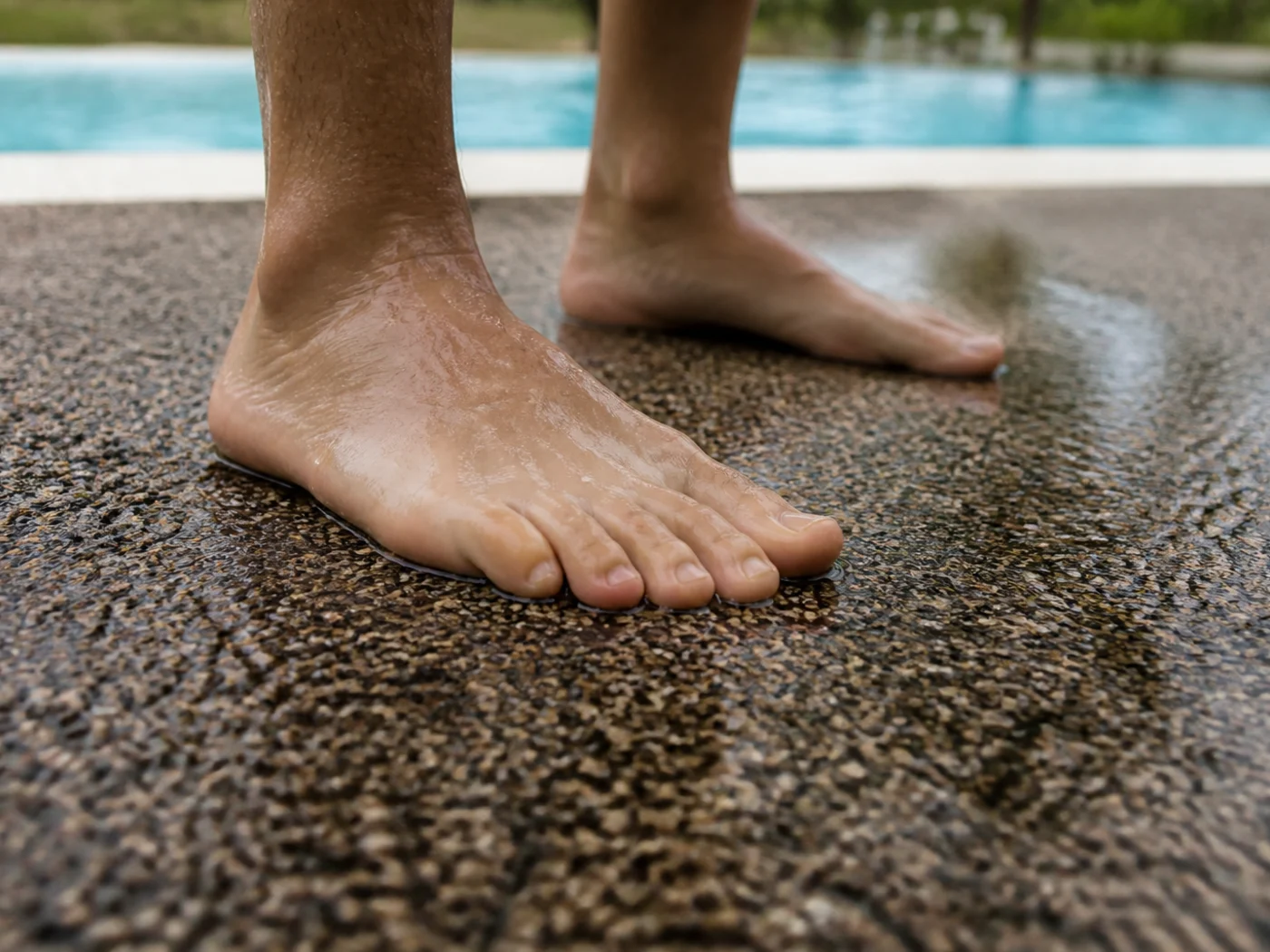
A bare slab sends every landing straight back up through your ankles and knees. The elastic layer under a poured court absorbs part of that hit, which is why an hour of pickup basketball feels different on it. Pace comes from the wear coat above. A smoother finish plays quicker for tennis, a slightly coarser one holds the foot better for basketball and pickleball, and we set it for whoever is actually on the court most weeks. Grip after rain matters more here than in most places. A Florida storm passes fast and people want straight back on. The texture we finish with sheds water and keeps footing once the standing water has gone.
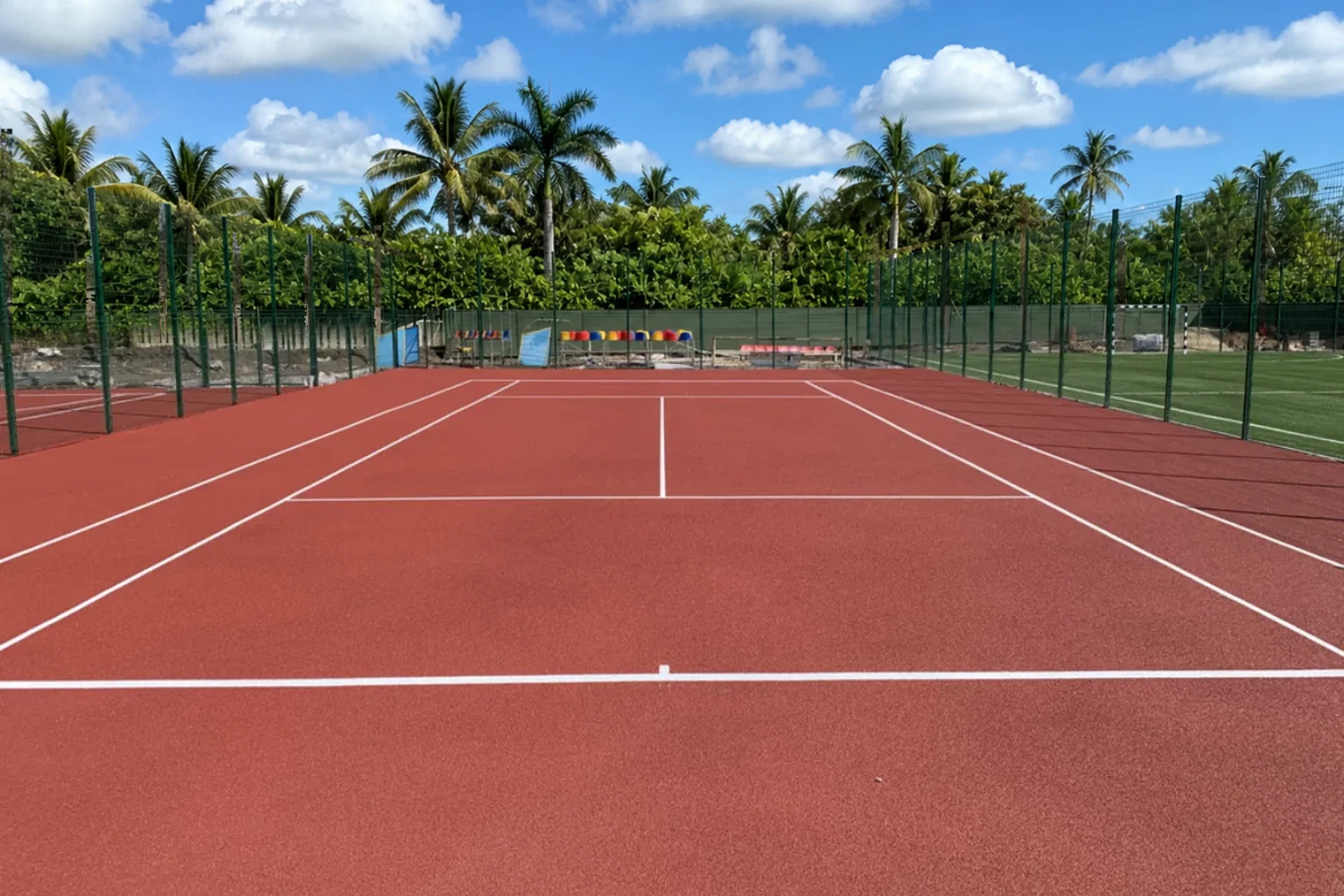
Markings are the first thing to go on a painted court. Ours are laid as part of the surface, in a color that contrasts with the field around it, so they wear down with the court instead of peeling off the top of it. We set out from a measured center and check the diagonals before anything is struck, because a court that is out of square shows up on every serve. Tennis, basketball and pickleball each have their own set out, and the order the lines go down in decides how clean the finished court reads. If the court hosts more than one game, we agree which lines lead and which sit back before the first one is marked.
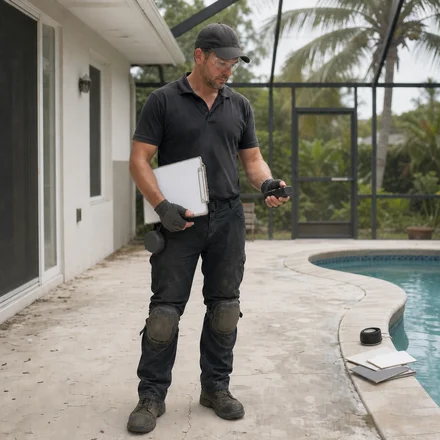 1
1We visit within 24 hours, measure and hand you a fixed price.
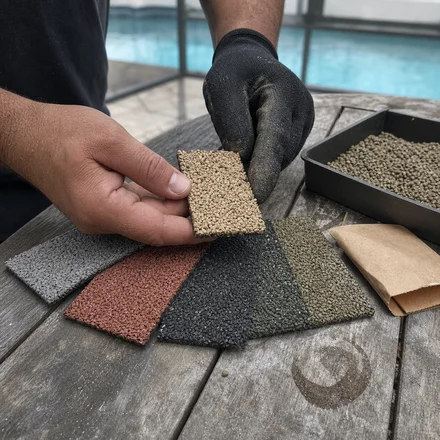 2
2Pick the blend and the depth. We repair the base so it holds.
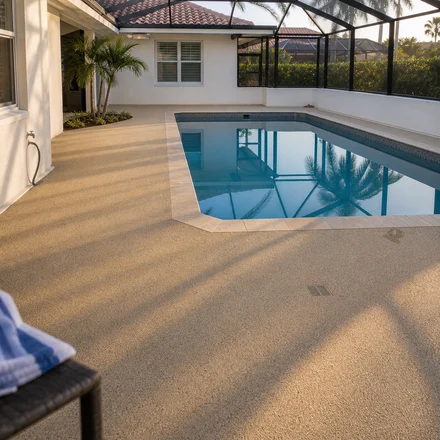 3
3Poured, cured and walkable in 24 to 48 hours.
In most cases yes. If the asphalt is stable and drains, we prep it, prime it and build the system straight on top, which saves you the demolition and the haul away. If it is shoving, cracked through or holding water after every storm, we say so at the measurement and price the repair as a line in the quote rather than finding it later and asking you for more.
Thickness comes from the sport and from how hard the court gets used. A club tennis court, a middle school basketball slab and a pair of HOA pickleball courts all get a different build. We set the depth at the measurement, write it into the quote, then check it with a gauge in the wet surface as we pour. What you paid for is what went down.
Color choice does most of the work here. Dark greens and blues take in more sun than mid tones, so on an open court with no shade we push you toward the lighter side of the palette. It is a sports surface and not a pool deck, so it will still be warm in August. Morning and evening play is the honest answer for July in South Florida.
We measure free within 24 hours of your call and hand you a fixed written price off that visit, with no deposit taken at the estimate. From there most courts sit 1 to 3 days on site. School calendars and hurricane season move dates around more than our schedule does, so if you have a window in mind, say it at the measurement and we book to it.
If your slab has to carry basketball and pickleball at the same time, see how we handle shared court layouts.
Free on-site measurement within 24 hours. No obligation.