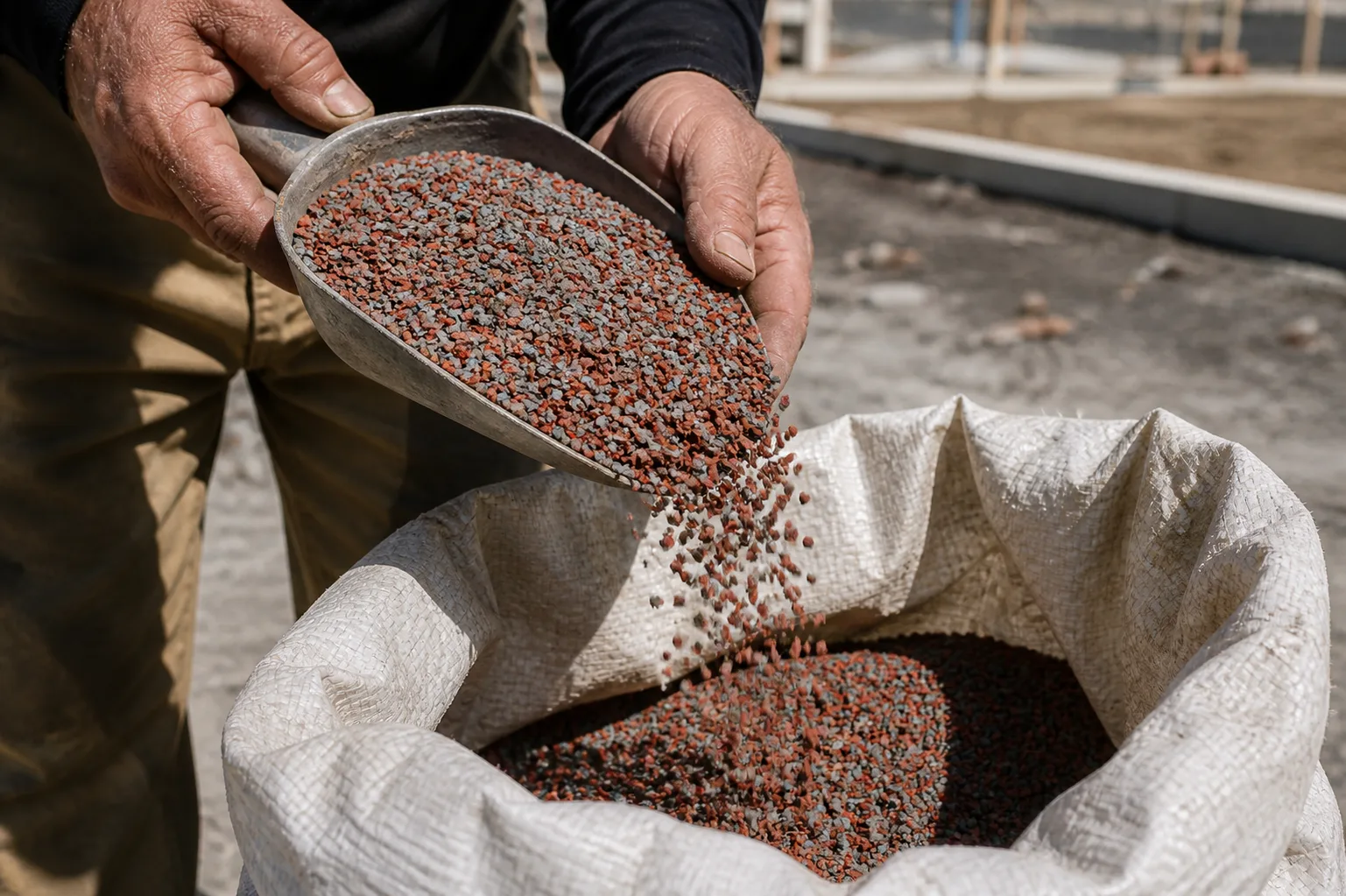
We pour aliphatic polyurethane binder, so your deck holds its color in full sun instead of going amber by the second summer. Pot life is picked slow, medium or fast to match the day your deck is poured.
Binder that yellows and chalks by the second summer
Pot life too short for a hot afternoon pour
Adhesive that lets a sloped deck creep
How we handle it
✓Slow, medium and fast. Pot life picked for the day your deck is poured.
✓Aliphatic grades. Color holds under direct sun instead of going amber.
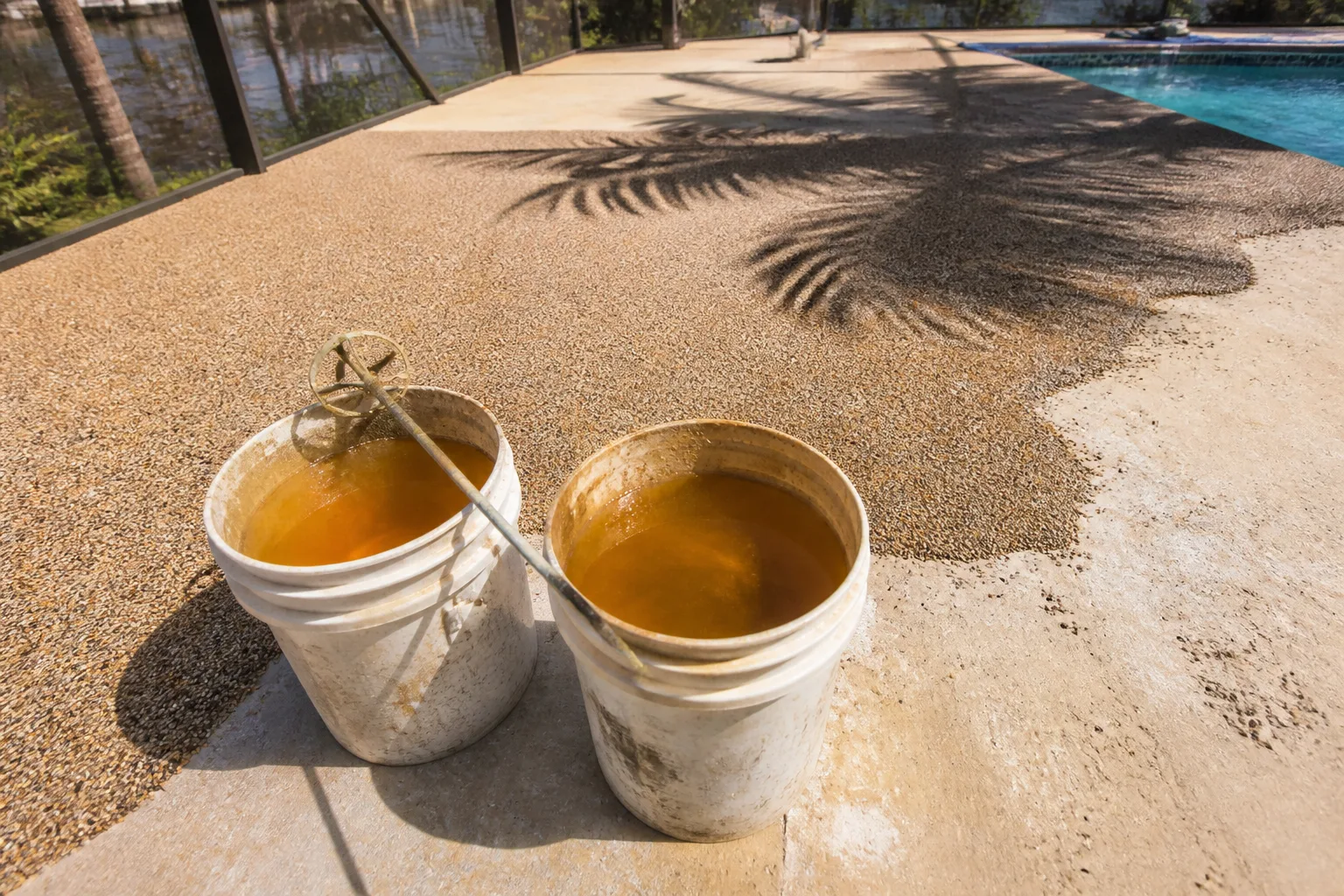
✓Stone work too. Two part binders for pebble and stone carpet.
✓Mixed by weight. Ratios on a scale, not by eye, so cure is the same across the deck.
The binder is the polyurethane resin that glues the rubber together. Two families exist. Aromatic binder is cheaper and ambers under ultraviolet light. Aliphatic binder holds its color in direct sun. In Florida we put aliphatic on anything the sun hits, and keep aromatic for shaded lanais and for layers that sit under a colored top.
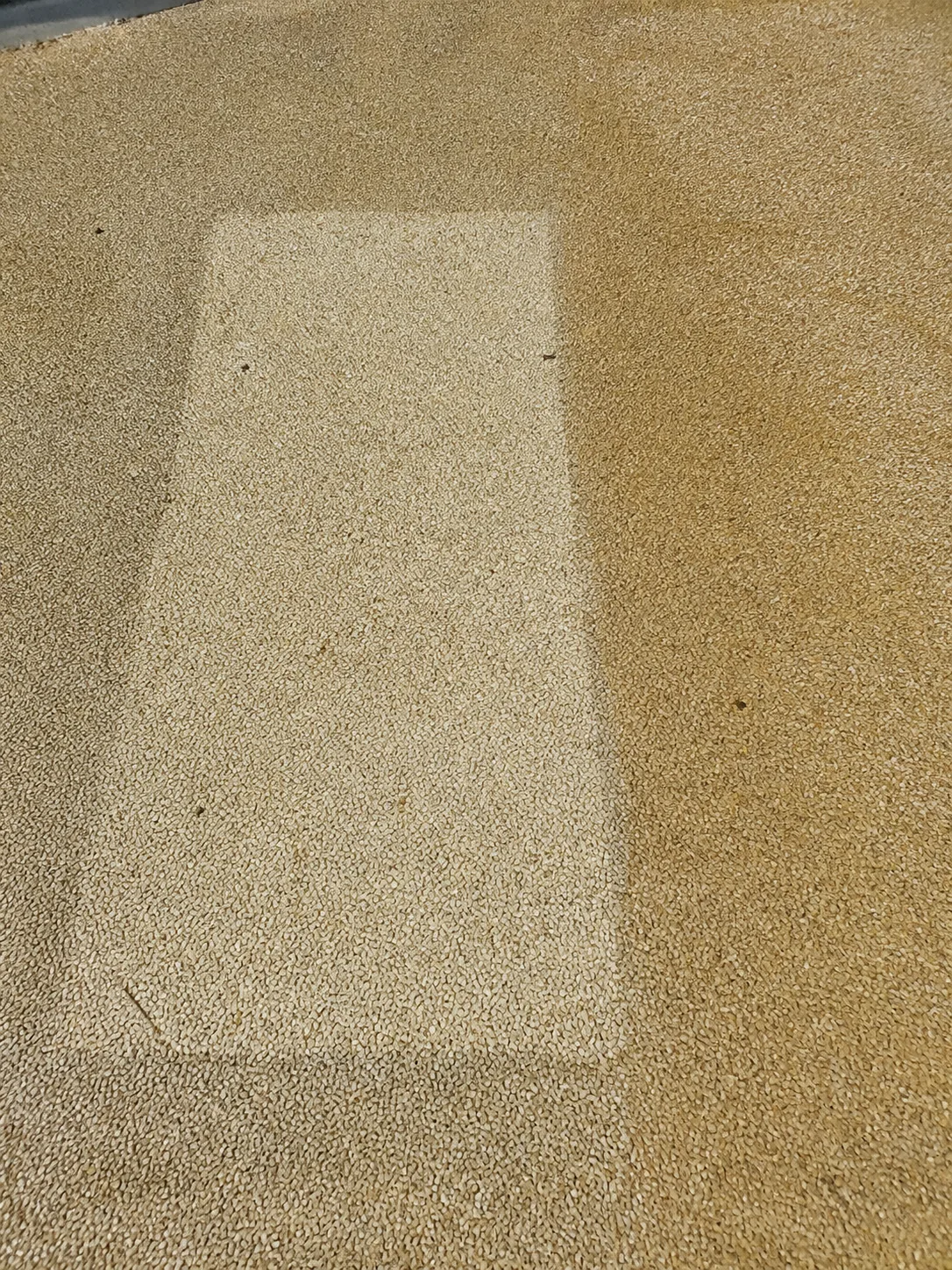
When a rubber deck goes yellow, the rubber did not change. The binder did. Aromatic polyurethane breaks down under ultraviolet light and turns amber, and once the film goes amber every color under it reads warmer. Light gray drifts toward tan. White stops being white. You see it clearest where a planter or a rail has shaded one strip of deck, because the covered line stays the shade you picked while everything around it has moved. Aliphatic binder is built to take the ultraviolet hit without changing color. It costs more per gallon. On an open deck in South Florida that cost is not optional, because a deck here takes sun a deck up north never sees.
The shaded strip is the color you picked, the rest is aromatic binder gone amber.
Pot life against the heat
Pot life is how long the mix stays workable after the binder goes in. It is written for a mild day. On a July afternoon in Hollywood the pan heats up, the reaction runs faster, and that window shrinks hard. A crew working with the wrong grade throws away half a batch and leaves a seam where fresh mix met a batch that had already stiffened. So we pick the speed off the forecast. Slow grades for the hot part of the day, faster grades for a cool morning or a job in shade. Humidity counts too, since these binders cure on moisture in the air. We watch the radar as well, because an afternoon downpour on a green pour ruins it.
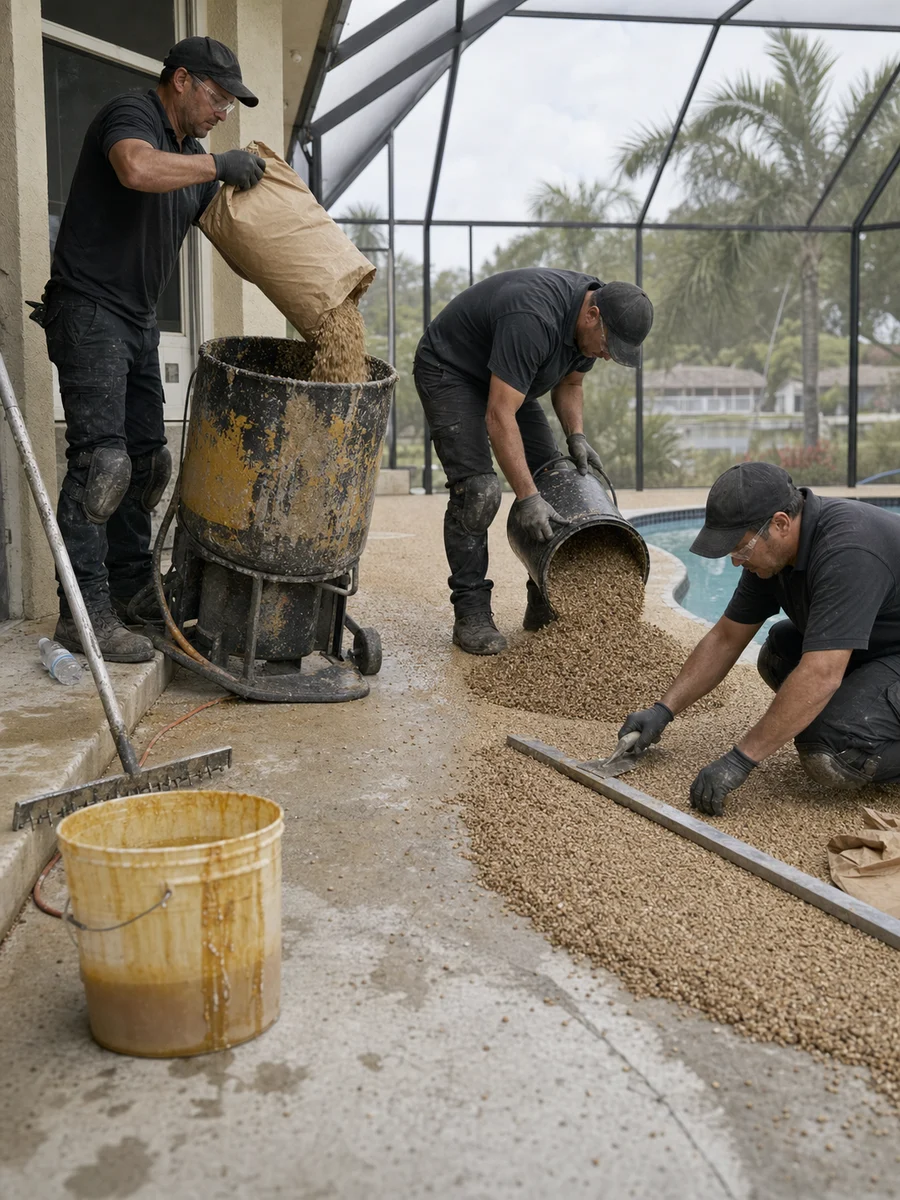
Batches are timed so each one meets the last while both are still open.
Weighed, never poured by eye
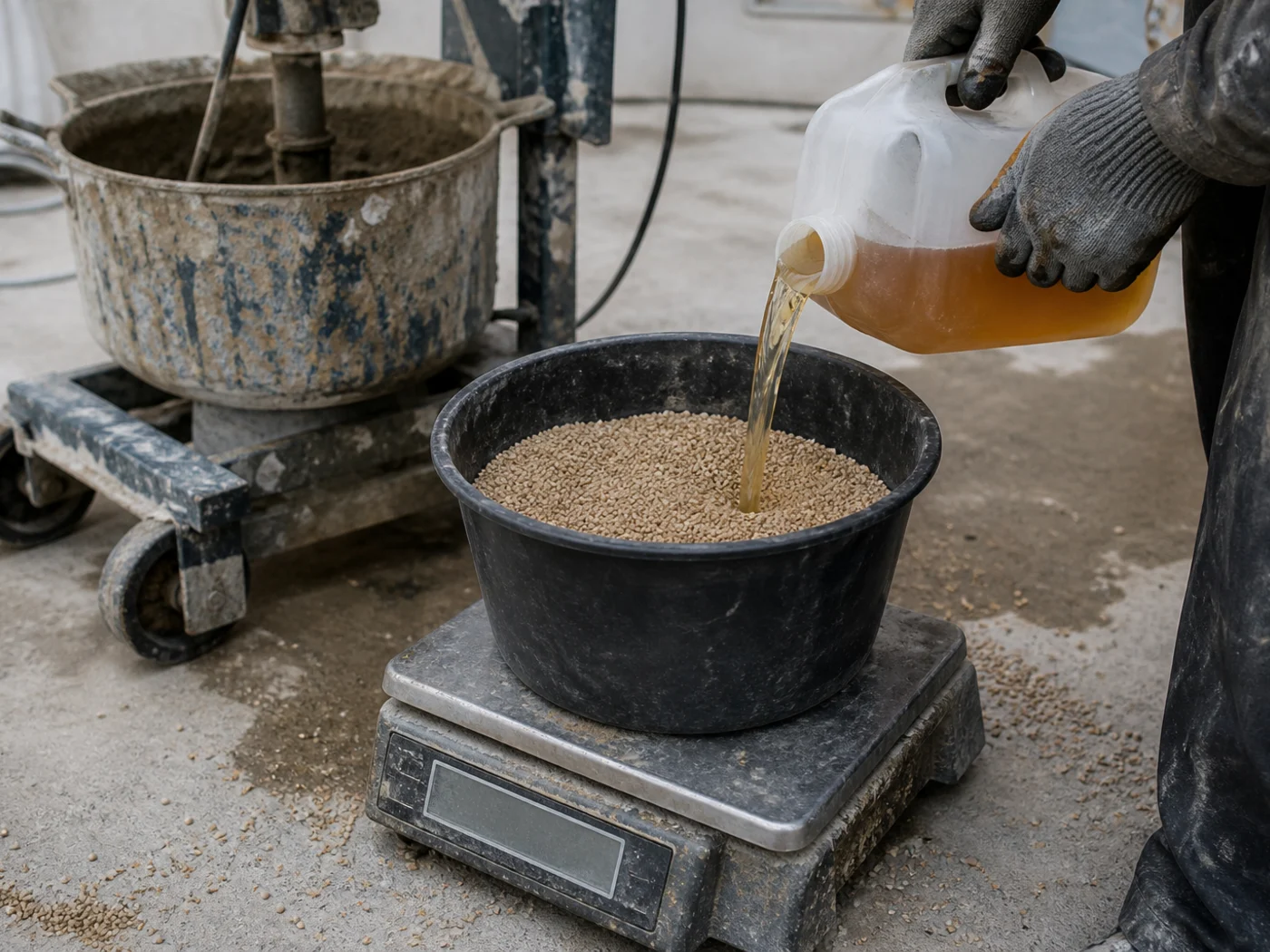
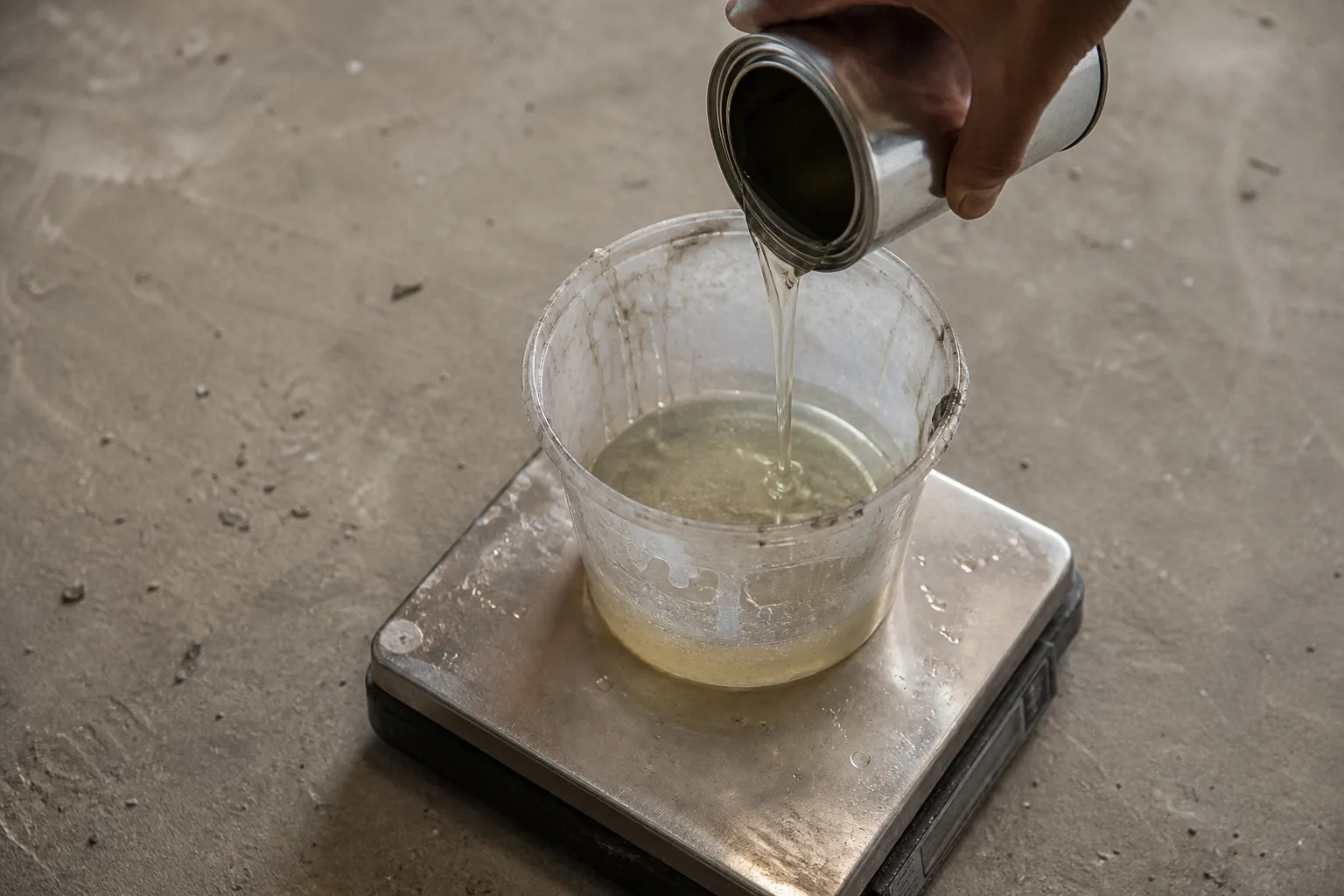
Ratio is the part you never see and the part that decides everything. Too little binder and the surface sheds grains under a hose. Too much and it skins over glossy and slick, which is the last thing you want beside a pool. Eyeballing a jug into a mixer gets you both faults on the same deck, one at each end of it. Every batch on our jobs goes on a scale. Granule weighed, binder weighed, same numbers all day, so the cure is identical from the first pan to the last one. It also means a repair years from now can be mixed to the same recipe. On sloped decks we run an adhesive coat under the pour so nothing creeps downhill in the heat.
Every pan is weighed, so the last batch of the day cures like the first one.
How it works
1
Free on-site measurement
We visit within 24 hours, measure and hand you a fixed price.
2
Design and colour choice
Pick the blend and the depth. We repair the base so it holds.
3
Installed in 1 to 3 days
Poured, cured and walkable in 24 to 48 hours.
What it costs
from $8per sq ft installed
✔ Base prep, crack treatment and priming included
✔ 2 year workmanship warranty included
✔ Fixed number after the free measurement
Already collecting quotes? Bring them to our visit. We go through them line by line, where they are padded, where they are fair, and where someone left out base prep that costs you in year two. You keep that breakdown either way.
Questions we get
Will an aliphatic binder stop my deck yellowing for good?
It stops the binder ambering, and that is what causes most of what people call yellowing. Dirt, pool chemicals, and iron in sprinkler water can still stain a light surface, but that is a cleaning matter, not a binder failure. A hose handles most of it. Before you sign anything we tell you which colors hide Florida water staining best.
Can you pour during the rainy season?
Yes, we pour right through the summer. We start early, watch the radar, and work in sections we can close out before an afternoon cell arrives. If a storm parks on us we stop and come back, because water on a fresh pour leaves a mark you cannot buff out later. That is one reason a job runs 1 to 3 days on site instead of one fixed day.
Does pool chlorine attack the binder?
Splash out and normal pool water do not. Trouble comes from chemical sitting on the surface, a tablet dropped on the deck or shock spilled from the bucket and left in the sun for a day. Rinse a spill off and you will not see a mark. On the walkthrough we point out the spots near the equipment pad where this usually happens.
How soon can we walk on it after the binder goes down?
Walkable after 24 to 48 hours of curing, and here it usually lands at the warm end of that. Heat speeds the cure, heavy humidity slows it. Furniture and planters go back a little later so nothing presses into a surface that is still firming up. We give you the exact times for your deck before we leave the site.
Binder and resin are not the same material, and the matched kits we mix for stone work sit on the epoxy resin page.
The rest of what goes in
Same surface, other components. Each one named on your written quote.
 1
1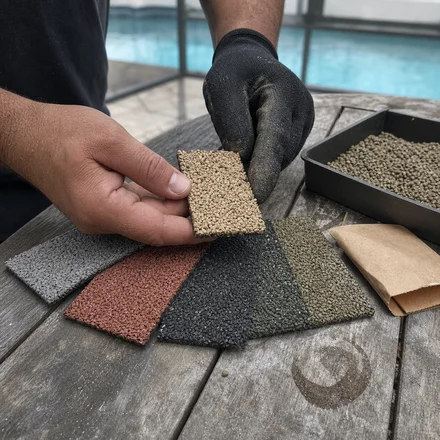 2
2 3
3