What Pour In Place Rubber Surfacing Is
Mixed on your property and troweled down as one sheet, from 8 dollars per sq ft.
Poured versus tiles and rolls
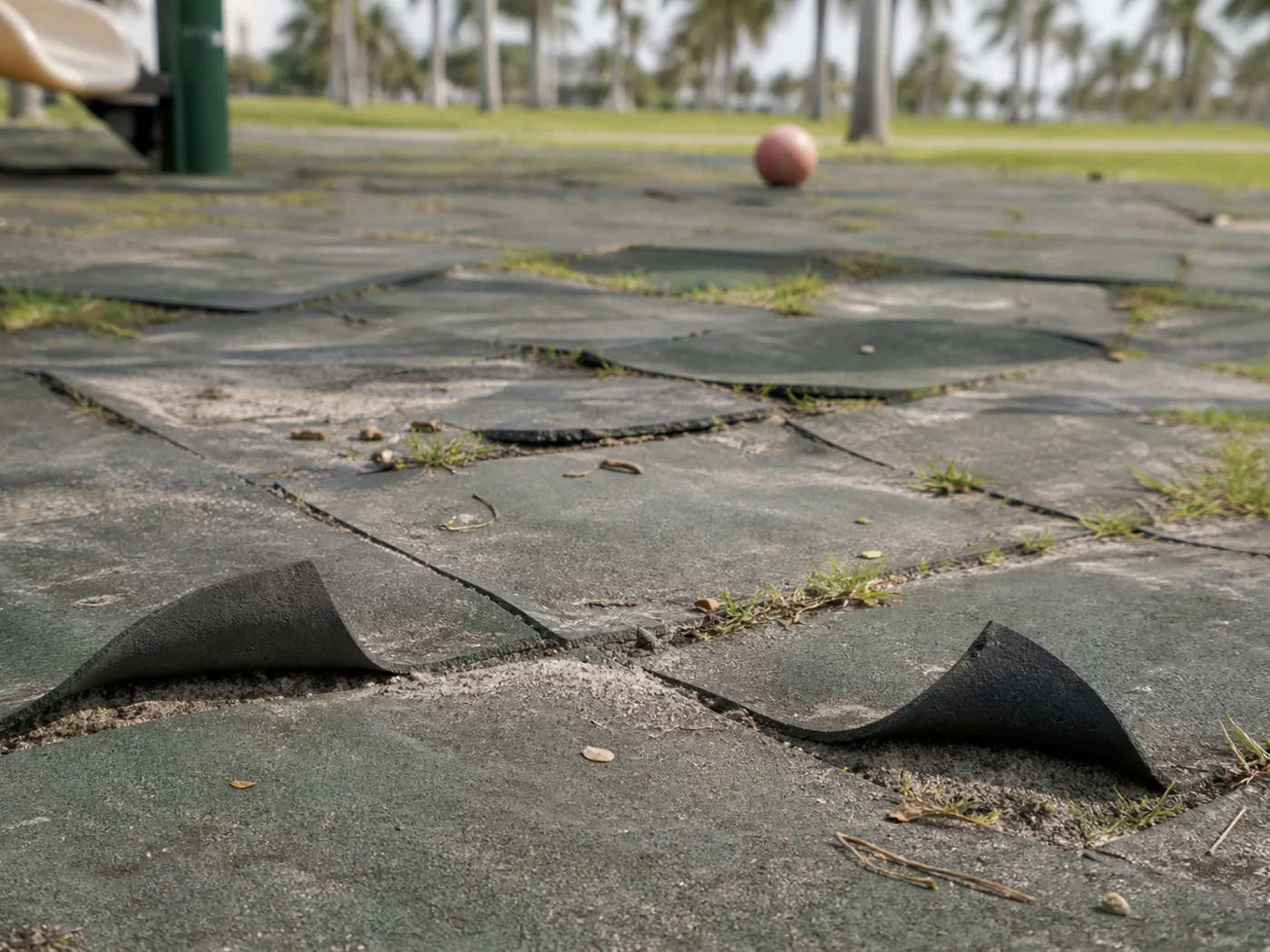
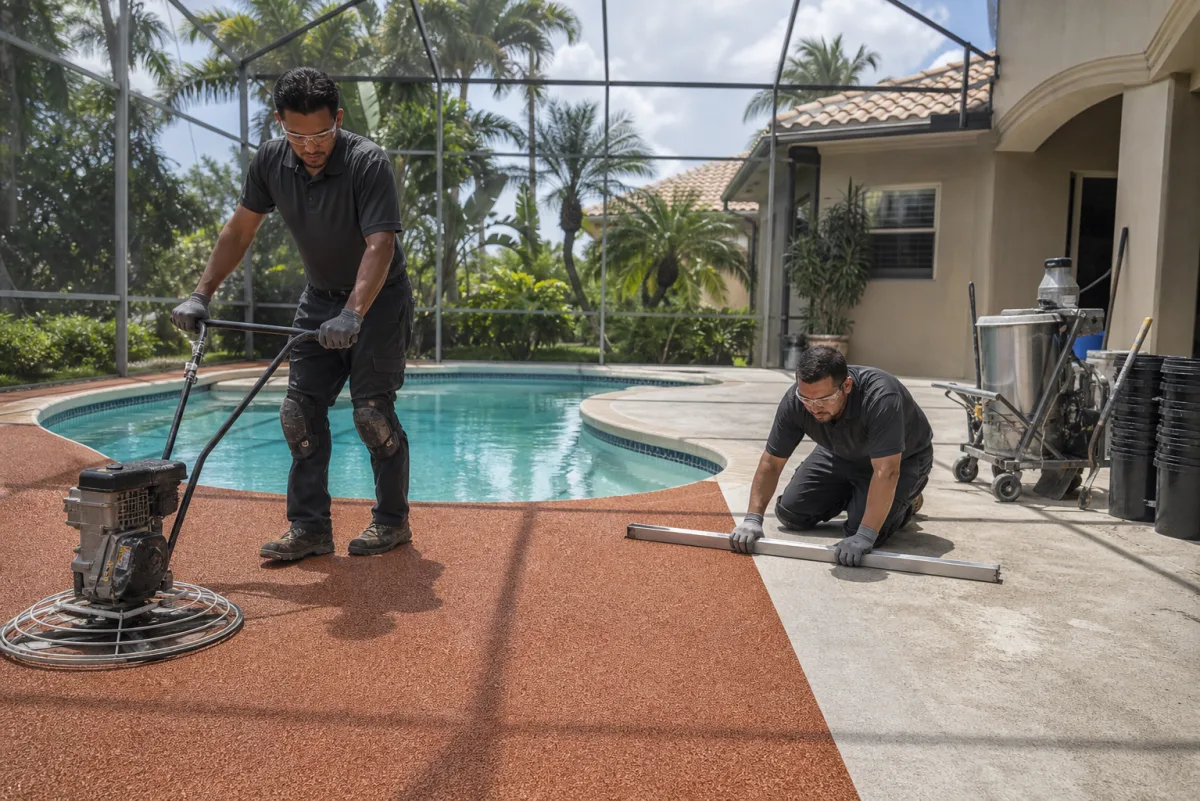
Tiles and rolls arrive finished. Somebody cuts them to fit your shape and glues them down, and every place two pieces meet is a joint. Pour in place arrives as loose granule and liquid binder in buckets. The crew mixes it on your property, spreads it against screed rails and closes it with a trowel, so the finished surface is one piece from edge to edge. That is the whole difference and it decides everything else. A poured surface wraps a post, a drain or a kidney shaped pool without a single cut line. Tiles have to be cut, and each cut edge is where water gets under the adhesive first. Poured also drains through itself instead of running to the low corner, which matters more here than anywhere. The trade is that it has to be laid by a crew, on site, in one working session.
The two layer build
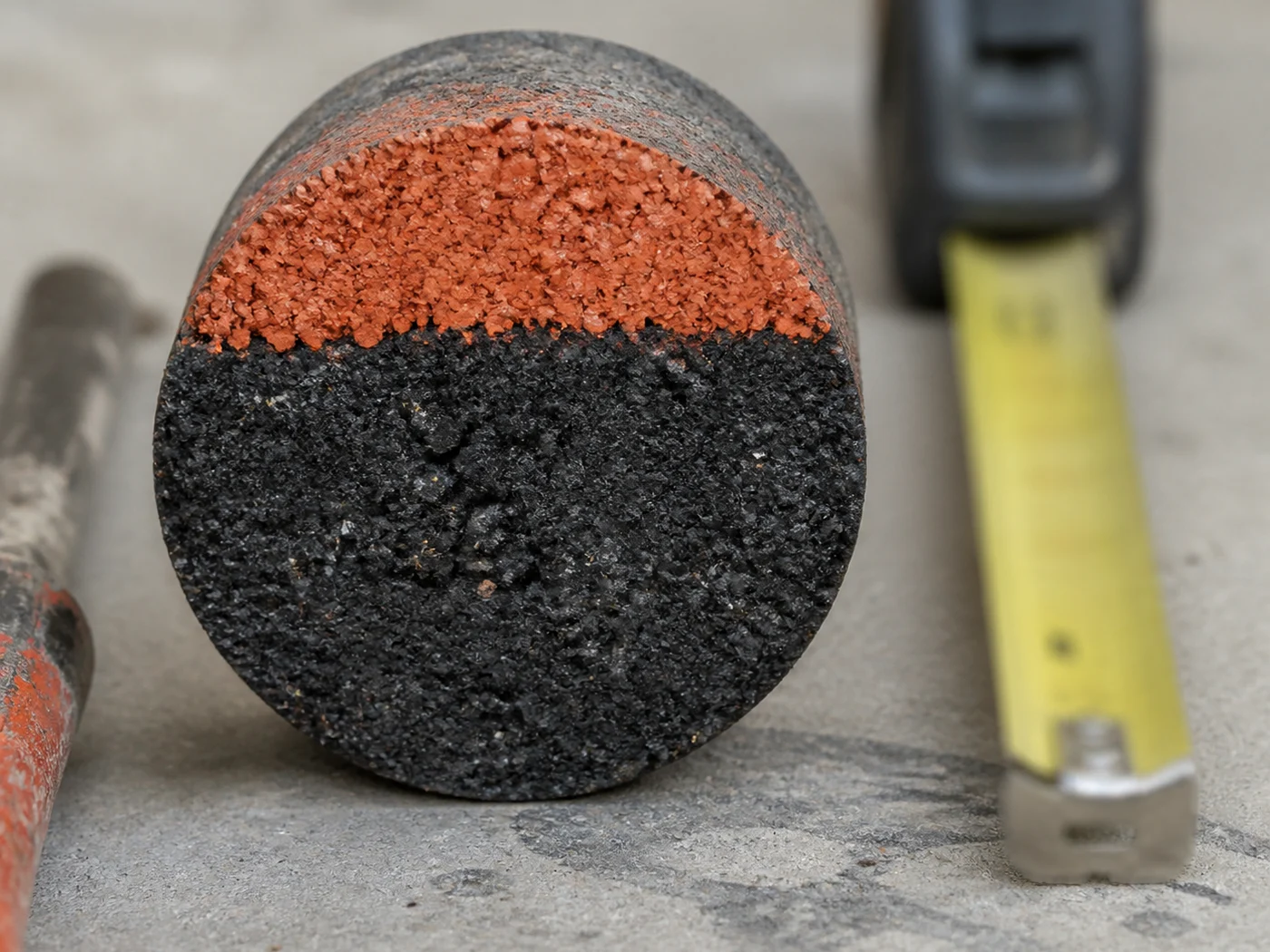
Two layers do two different jobs. The bottom layer is black SBR, recycled tire rubber ground and screened, and it carries the depth and the give. The top layer is EPDM, a colored granule made to sit in sunlight, and it is the part your feet and your eyes actually meet. The colored layer goes on while the base is still green, so the two lock into one body instead of stacking as two sheets. On thin work over sound concrete a single layer is possible. Under play equipment the cushion has to be deep, and paying for colored granule all the way down buys you nothing you can see, so the two layer build is what gets specified. Binder ratio is the quiet part of the job. Short on binder and the top skins off early. Heavy on binder and the surface seals over and stops draining.
Where it goes, what it costs
Pool decks and playgrounds are most of it here. After those it is patios, walkways, splash pad surrounds, dog runs, roof terraces, gym floors and the run from the back door to the dock. The base can be concrete or asphalt or compacted stone, and it has to be sound and it has to drain. You are looking at 8 dollars per sq ft installed and up. What moves the number is area, depth, how much of the surface is colored EPDM against black base, and what shape your slab is in before anyone mixes anything. We are in Hollywood FL and we pour across Broward, Miami-Dade and Palm Beach. Free measurement within 24 hours, fixed written price, 1 to 3 days on site, walkable after 24 to 48 hours, 2 year workmanship warranty. We have poured more than 1.6M sq ft since 2013.
Questions we get
What is the difference between pour in place and poured in place?
Same surface, two spellings. The trade writes pour in place, poured in place and wet pour for the same thing, granule and binder mixed on site and laid seamless. Tile and roll goods are the opposite, made in a factory and cut to fit. If a quote says poured in place and yours says pour in place, you are comparing the same product.
Can pour in place rubber go over my existing concrete?
Usually yes, and that is most of what we pour. We open the face with a grinder, treat the cracks, prime it and lay the rubber straight over the old concrete. No demolition, no dumpster, and your door threshold barely moves. Where a slab is heaving or holding water after rain, we tell you at the free measurement and the fix is priced before the surface is.
How long does a pour in place rubber surface take to install?
Most jobs are 1 to 3 days on site. Day one is base prep and priming, then the pour, then the edges and the trowel finish. You stay off it 24 to 48 hours while it cures, so a Friday start usually means a Monday back in use. Large lots get poured in sections so every batch is placed while it is still workable.
Does pour in place rubber get slippery when it rains?
No. The finished face is granule, not a smooth film, so it has texture in every direction and water goes through the surface rather than standing on it in a sheet. That is the opposite of a sealed pool deck, which gets slick the moment it is wet. It is also cooler, 99 F on light rubber where bare concrete reads 155 F on a 91 F afternoon.
Can I DIY rubber surfacing myself?
Small patches yes, a full pour in place rubber surface no. Ready mixed patch kits cover a few square feet and will fix a lifted edge, a gouge or a spot where a table leg dug in. A whole surface is different. Granule and binder are proportioned by weight, not by eye, and blended in a forced action mixer, then spread and hand troweled inside the pot life of the resin. In Florida heat that window is short, and a batch that sits too long cures crumbly. Get the ratio wrong and the surface either stays tacky or breaks up underfoot within a season.
The mix, the layers and the base it needs are set out on our poured rubber technology page.