Rubber Paving Poured Over Your Concrete
Walkways, patios, pool surrounds and driveways get a seamless rubber wear layer, no tear out.
What rubber paving actually is
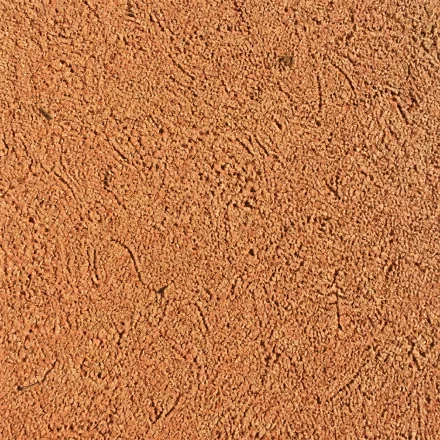
Homeowners say rubber paving. The trade says poured rubber, wet pour or pour in place. Same product. Rubber granule and a binder go down wet and cure into a wear layer that is bonded to the slab underneath, so there is no unit to shift and no joint to open. Nothing is torn out first. Grinding, crack treatment and primer come first, then the rubber goes down in one working session. That is why a resurface does not raise your slider sill by a step or fill your yard with broken slab. Underfoot you get texture rather than a sealed sheet, so rain drains down through the layer instead of running to one puddle by the pool gate. Pricing starts at 8 dollars per sq ft installed. What moves it is area, depth and the condition of the slab you already own.
Poured rubber versus rubber pavers
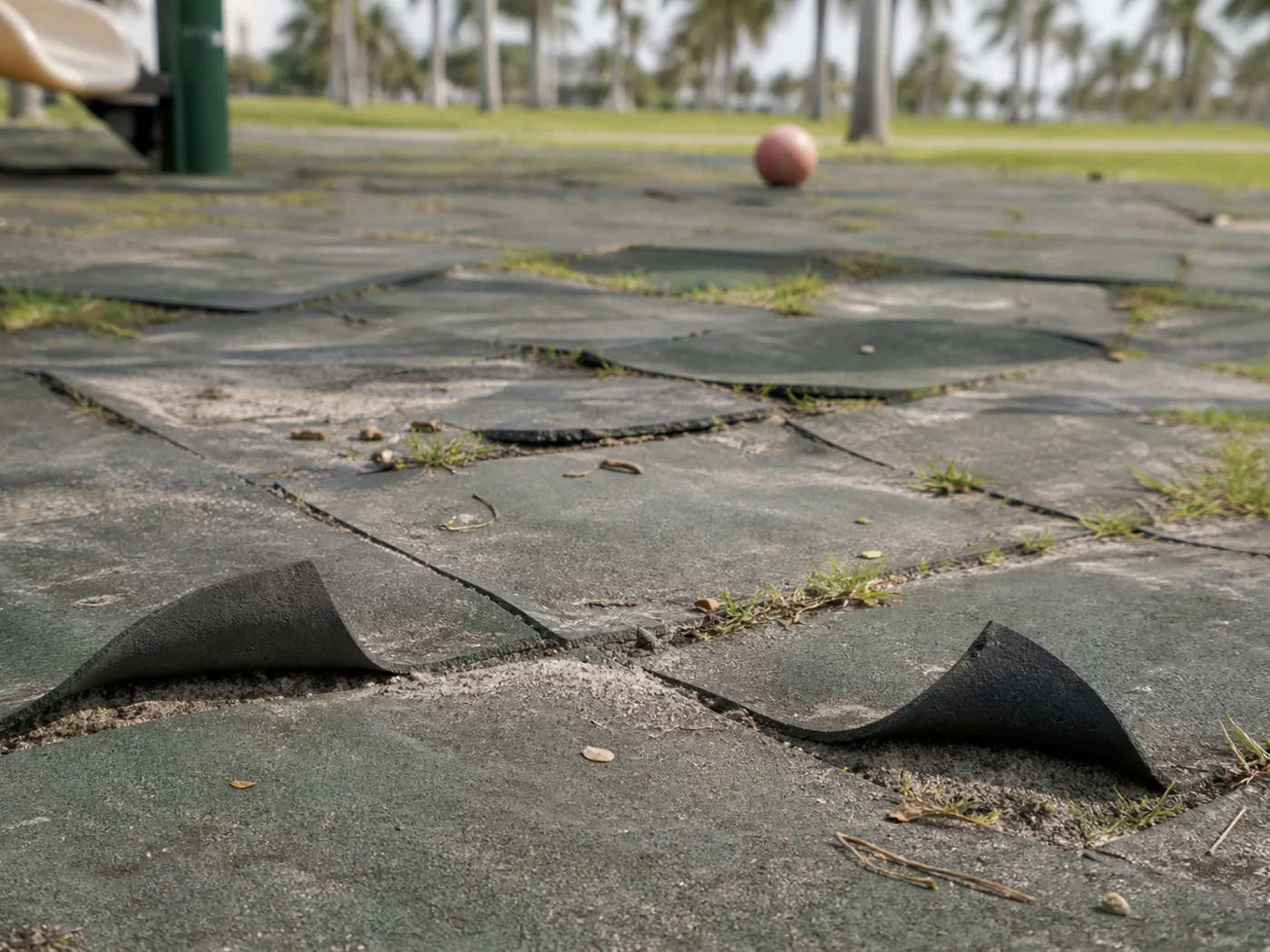
Rubber pavers and interlocking rubber tiles are the other products sold as rubber paving. They arrive finished in a box. Somebody sets them or glues them down, and every place two of them meet is a line. That line is the whole story here, because the surface is wet far more of the year than it is dry. Water tracks under an edge, the glue quits, and one corner starts standing proud of the rest. After that you own a trip hazard and a patch that never quite matches. Poured has no line to fail. It also takes a shape. A kidney pool, a curved walk, a planter box, all of it comes out as one piece with no cut edge in it. The honest cost is a crew on your property for a day or three in dry weather, instead of a pallet you unload yourself.
Heat, rain and where it goes
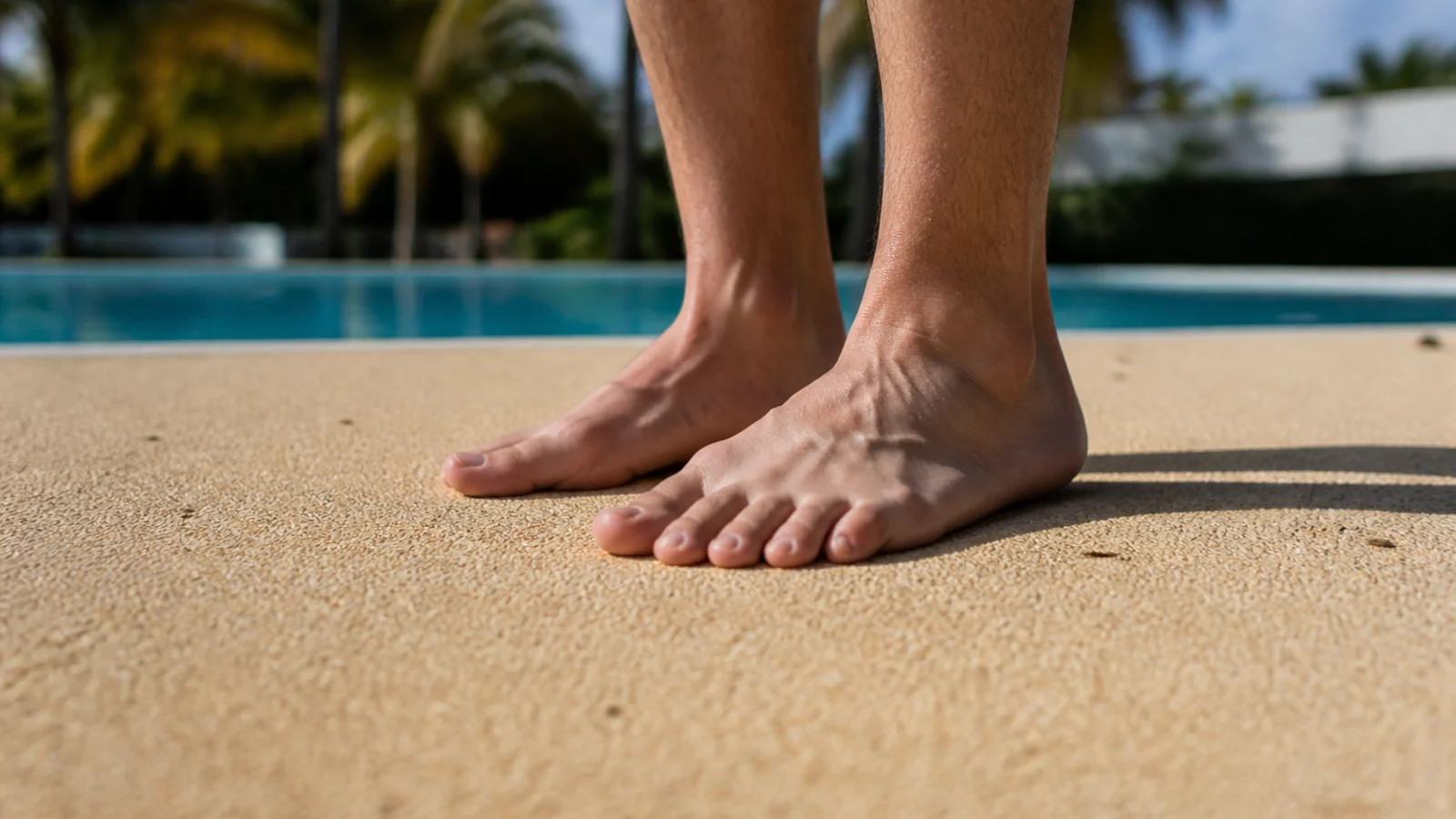
Two things here decide this. Heat first. On a 91 F afternoon we have measured 155 F on bare concrete, 134 F on tile and 99 F on a light rubber blend. Those are field measurements. That gap is why the pool surround and the path to the gate are the first places people pour. Rain second. Paint and sealer go glassy under water and hold it on the surface until it evaporates or finds the low spot. A granule surface keeps its bite and lets the water down through it. Beyond the pool, the usual list here is the front walk, the side yard run to the trash cans, the screened lanai floor and the driveway. Concrete or asphalt take it, as long as the slab is stable and water leaves it. If yours does not, you hear that at the free measurement before you get a number.
Questions we get
What is the difference between rubber paving and rubber pavers?
Rubber paving is the poured version. Rubber pavers are individual units you set down. The poured one cures as a single bonded layer with no unit to shift and no joint to open, so it holds shape on a curve and around a drain. Pavers can be lifted and moved by a homeowner, which is their one real advantage.
How much does rubber paving cost in South Florida?
Installed work starts at 8 dollars per sq ft. A small awkward walkway costs more per foot than a big open patio, because setup and edge work do not shrink with the area. You get one fixed written price after the free measurement, and that number is what you pay.
Can rubber paving go over an old cracked walkway?
Usually. Stable hairline cracking gets bridged by the layer above it, since the rubber flexes where the concrete cannot. Sections that crumble under a hammer get cut out and rebuilt first, and that repair is priced separately and shown to you before the surfacing is. A slab that pumps water at the joint or has dropped at one end needs the drainage fixed first.
How long before I can walk on it?
24 to 48 hours after the pour, depending on how warm and how humid that week is. Crews are on site 1 to 3 days for a normal house. Furniture and planters go back after the cure, not during it. Pool water and sprinklers stay off it until we tell you, because a wet cure is the one thing that marks a fresh surface.
If you want the trade version of this, with the layer build and the binder ratio, read pour in place rubber surfacing.