Aliphatic vs Aromatic Binder, Why It Matters in Florida Sun
Written by the crew that installs it
Aliphatic and aromatic describe the isocyanate chemistry inside the polyurethane binder that holds a stone carpet together. Aromatic binder costs less and yellows within 6 to 18 months of direct sun, so it belongs indoors or under permanent cover. Aliphatic binder stays clear for 8 to 10 years outdoors, which makes it the only sensible specification for a South Florida patio, pool deck or entry landing.
A stone carpet is only as good as the resin holding it. The aggregate sets the look, the binder sets the strength, the service life and whether the floor still reads clear after 3 Florida summers.
Picking the wrong resin is the most common reason a stone carpet looks tired after 1 or 2 seasons, and it is a decision made before anyone shows up on site.
What a stone carpet binder does
Stone carpet binder is a clear polyurethane resin blended with washed stone aggregate such as quartz, marble chip or river pebble. The mix is troweled out wet and cures into a seamless slab that drains straight through.
The resin has 4 jobs. It coats every stone so the aggregate locks into one body, it bonds that body to the concrete below, it carries the wear resistance of the finished floor, and it shields the stone from staining.
Resin content usually runs 8 to 12 percent of the mix by weight. Below that the stones are glued only at their contact points, and the surface starts shedding aggregate inside the first year.
Everything else comes down to which polyurethane chemistry that resin is built on.
What aromatic polyurethane is
Aromatic polyurethane is built on isocyanates that carry a benzene ring in the backbone. That ring absorbs ultraviolet light, and the absorbed energy breaks the polymer down at the surface.
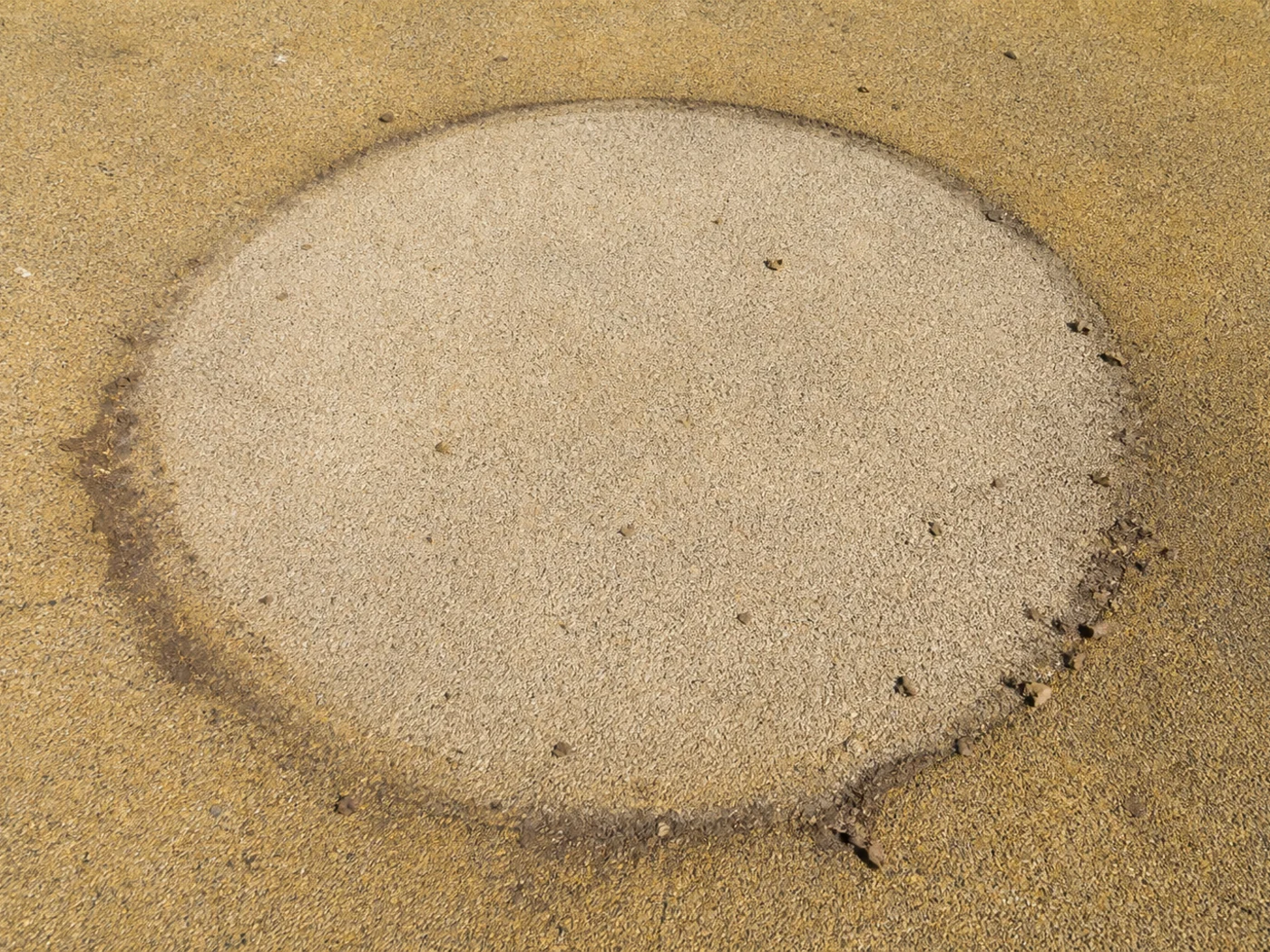
The visible result is ambering. A water clear resin turns straw, then honey, then brown. On white marble chip the shift is obvious by month 12. On dark aggregate it hides longer, but the resin is degrading at the same rate.
Aromatic resin is not a bad material. It cures predictably, it is the cheaper of the 2 chemistries, and indoors it holds clear for the life of the floor because nothing is attacking it. Garages, showrooms, storage rooms and fully covered walkways are all fair uses.
What aliphatic polyurethane is
Aliphatic polyurethane uses isocyanates with no benzene ring, so ultraviolet light has nothing to latch onto. The resin stays clear and the stone keeps the color it arrived with.
It costs roughly 1.5 to 2 times what aromatic resin costs per gallon. Across a finished job the difference is small per square foot, because resin is a minor share of a total made up mostly of aggregate, prep and labor.
Aliphatic resin also stays flexible longer. A deck that swings from 75 degrees F at dawn to 140 degrees F on a summer afternoon moves constantly, and a binder that has gone brittle cracks at the aggregate contact points first.
Which binder to choose for outdoor use
Anything in South Florida with open sky above it gets aliphatic binder. Pool decks, patios, entry landings, balconies, walkways and roof terraces all sit in that group.
The region runs close to 3000 hours of sunshine a year, with a high ultraviolet index across 9 months of it. That is a harder exposure than most of the country, and it is why a resin that survives 5 years in a northern state can be visibly amber here in 2.
The rule bites hardest on light aggregate. Whites, creams and pale grays show the shift first because there is no stone color to mask the resin. Charcoal and mixed brown blends buy time but do not solve it.
Aromatic binder outdoors is defensible only where the area is shaded all day and the owner has accepted a shorter refresh cycle.
| Property | Aromatic | Aliphatic |
|---|---|---|
| Behavior under ultraviolet | Ambers in sun | Stays clear |
| Time to visible change | 6 to 18 months | 8 to 10 years |
| Resin cost per gallon | Lower | 1.5 to 2 times higher |
| Flexibility over time | Goes brittle sooner | Stays flexible longer |
| Where it belongs | Indoors and under cover | Every surface open to sky |
Outdoors in South Florida the binder is aliphatic. Aromatic resin costs less and ambers within 6 to 18 months of direct sun, which turns a sound slab into a refinishing job.
What a quality binder has to deliver
A binder written into a specification should be documented on 6 counts.
- adhesion to primed concrete, verified by pull off testing
- moisture resistance with no clouding after standing water
- resistance to chlorine, salt spray and pool chemistry
- tensile strength that survives foot and cart traffic
- ultraviolet stability stated on the manufacturer data sheet
- stable viscosity and pot life across the working temperature range
Pot life matters more here than in a mild climate. At 90 degrees F a resin rated for 30 minutes of working time can stiffen in 15, so crews mix smaller batches and work in tighter sections.
Ask for the technical data sheet and the safety data sheet before the material is ordered. A supplier who cannot produce both is not selling a specified product.
How 1-component and 2-component kits differ
A 1-component binder ships ready to pour and cures on ambient humidity. Nothing has to be measured, which removes the most common site error and makes it the practical choice for tight schedules or crews that rotate.
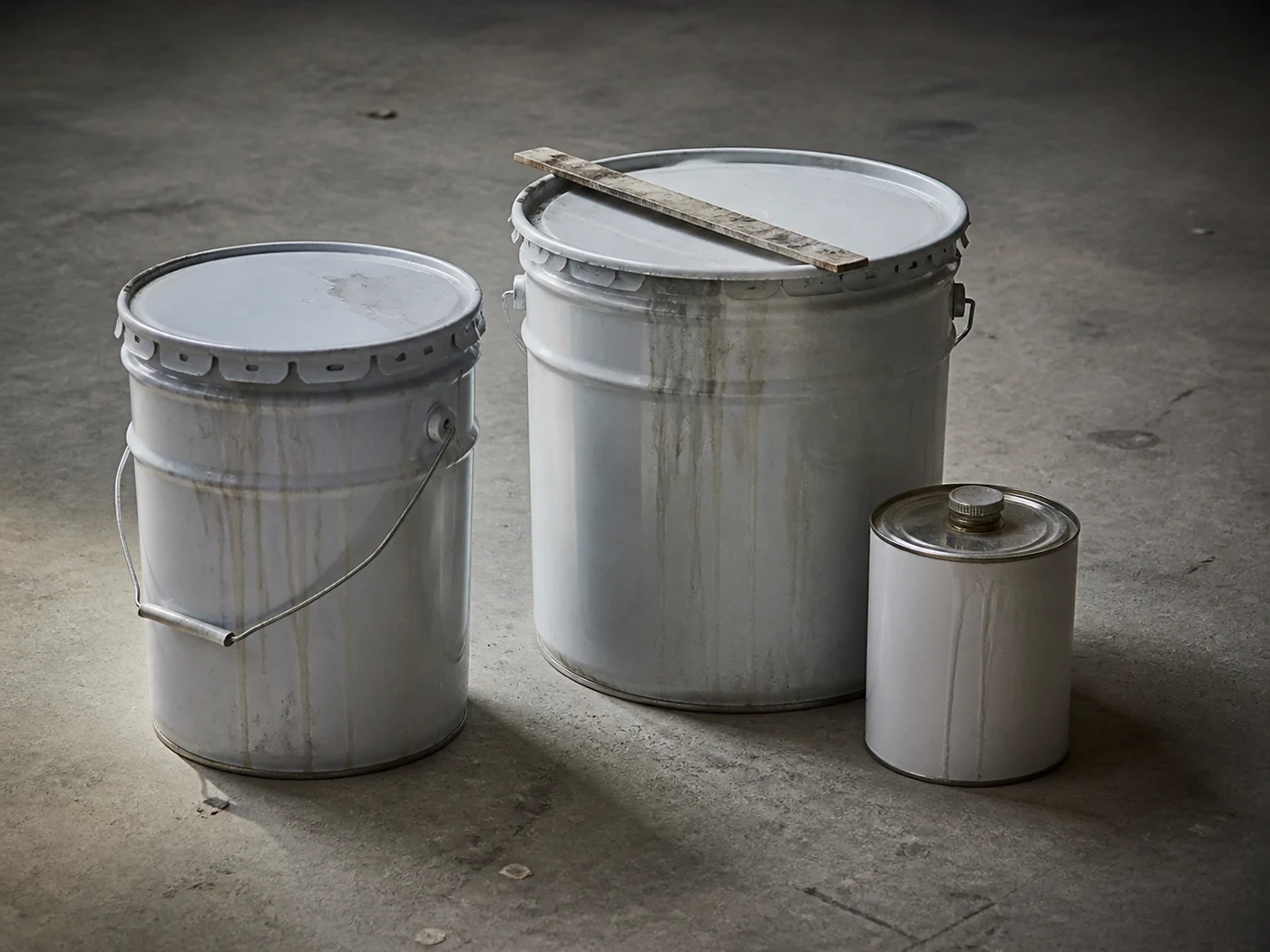
A 2-component binder ships as part a and part B, combined at a fixed ratio immediately before the aggregate goes in. Mixing has to run the full time the data sheet calls for, normally 2 to 3 minutes under power, until the mass is one color with no streaks left in it.
The payoff for the extra step is a denser cure and better chemical resistance, which is why 2-component systems show up on commercial decks and around pools.
Both chemistries fail the same way when the ratio drifts or mixing is cut short. Soft spots, tacky patches and aggregate that rakes loose under a broom all trace back to the mix, not to the resin itself.
What materials go in with the binder
The same resin is used with several aggregates, and the stone decides the texture far more than the resin does.
- quartz sand for hard wearing commercial floors
- marble chip for bright decorative work
- river pebble for patios and landscape edges
- crushed decorative stone where traction matters
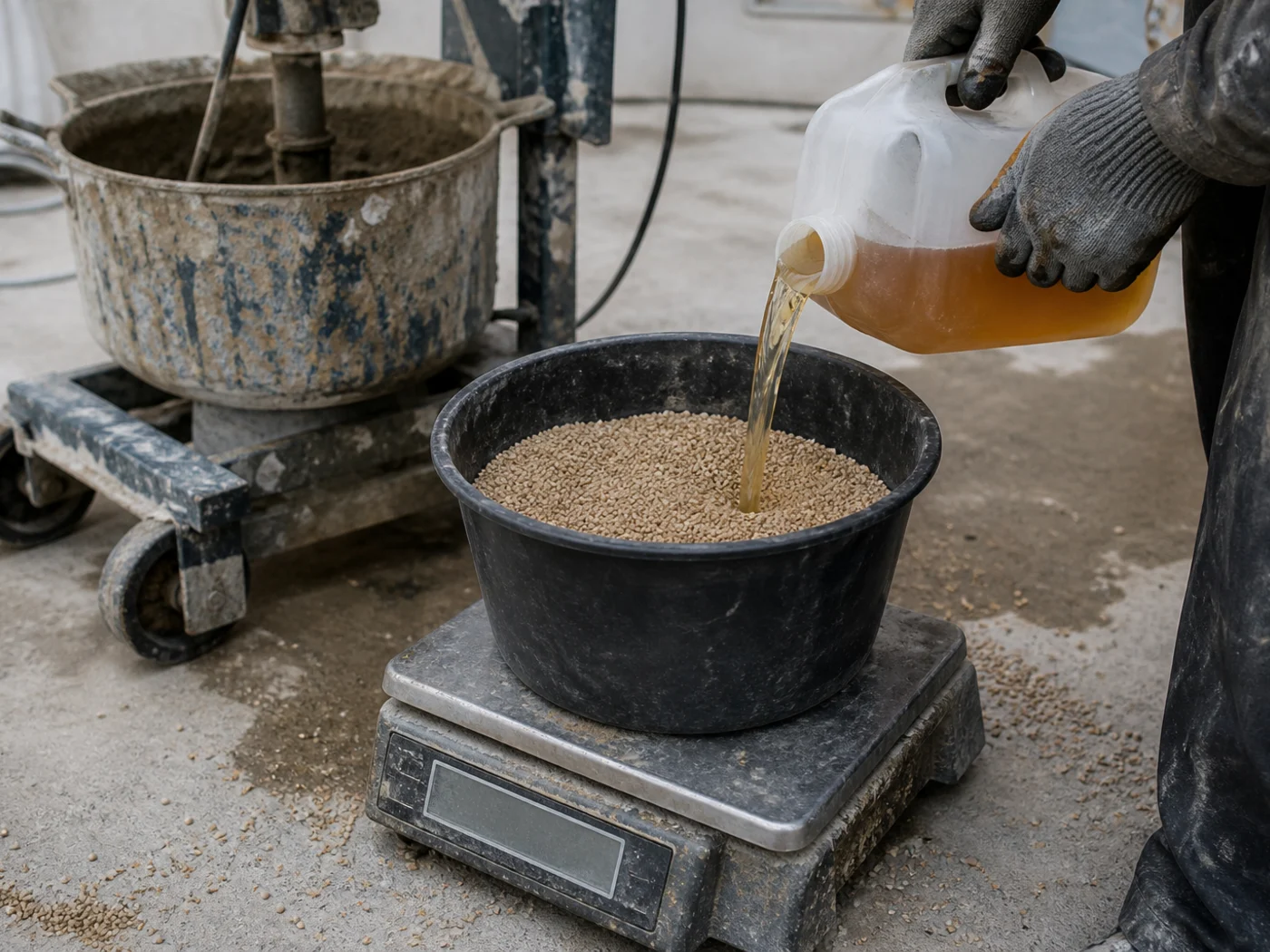
Common sizes on stone carpet work are 0.08 to 0.16 inch, 0.16 to 0.3 inch and 0.2 to 0.4 inch. Finer stone gives a smoother floor and drinks more resin. Coarser stone drains faster and reads as texture underfoot.
Aggregate has to arrive washed, kiln dried and free of dust. Moisture or fines left on the stone sit between the resin and the rock, and show up months later as cloudy patches or loose aggregate.
Common mistakes when choosing a binder
4 errors account for most of the stone carpet failures seen in this market, and all 4 happen at the buying stage.
Using a general purpose adhesive
Construction adhesives and floor glues are not formulated to coat loose stone. They fail to wet the aggregate evenly and the surface breaks up inside a season.
Cutting the resin content
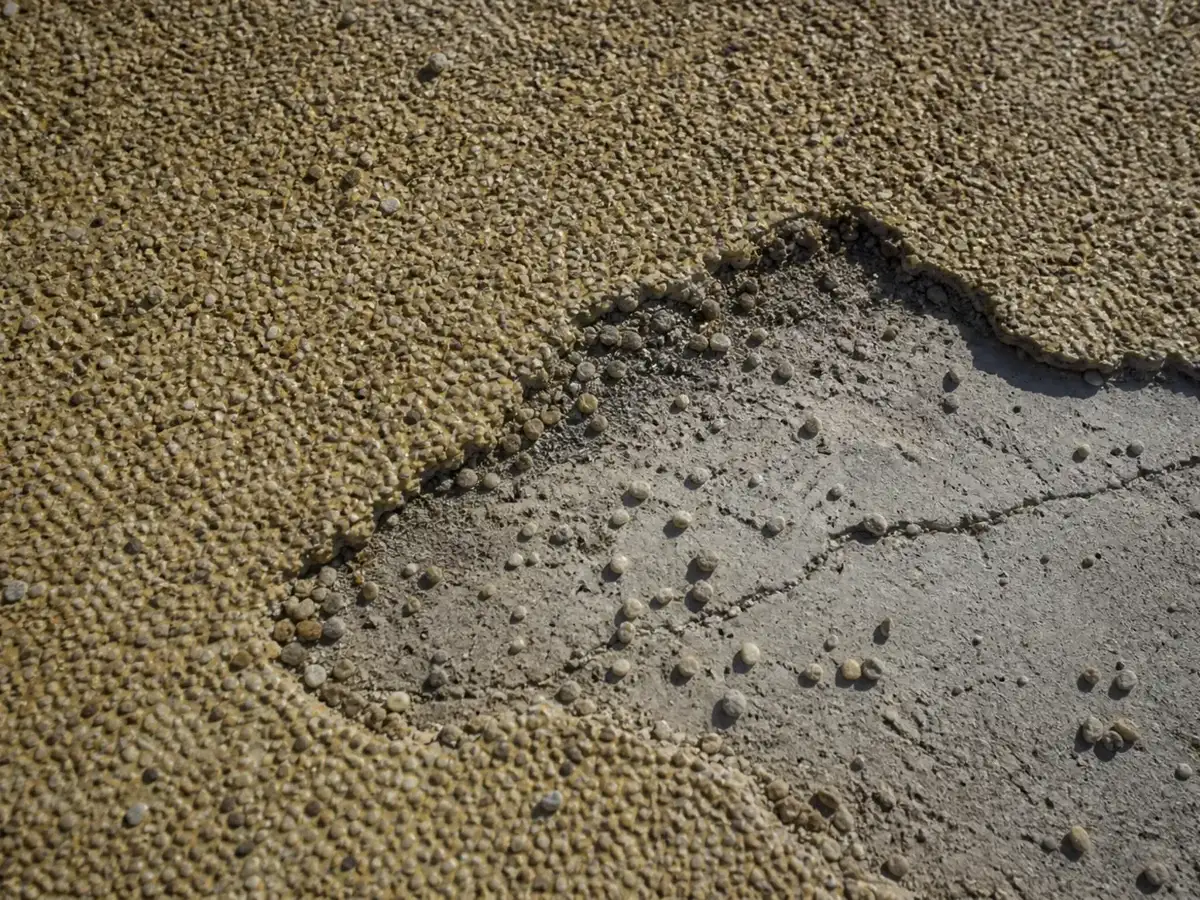
Stretching a kit across extra square footage saves a few dollars and costs the floor. An under resined stone carpet sheds aggregate, lifts at the edges and cannot be patched invisibly.
Putting aromatic resin outdoors
This is the mistake behind most repair calls in South Florida. The slab is structurally sound but the color has gone amber, and the fix is grinding the top off and recoating.
Buying on price alone
Off brand resin with no data sheet can cure soft, bond poorly and release aggregate within 2 years. It is a small line on the invoice and the single largest risk in the build.
Practical recommendations for Florida
- use aliphatic binder on every surface open to the sky
- keep aromatic binder for indoor and fully covered areas
- weigh the components instead of judging by eye
- hold the mix to the ratio printed on the data sheet
- pour in the morning while the slab is under 95 degrees F
Concrete has to be cured 28 days and tested for residual moisture before any primer goes down. Slabs poured over damp fill in the rainy season often need a moisture barrier primer first.
Plan around the weather. A stone carpet needs 24 hours clear of rain after the pour, which in July usually means starting at first light and stopping by early afternoon.
How the binder fits the rest of the system
The binder is 1 layer in a stack, and the layers have to agree with each other. Primer, aggregate, resin and any topcoat should come from the same manufacturer or be documented as compatible.
Primer choice follows the substrate. Sound cured concrete takes a standard polyurethane primer, damp slabs take an epoxy moisture barrier, and existing coatings normally have to be ground off rather than bonded over.
A clear aliphatic topcoat is optional on stone carpet and worth the money on high traffic decks. It adds a sacrificial layer that can be renewed at year 5 to 7 without disturbing the aggregate.
Poured rubber systems run on the same family of polyurethane chemistry, so the same sun rules and the same mixing discipline carry across both surfaces.
What to take away
Aromatic and aliphatic binders are the same class of material with different ultraviolet behavior. Aromatic yellows in sun. Aliphatic does not.
In South Florida that single difference decides the specification. Outdoors the binder is aliphatic, the aggregate is washed and dry, the ratio is weighed, and the slab is cured and primed before anything is poured.
Get those 4 items right and a stone carpet holds its color and its structure for 10 to 15 years. Miss any of them and the floor becomes a refinishing job long before that.
 Mistakes that cost twice
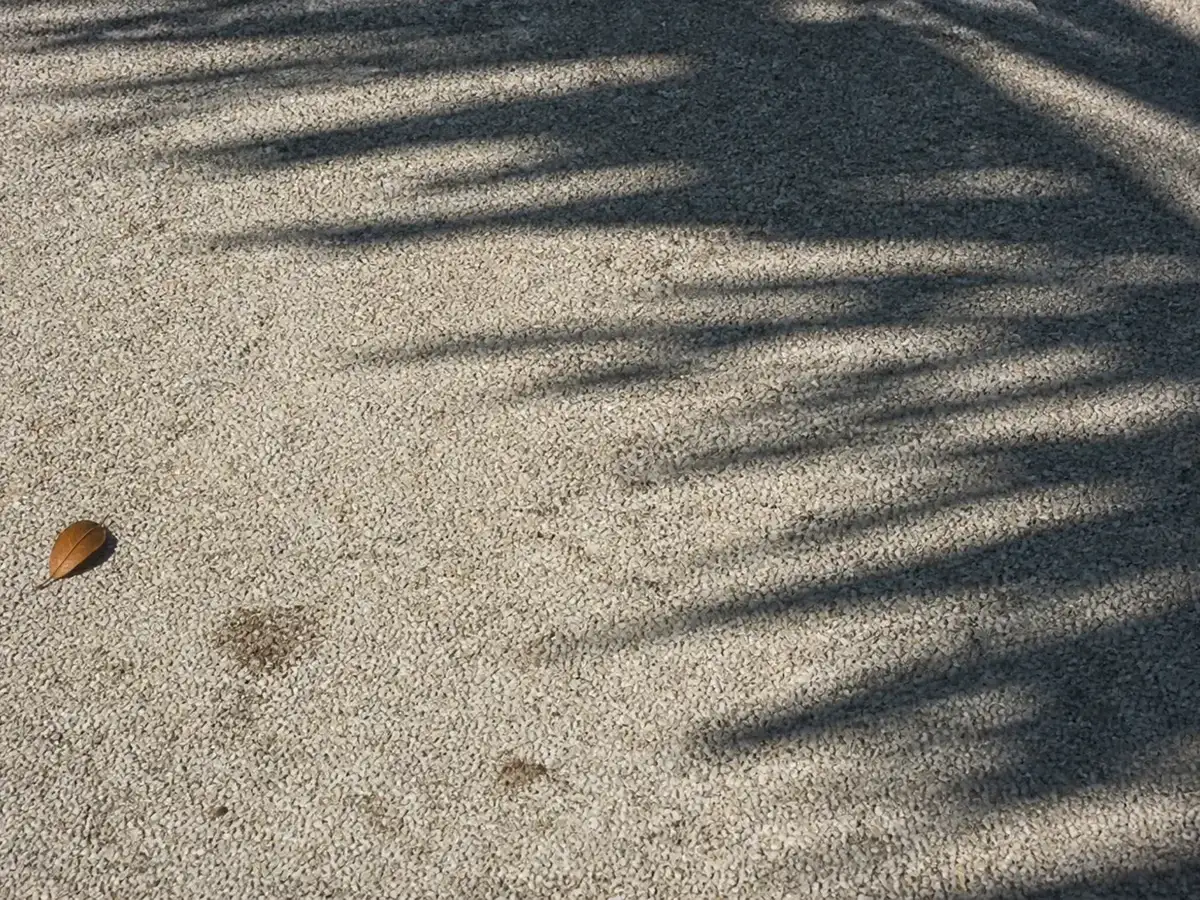 Stone carpet in Florida heat
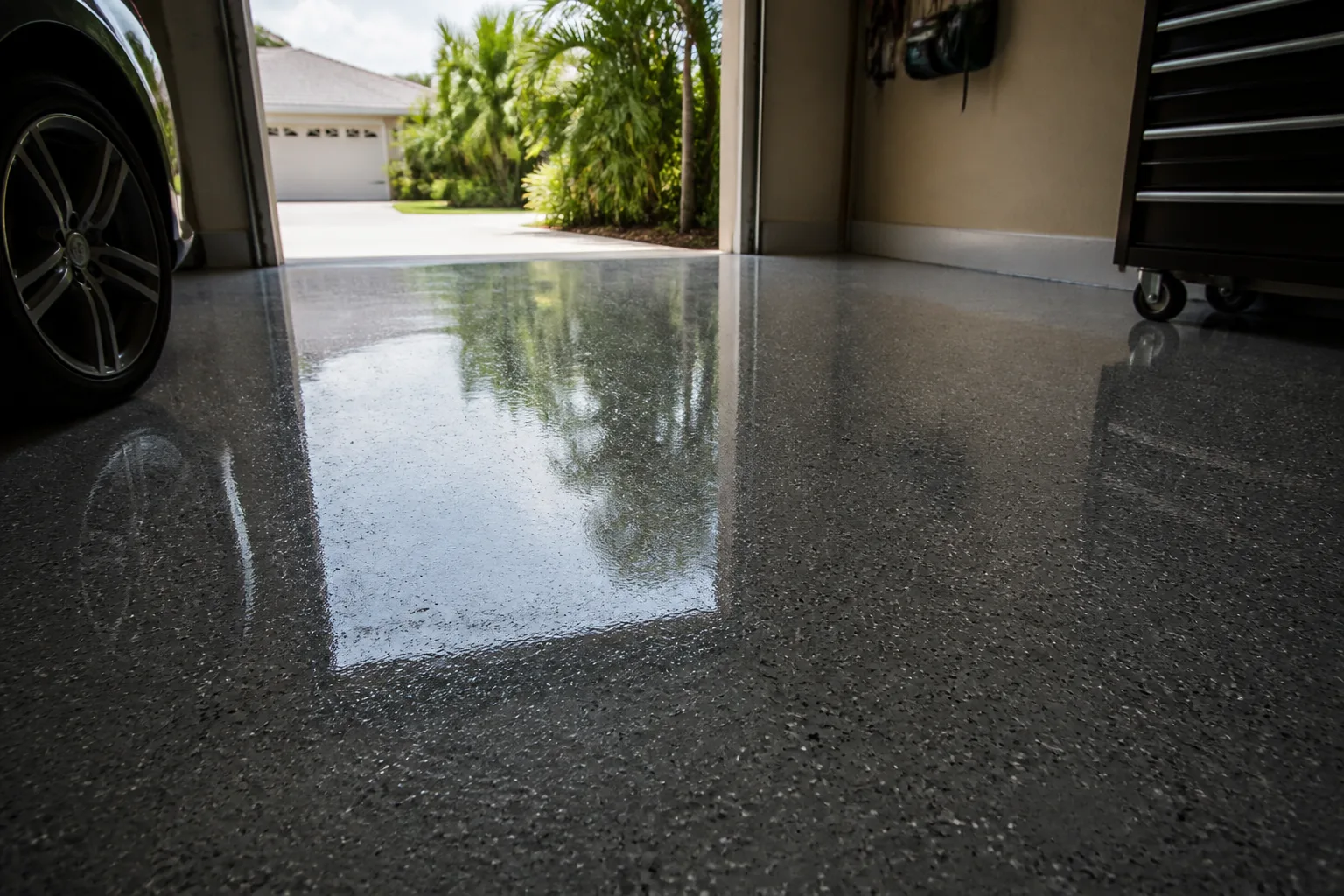 Epoxy against polyurethane