Stone Carpet Outdoors in Hot, Humid Climate
Written by the crew that installs it
Stone carpet performs well outdoors in South Florida as long as the binder is an aliphatic polyurethane and the substrate drains. A typical exterior pour runs about 0.4 inch deep over concrete, uses aggregate sized 0.08 to 0.2 inch, and lasts 10 to 15 years. The binder, not the stone, decides whether the surface yellows under year round sun.
Stone carpet is natural aggregate poured wet and locked into a clear resin. Outdoors it faces high ultraviolet load, daily summer rain and salt air, so material selection matters far more than it does on an indoor floor.
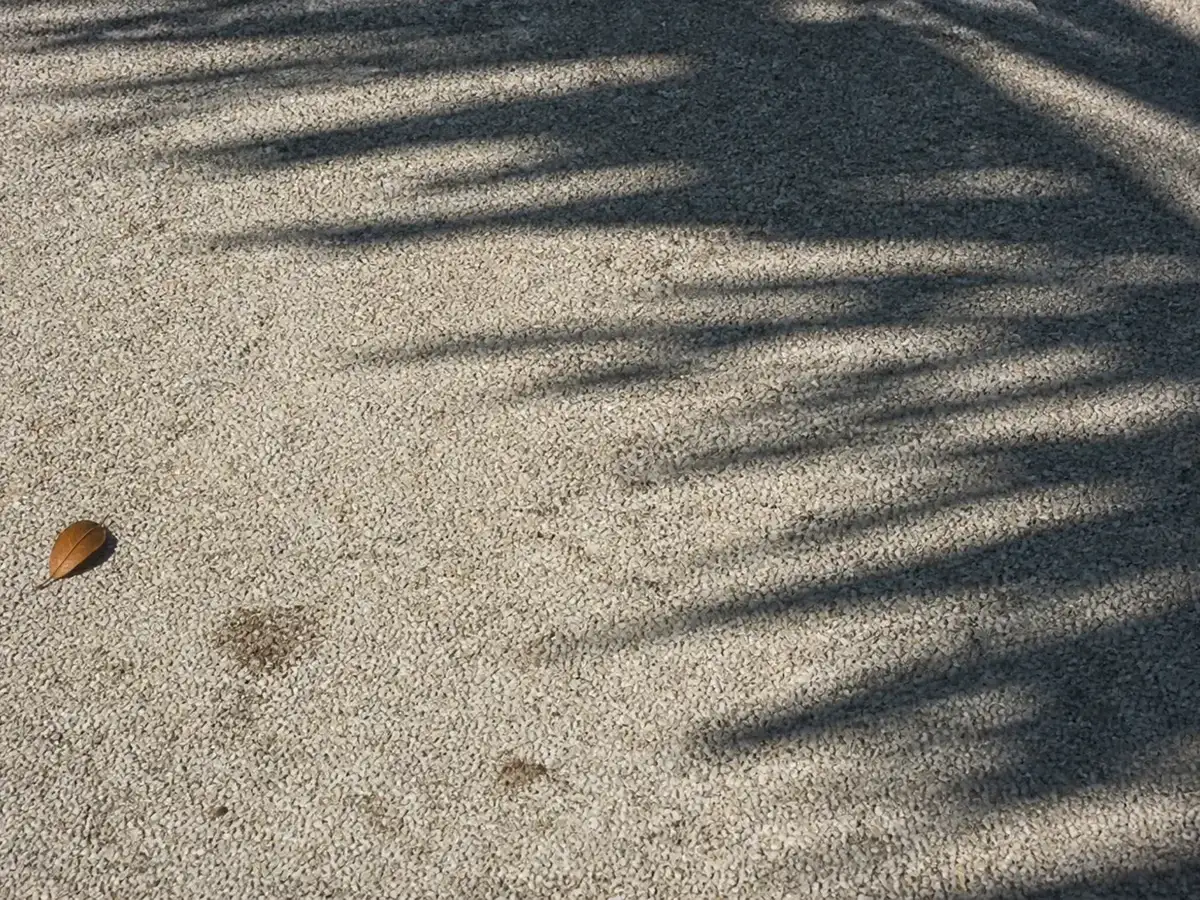
Most exterior failures trace back to 2 decisions made before anyone opens a bucket. The wrong resin ambers and chalks. The wrong substrate holds water against the bond line. Either one can end a deck inside 1 or 2 seasons.
Can stone carpet be used outdoors in Florida
Yes. Poured correctly, the surface handles standing humidity, heavy rain, daily temperature swings and rolling load from furniture and carts.
It is permeable by design. Water passes through the voids between the stones instead of sheeting across the top, which is why it does not pond the way a sealed concrete deck does after an afternoon storm.
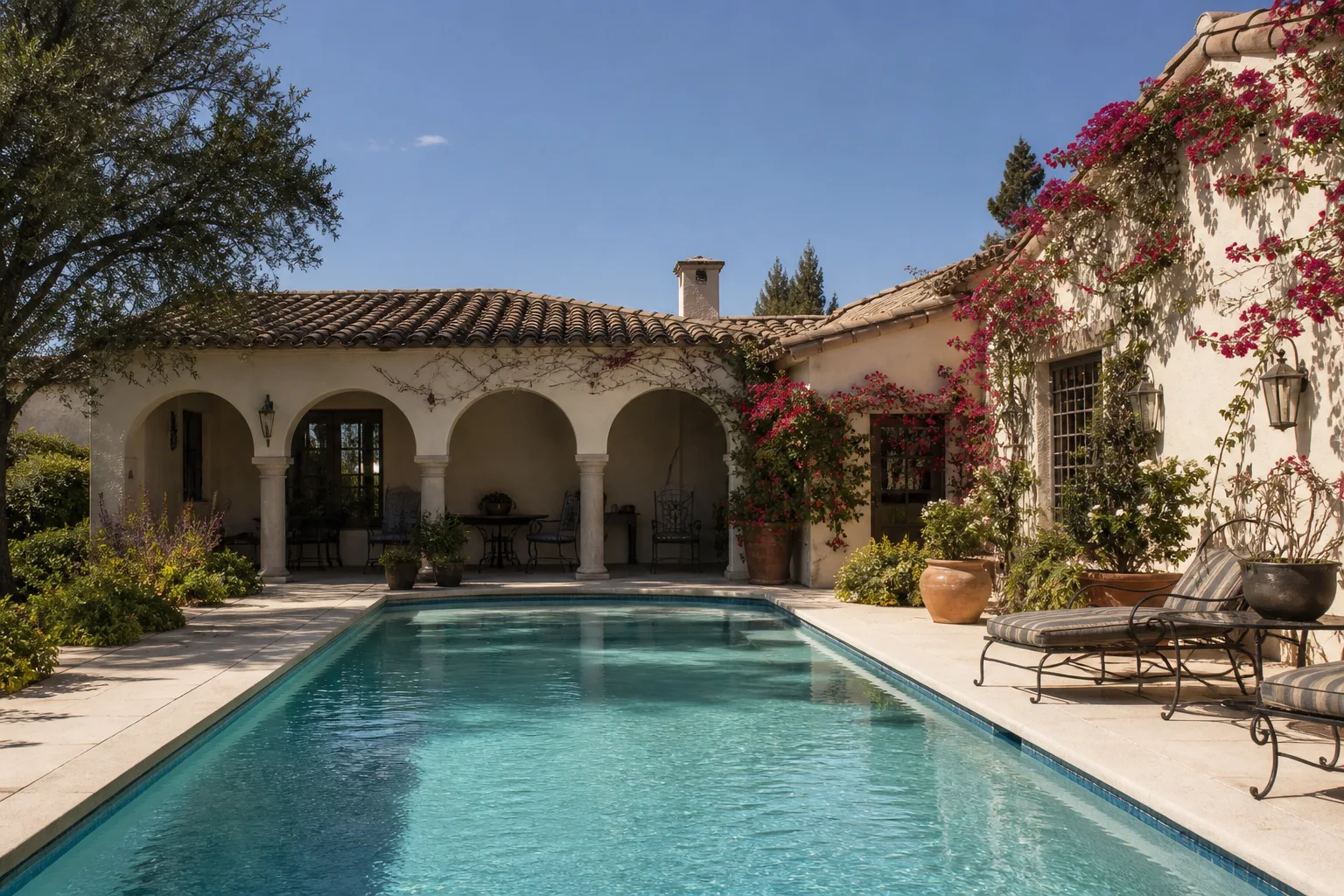
Common exterior uses in South Florida include patios, lanais, balconies, entry landings, stairs, walkways and pool decks. On a pool deck the same permeability that clears rainwater also clears splash out, so the surface dries fast and stays walkable.
The limits are real but narrow. Stone carpet needs a sound rigid substrate underneath, and it needs somewhere for the water to go once it drains through. Neither is exotic on a Florida property.
Which materials survive heat and humidity
Exterior work uses a narrower material list than interior work, because sun exposure rules out several products that behave fine indoors.
Which aggregate to choose
Marble chip, quartz sand and river pebble all work outdoors. What matters more than the rock type is the size grading.
Aggregate at 0.08 to 0.2 inch is the general purpose choice and covers most patios and walkways. Aggregate at 0.16 to 0.3 inch drains faster, hides staining better and reads with a coarser texture, which suits pool surrounds and heavy rain exposure.
Which binder holds up in sun
Use an aliphatic polyurethane binder anywhere the sun reaches. It resists ultraviolet breakdown, stays clear rather than turning amber, and keeps the aggregate flexible through heat cycling.
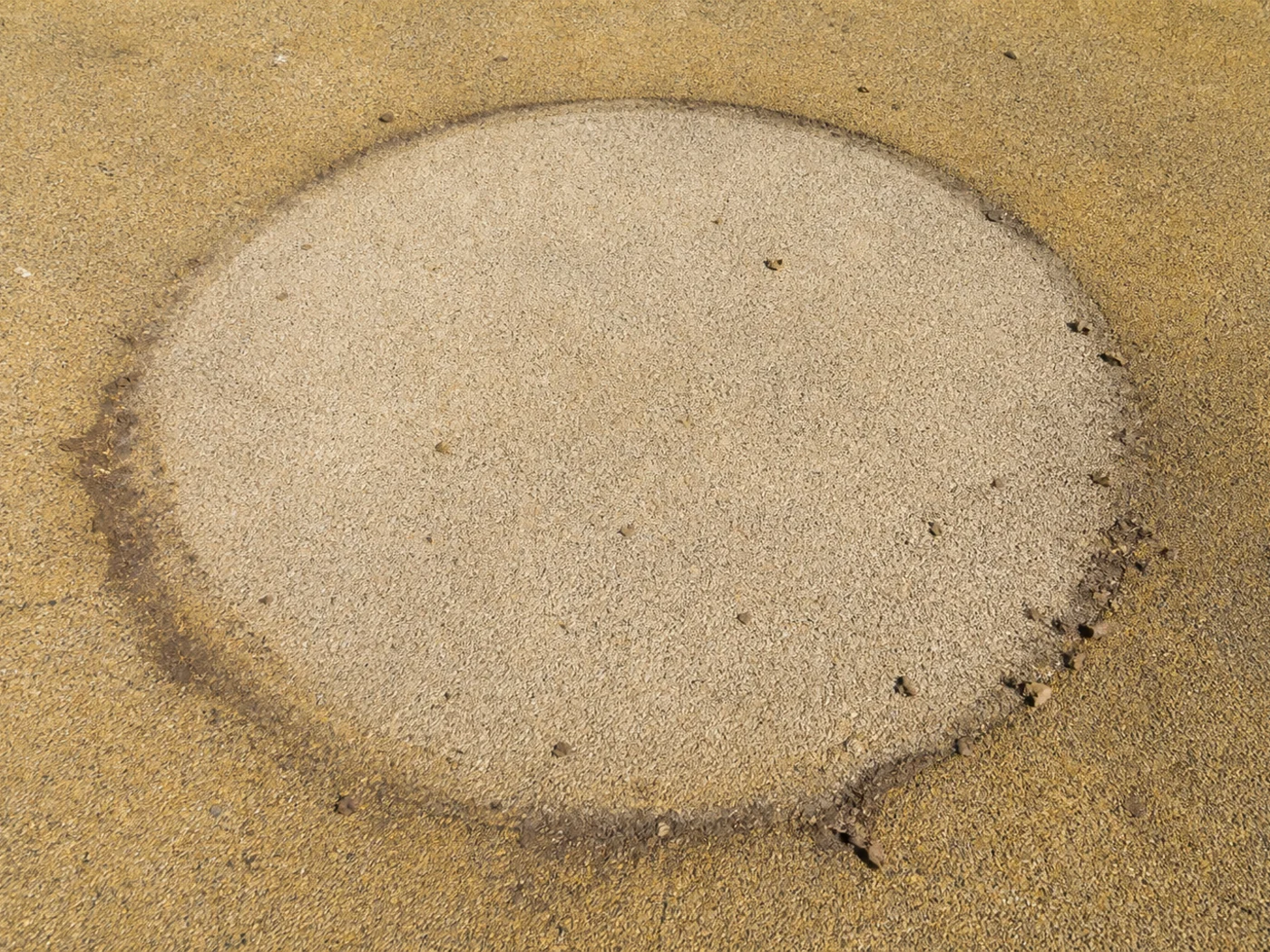
Aromatic resins cost less and discolor within a season or 2 outdoors. On a dark aggregate that shift can be tolerable. On white marble it is obvious from across the yard.
What substrate an outdoor pour needs
The substrate carries the whole system. Stone carpet is thin and rigid, so it copies whatever sits under it, cracks included.
A sound substrate is structurally solid, flat within roughly 0.2 inch under a 10 foot straightedge, dry, and sloped for runoff. Poured concrete and cement screed are the usual candidates. Existing tile can work once it is sounded for hollow spots and mechanically abraded.
Slope is not optional outdoors. Around 1 to 2 percent of fall away from the house, which is roughly 1 inch of drop across 8 feet, moves water off the deck instead of parking it against the wall.
Substrate moisture should read at or below 4 percent before priming, and fresh concrete needs about 28 days of cure before it is ready to take a coating.
How outdoor stone carpet is installed
The sequence is short but unforgiving, because the binder starts working the moment the parts are combined.
- Grind or shot blast the substrate, then vacuum it clean
- Prime with a polyurethane or epoxy primer and let it set
- Mix aggregate and binder to the ratio on the data sheet
- Trowel the mix flat and consolidate it to full depth
- Protect the deck and let it cure before foot traffic
Pour between 50 and 90 degrees F. Below that range the binder cures slowly and never reaches full strength. Above it the working time collapses and the crew loses the surface before it is flat.
Florida humidity shortens pot life as well. Most crews start early, work small bays, and stop ahead of the afternoon storm rather than fight moisture landing on a wet pour.
What stone carpet does well outdoors
The pour is seamless across the whole area, so there are no joints for weeds, ants or trapped dirt to occupy.
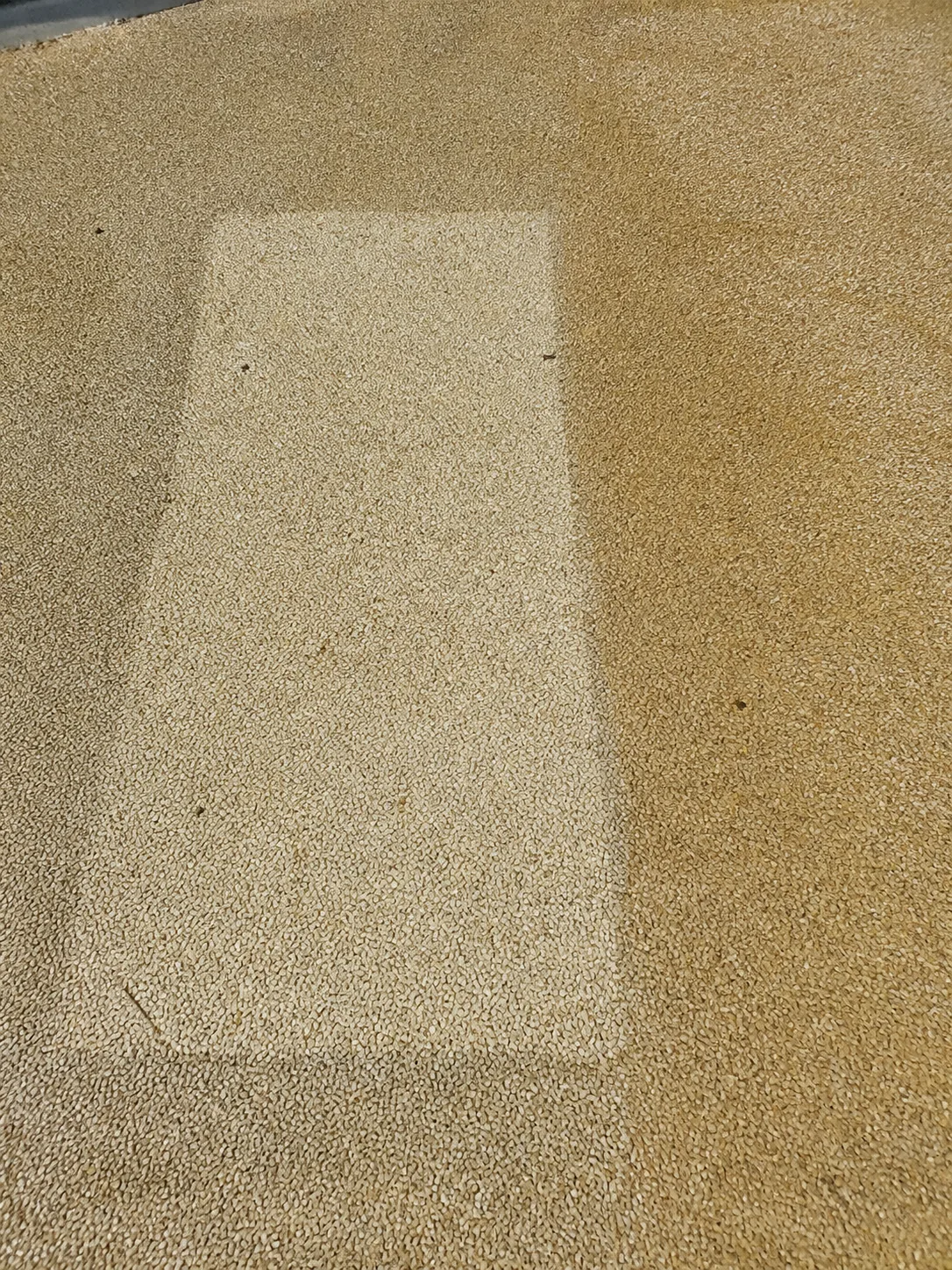
Texture comes from the stone itself, which gives usable grip when the deck is wet. That is the main reason it turns up around pools and on entry stairs.
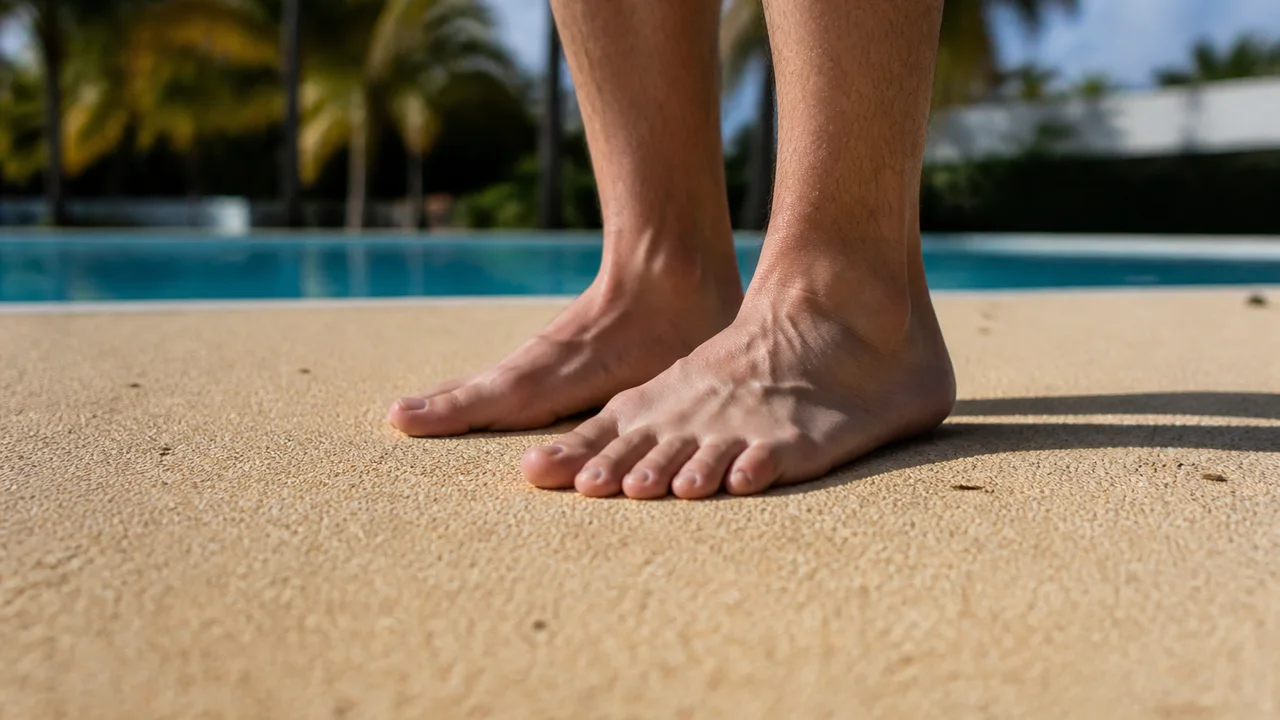
It also runs cooler underfoot than dark pavers or sealed concrete, because light aggregate reflects rather than stores heat and the open structure lets air move through it.
Service life on an exterior deck is normally 10 to 15 years with a UV stable binder. Repairs stay local. A damaged patch can be opened, refilled and blended without lifting the surrounding surface, which is not true of a cracked slab.
Which mistakes shorten outdoor service life
Using a resin that is not UV stable
Aromatic binders amber under direct sun and eventually chalk. Tolerable on dark stone, poor practice on light stone.
Leaving the deck without drainage
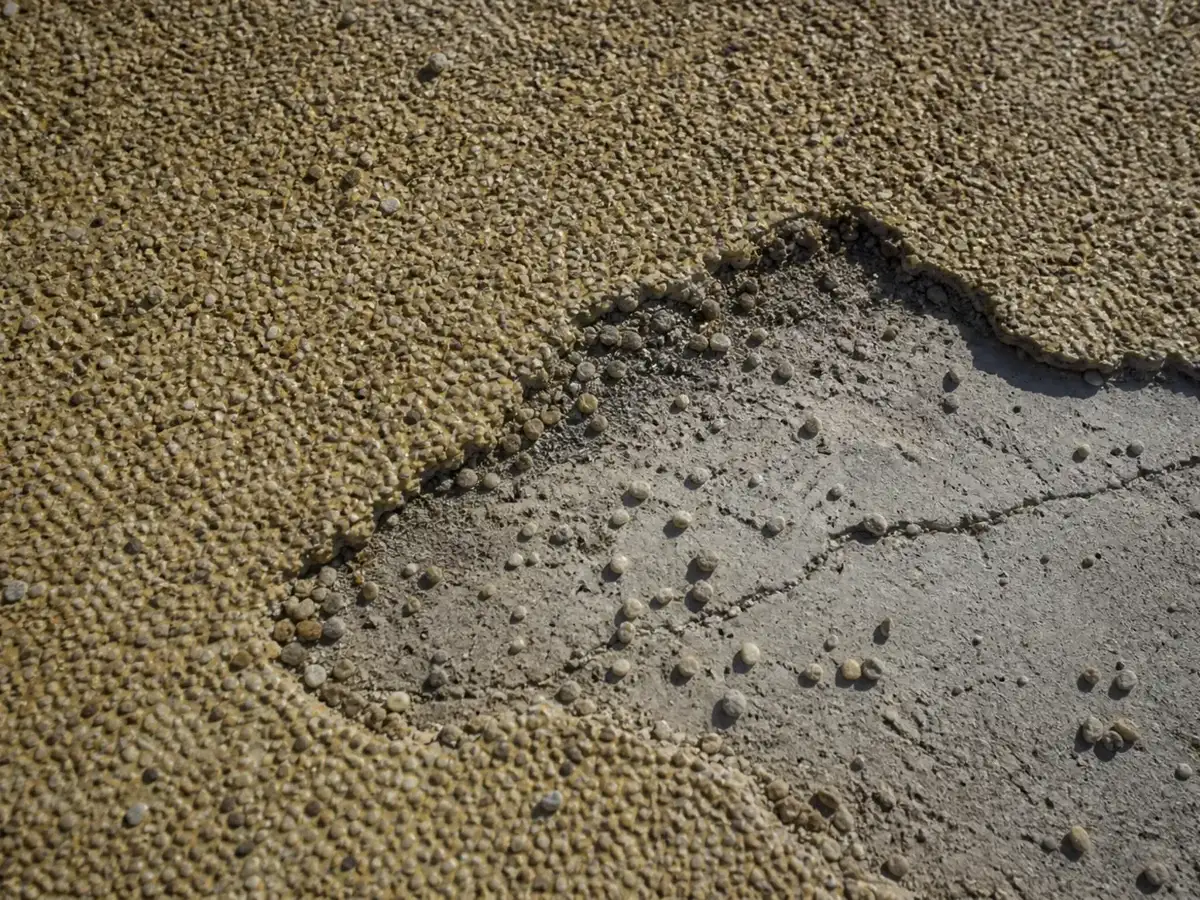
Water that drains through the surface and then sits against the substrate degrades the bond from below. Fall and an outlet are both needed.
Picking the wrong aggregate size
Aggregate finer than 0.08 inch tightens the voids and slows drainage. Aggregate coarser than 0.3 inch drains freely but feels sharp underfoot, which matters on a pool deck where people walk barefoot.
Skipping substrate preparation
Dust, curing compound and laitance are the usual causes of delamination. Mechanical preparation followed by primer solves almost all of it.
Practical rules for a Florida install
- Use aggregate sized 0.08 to 0.2 inch unless drainage or texture argues for coarser stone
- Specify an aliphatic polyurethane binder anywhere the sun reaches
- Confirm 1 to 2 percent of slope away from the structure before priming
- Check substrate moisture at 4 percent or lower
- Hold the pour to 50 to 90 degrees F and off the hottest hours of the day
- Keep foot traffic off for 24 hours and furniture off for 72 hours
Material cost tracks the aggregate. Marble chip sits at the low end, quartz in the middle and river pebble at the top, so the stone choice moves the installed rate per square foot more than any other single decision.
How the aggregate and binder work together
Stone carpet is a system, and the outcome is set by 3 things acting together rather than by any single product.
The aggregate sets appearance, texture and drainage rate. The binder sets colorfastness, flexibility and bond strength. The installation sets thickness, consolidation and how cleanly the surface meets drains, walls and edges.
Mismatches show up quickly. A premium binder over a dusty slab still delaminates. Clean preparation under a cheap aromatic resin still discolors. A long outdoor life needs all 3 correct on the same job.
Edges and transitions deserve equal attention. Where the surface meets pool coping, a door threshold or a deck drain, that detail decides whether water leaves the deck or works its way under the pour.
What to take away
Stone carpet is a sound outdoor surface in South Florida once the specification matches the climate.
An aliphatic polyurethane binder, aggregate at 0.08 to 0.2 inch, a clean and sloped substrate, and a pour placed between 50 and 90 degrees F cover most of what separates a 15 year deck from a 2 season one.
Everything else is detail work. Settle the binder and the substrate first, then choose the stone for the look you want.
 Aliphatic vs aromatic binder
 Mistakes that cost twice
 What stays coolest underfoot