How to Choose a Surfacing Contractor
Ask any surfacing contractor for 3 documents before a deposit moves. Liability and workers compensation certificates, the ASTM F1292 report for your exact build, and a written scope with depth in inches.
A surfacing contractor should produce 3 documents before any deposit changes hands. Certificates of general liability and workers compensation insurance, the manufacturer ASTM F1292 test report for the exact system and thickness being installed, and a written scope stating depth in inches, layer build and surface preparation. Installed poured rubber starts at 8 dollars per square foot in South Florida, and bids far under that usually cut depth or prep.
Poured rubber is made on site, so the crew doing the work matters as much as the material going down. The same granule and binder can produce a surface that lasts 15 years or one that lifts at the edges in a single wet season.
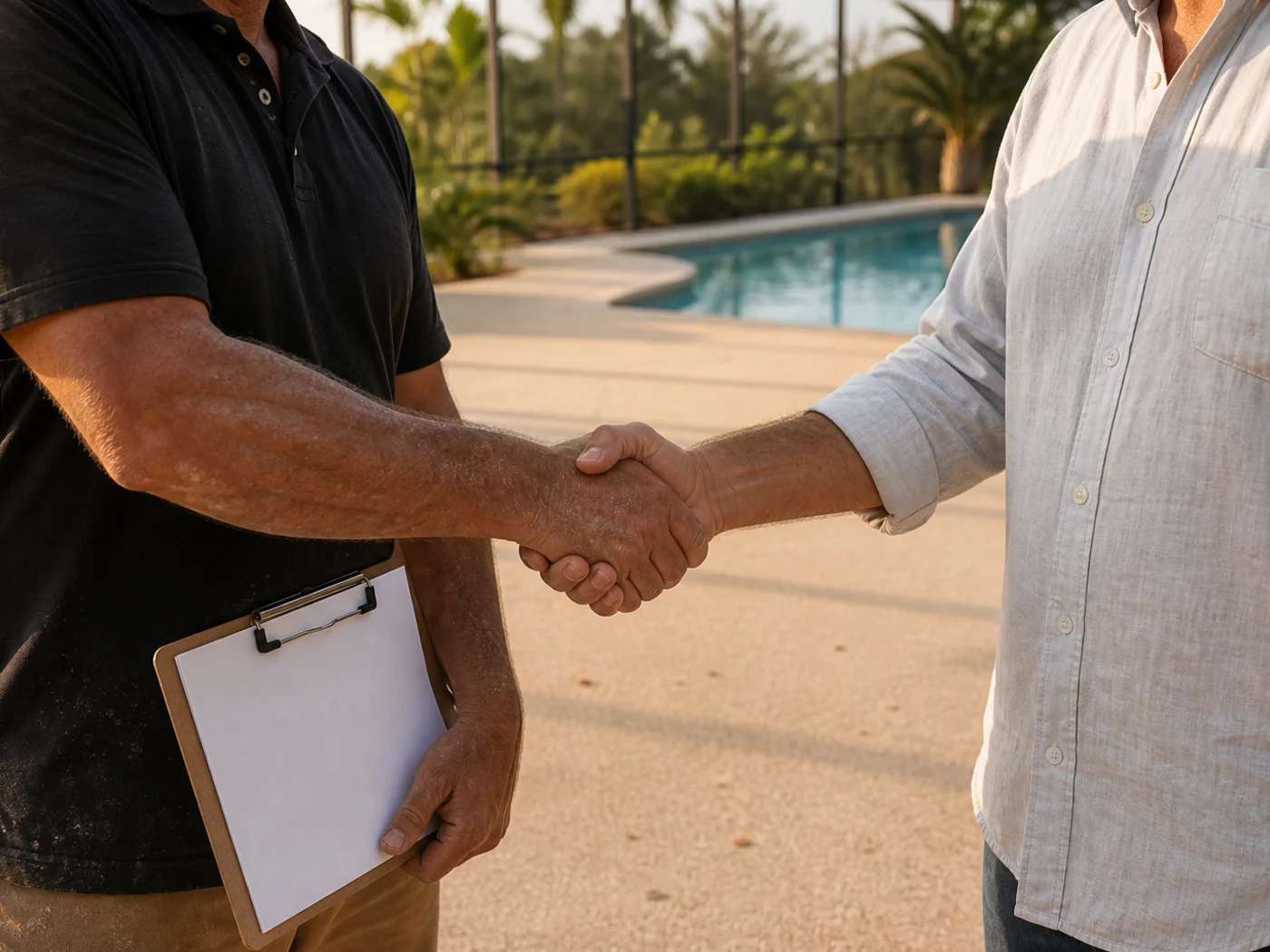
What a surfacing contractor should show
Paperwork sorts serious contractors from the rest faster than any conversation does. 3 categories are worth asking for in writing.
Insurance, and why nobody can show you a license for this
Florida licenses the trades it defines, and surfacing poured over an existing slab is not one of them. There is no state license category for this work. A contractor waving a license number at you is showing a card for something else, usually general contracting or paving, so ask what it actually covers and check the number against the Florida Department of Business and Professional Regulation record. The document that protects you here is insurance, and that one is not optional.
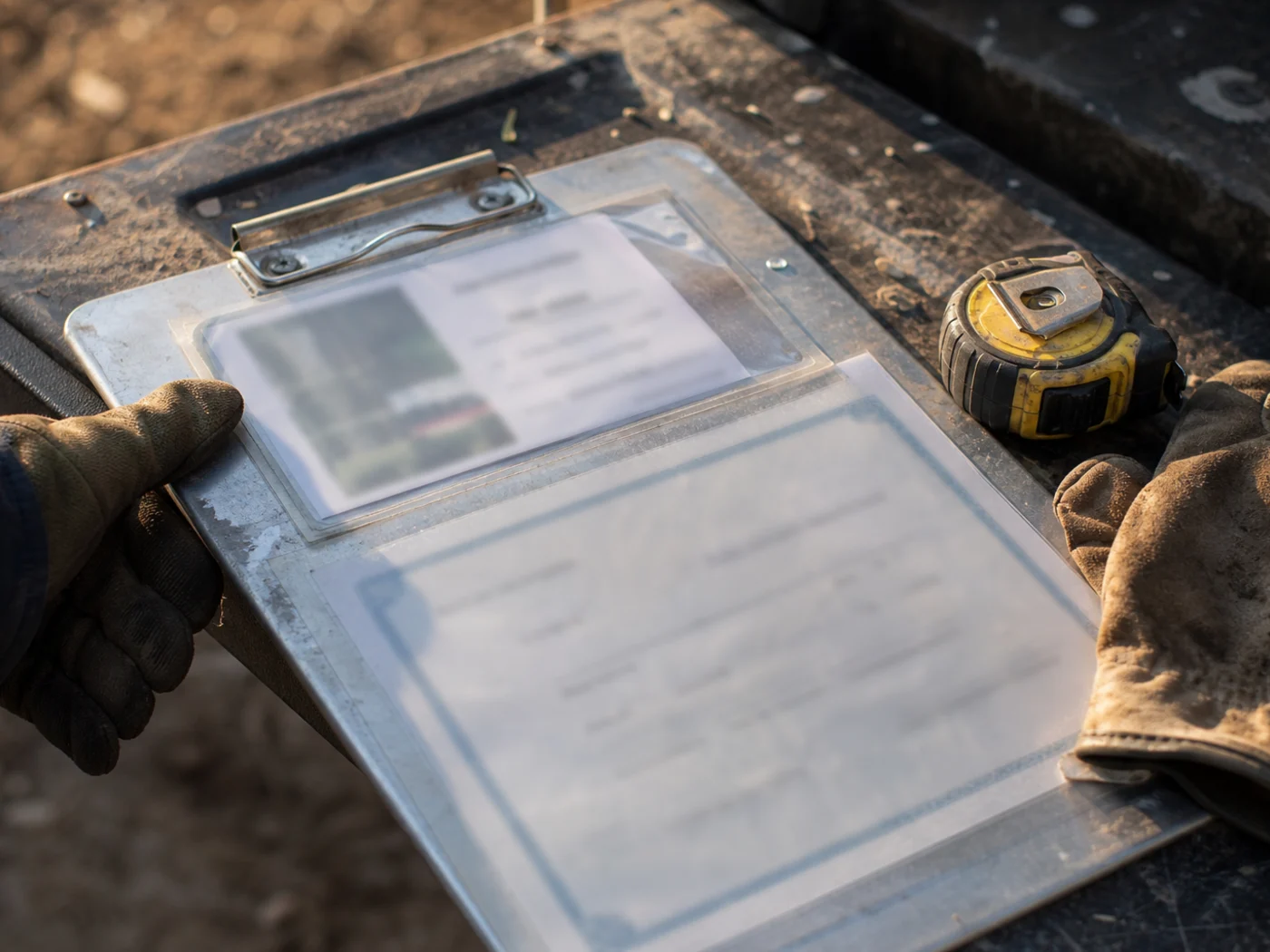
Insurance means 2 certificates, general liability and workers compensation, issued directly by the insurer and current on the day work starts. An uninsured crew injured on a property becomes the owner problem.
Test data and documentation
For playground work the manufacturer ASTM F1292 test report is the document that matters. It states the critical height, meaning the fall height below which a life threatening head injury would not be expected to occur, for a specific system at a specific thickness. A report for a different build is not evidence about the one being installed.
Where an accessible route crosses the surface, ask for ASTM F1951 data as well. That standard measures the effort needed to push a wheelchair across a surface and supports compliance with the ADA accessibility guidelines.
References and finished work
Photographs of a fresh pour prove very little, because a bad installation looks fine on day 1. Ask for addresses of jobs finished 3 to 5 years ago and look at the edges, the seams and the transitions, which are where age shows first.
Why a rubber surface is chosen
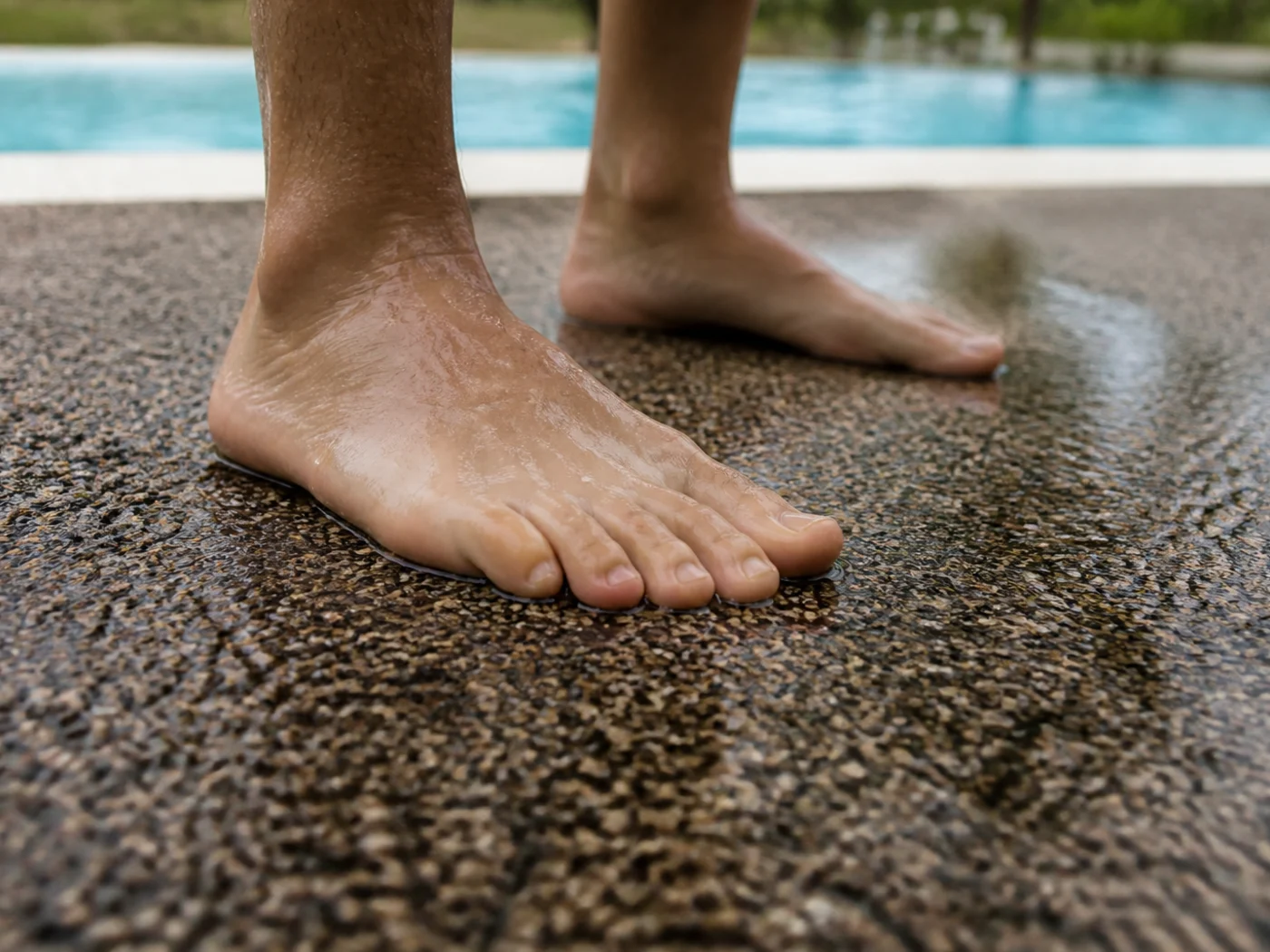
Seamless rubber crumb is used on playgrounds, walkways, pool decks and sports courts because it does several things at once that a hard surface cannot.
- it attenuates impact, so falls are survivable rather than serious
- it grips when wet, unlike sealed concrete or tile
- it drains straight through, so water does not stand after a storm
- it runs cooler underfoot than concrete or pavers in direct sun
- it absorbs noise and vibration, which matters in gyms inside occupied buildings
The material contains no loose fill to scatter, wash away or be displaced under a swing, and it can be repaired in place rather than replaced in sections.
Service life on a correctly built surface is 10 to 15 years in South Florida, with a topcoat refresh usually due somewhere around year 5 to 7.
How to compare bids and warranties
Bids for poured surfacing are only comparable when they describe the same build, so the paperwork has to be read before the price is.
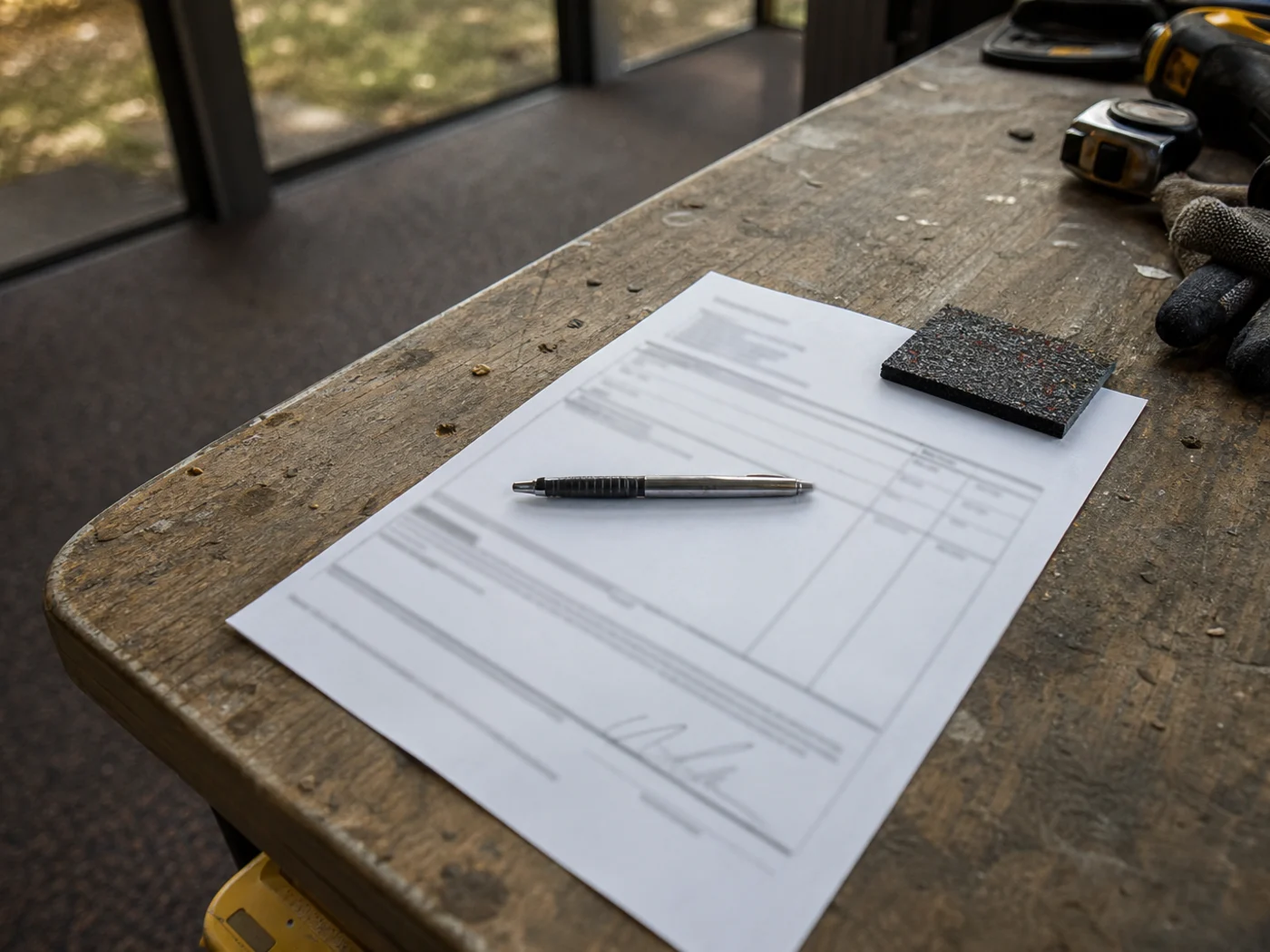
What a comparable bid contains
A bid that can be compared to another states the square footage, the surface preparation method, the primer, the total finished thickness in inches, the layer build, the granule type and the color. A single price with none of those cannot be compared to anything.
Poured rubber starts at about 8 dollars per square foot installed in this market, and stone carpet about 8 to 14. A bid well below those ranges is normally thinner than specified, poured over unprepared concrete, or both.
| On the page | A comparable quote | A weak quote |
|---|---|---|
| Thickness | Total finish in inches | A single price only |
| Build | Layer split and granule named | Nothing described |
| Preparation | Method and primer stated | Poured over unprepared concrete |
| Paperwork | 2 insurance certificates | Promised later |
| Test data | ASTM F1292 report for that build | A report for another system |
| Warranty | Written into the contract | Promised verbally |
| Deposit | Under half before material | Above 50 percent |
A quote you can compare names the thickness in inches, the layer build, the preparation and the primer. A single number with none of those cannot be compared to anything.
What the warranty actually covers
Warranties come in 2 parts and they are not the same thing. The manufacturer covers the material, and the installer covers workmanship, which is where delamination, edge lift and open seams sit.
Read the exclusions. Standing water, movement in the underlying slab and damage from cleaning chemicals are the common carve outs. Confirm the warranty term in years and confirm that it is written into the contract rather than promised verbally.
Contract and payment terms
A deposit above 50 percent before material is delivered is a warning sign. So is a contract with no start date, no completion date and no written scope. Any change made mid job should be documented before the work is done.
How to choose the rubber system
Once the contractor is settled, 5 decisions shape the finished surface.
- Thickness, which follows the fall height on play areas and comfort elsewhere. Depth drives both impact performance and cost.
- Granule type, with EPDM used for the colored wear layer and SBR used for the cushion layer underneath it.
- Texture, where a smoother finish suits gyms and indoor rooms and a more open texture gives better traction on ramps, decks and play areas.
- Density and resilience, tuned to use. Play areas take a softer build, weight training areas take a firmer and denser one.
- Color, which is a design choice with a temperature consequence, since pale tones run measurably cooler in full sun than dark ones.
Thickness deserves the most attention because it is the hardest thing to verify after the fact. Depth can be checked during the pour with a probe or a core, and that check should happen while the crew is still on site.
Where the surface serves a playground, thickness stops being a preference. It comes from the manufacturer ASTM F1292 test data for the system being installed, matched to the fall height of the tallest equipment in the use zone.
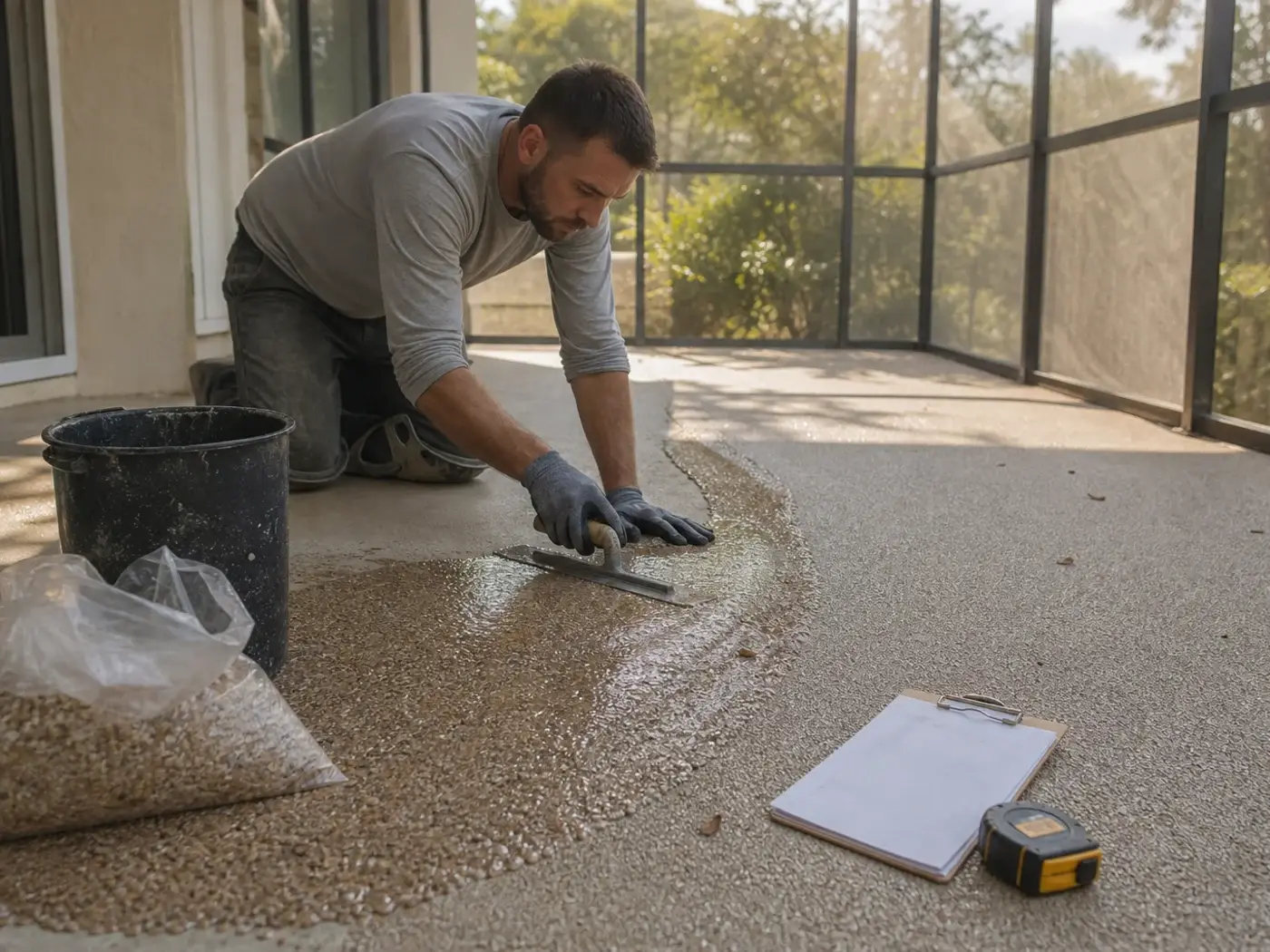 What stone carpet costs here
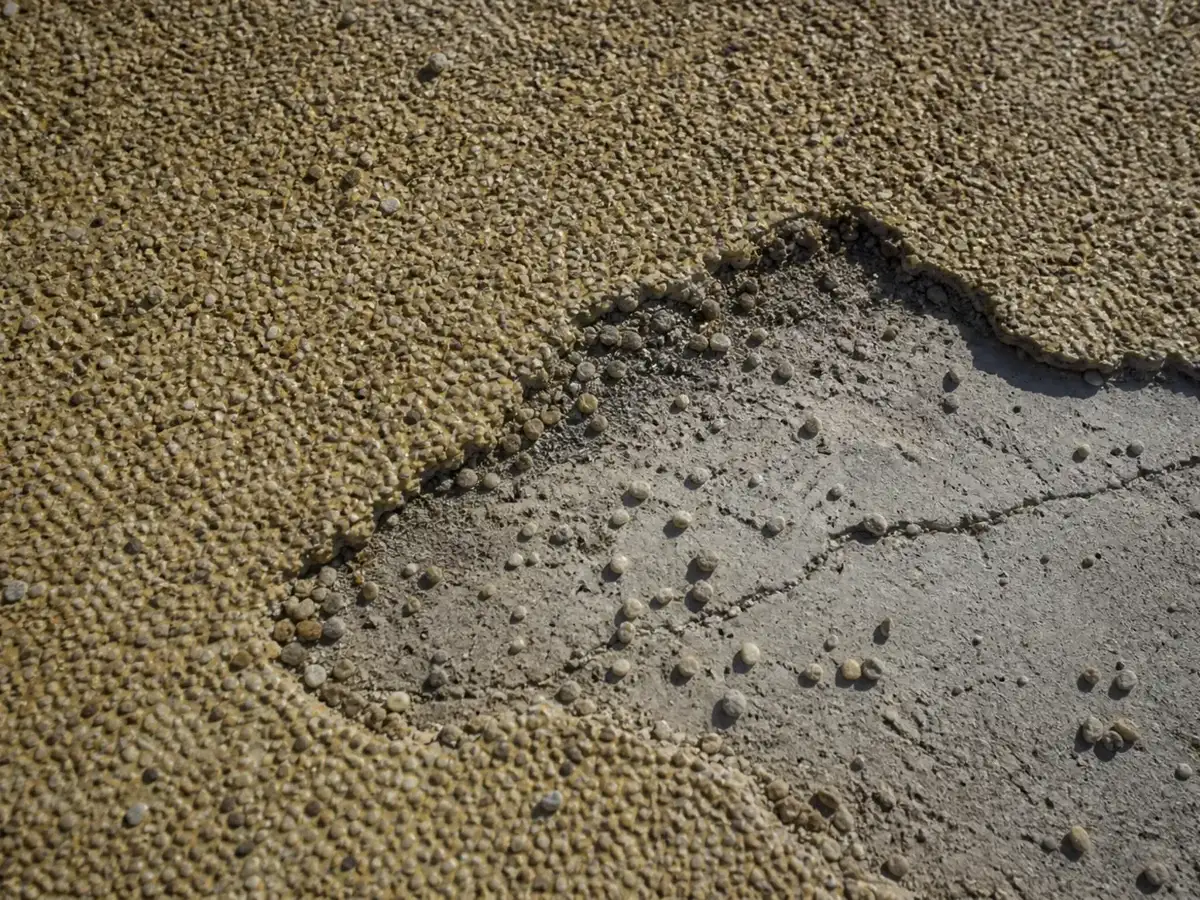 Mistakes that cost twice
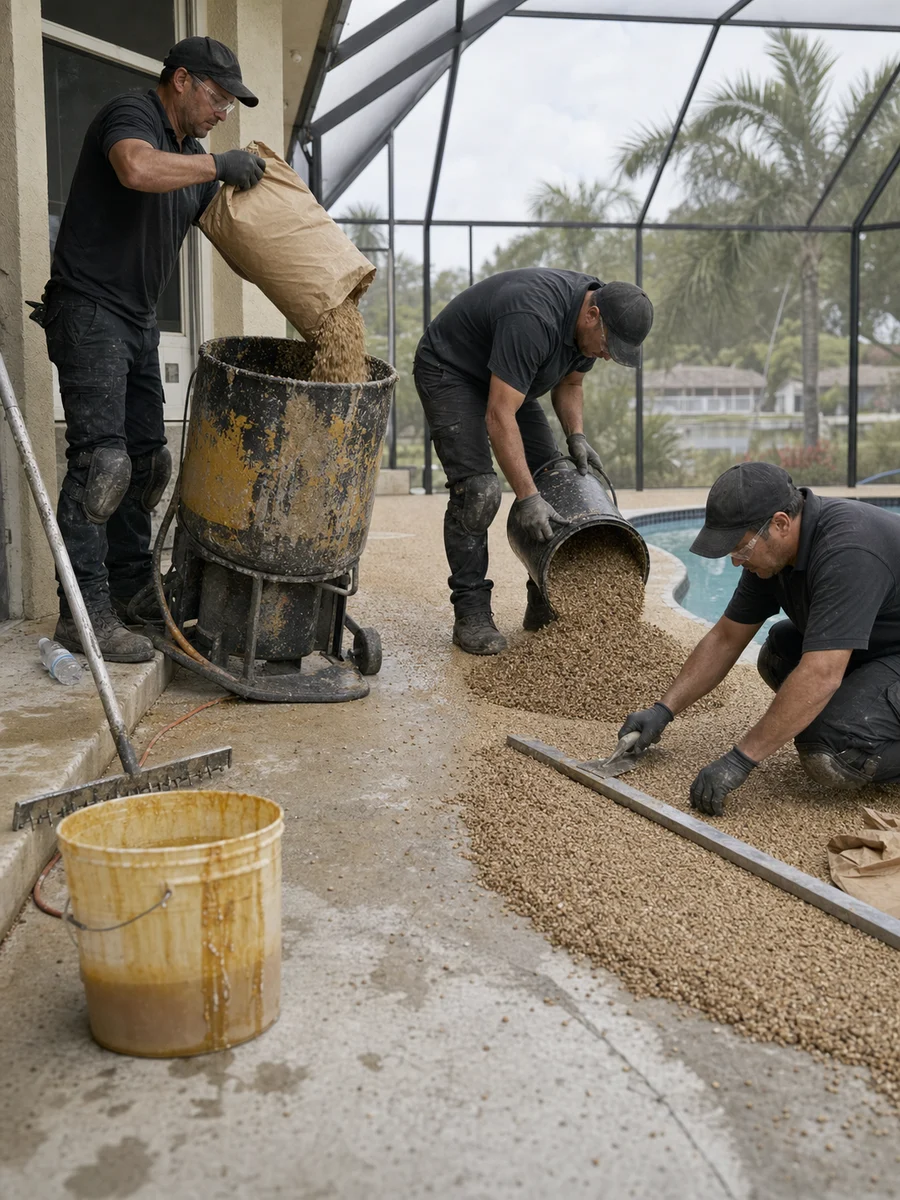 How a poured floor goes down