Poured Rubber vs Rubber Tiles
Poured rubber wins on anything over about 1,000 sq ft because it cures as one seamless slab with no joints to open. Tiles are precast at 20 by 20 inches and suit small areas. Same granule, same binder, different install.
Poured rubber and rubber tiles are built from the same rubber granule and polyurethane binder, but they are installed in different ways. Poured rubber is mixed wet on site and troweled into 1 seamless slab, normally 1.5 to 4 inches deep. Tiles are precast in a factory, most often 20 by 20 inches, and laid piece by piece over a prepared base. Seamless is the usual answer for playgrounds, pool decks and sports courts, while tile suits small areas under roughly 1,000 square feet.
Both formats use rubber crumb bound with polyurethane resin. The real difference is the joint. A poured surface has none, a tiled surface has one every 20 inches, and almost every practical difference between them follows from that.
Poured rubber or rubber tiles
A rubber surface is granule bound with polyurethane resin. It goes down either as a seamless poured slab or as precast tiles set unit by unit. The same 3 questions decide which format fits a site.
- Size, shape and location of the area, indoors or outdoors, square or free form
- How the surface will be used and who will be on it most of the time
- What the base is, whether concrete, asphalt or compacted soil
The sections below compare the 2 formats on the points that actually change a written specification.
What each format costs per sq ft
At a thin build of about 0.4 inch, tile is the cheaper option per square foot. Poured rubber costs more because a crew mixes and trowels it on site rather than a factory pressing it.
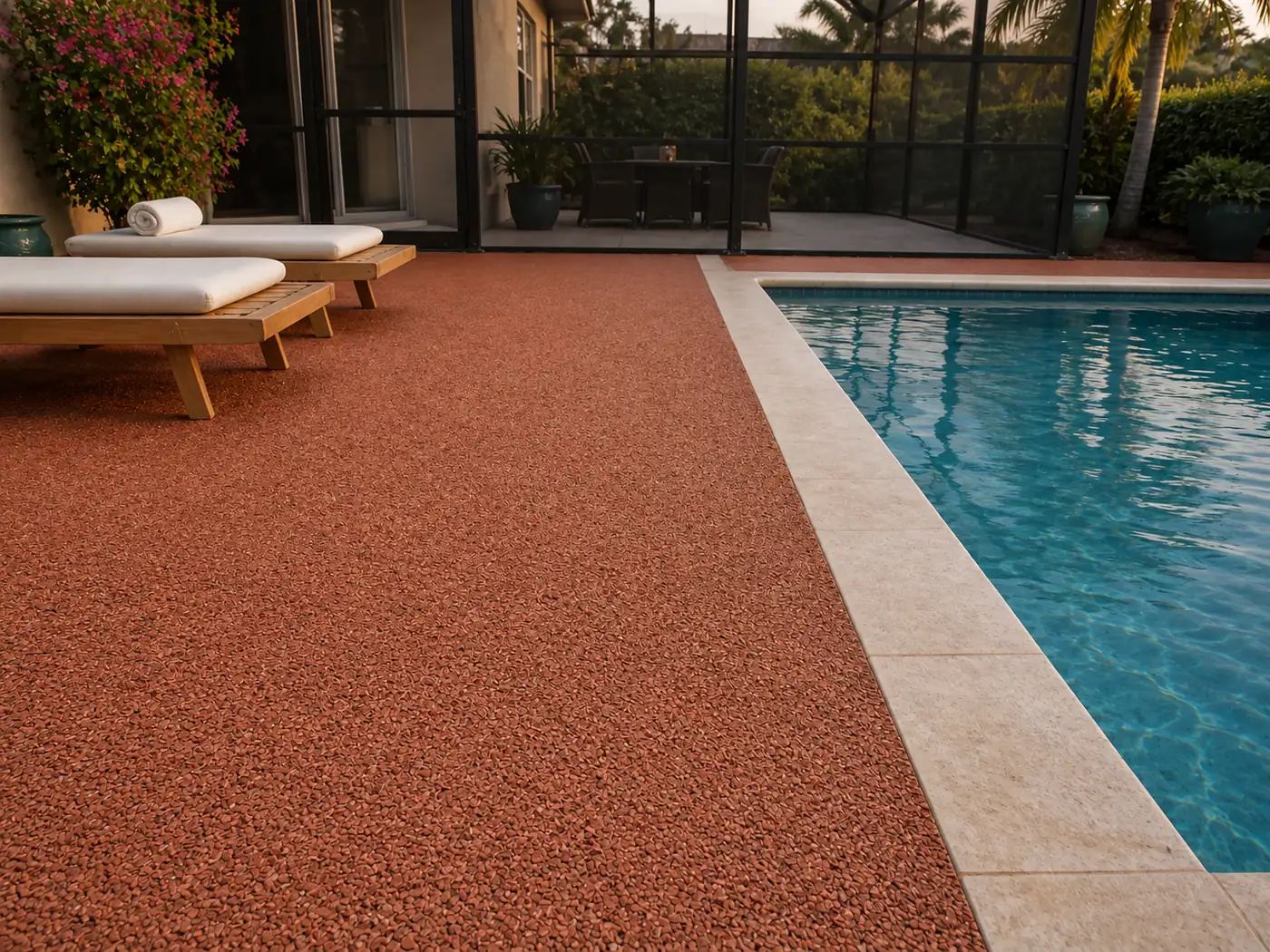
Installed poured rubber in South Florida generally runs $8 to 15 per sq ft depending on the application, with playground work at the lower end and pool decks at the upper end. Tile lands below that on small, simple, rectangular areas.
The gap narrows as the area grows. Cutting and fitting tile around curves, drains, coping and steps adds labor that a continuous pour absorbs at no extra cost.
Where each format is used
Both formats appear on outdoor play areas, sports courts, running tracks, gyms, wet rooms, cafe patios and workshop floors.
Competition level sports surfacing is poured, not tiled. The governing body spec for a sport calls for consistent shock absorption and ball rebound across the whole playing area, and a jointed surface cannot hold those manufacturer tested values across a seam.
Tile keeps its place on balconies, small patios, dog runs, rooftop terraces and anywhere a section may need to be lifted later for access to what sits underneath.
How each format is installed
Both need a properly prepared base. Poured rubber is blended with binder in a paddle mixer, spread and troweled in one continuous operation, so the crew has to keep pace with the pot life of the resin. A bad pour shows up later as ridges, roller marks or cracking.
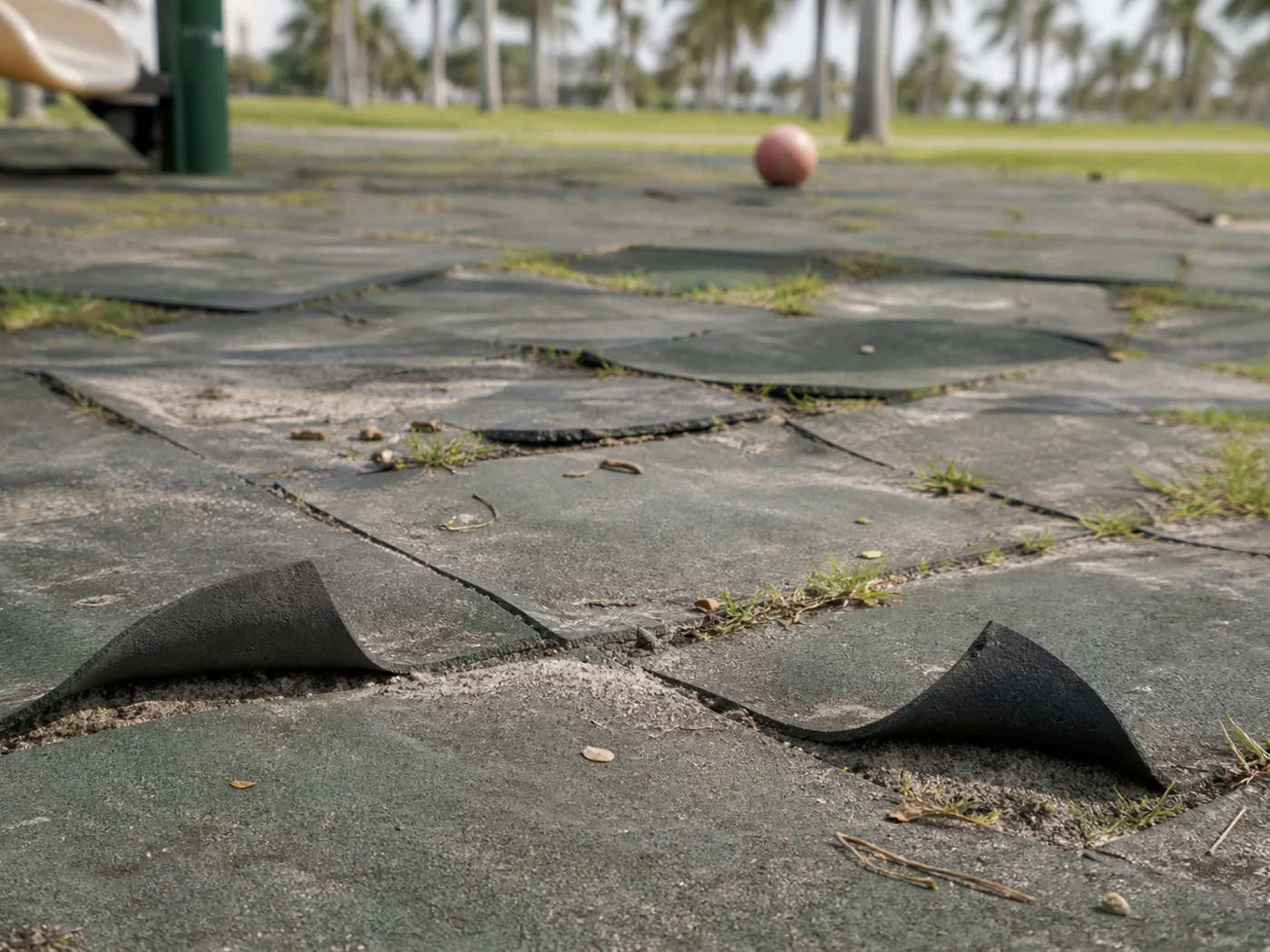
Tile is bonded or pinned down unit by unit. Set on an uneven base, the edges lift and the corners curl within 1 or 2 seasons.
Poured work is crew work. Tile can be laid by a competent homeowner on a small area, and that is a genuine part of its appeal.
How impact safety is rated
In the United States playground surfacing is judged against ASTM F1292, the Standard Specification for Impact Attenuation of Surface Systems Under and Around Playground Equipment.
Testing produces a critical height rating, the fall height below which a life-threatening head injury would not be expected to occur. That rating must equal or exceed the fall height of the tallest piece of equipment on site. The CPSC Public Playground Safety Handbook adds the layout rule, with the use zone extending a minimum of 6 feet in all directions from the equipment.
Neither format passes on material alone. F1292 rates the assembled system at its installed thickness, so a tile and a poured slab of the same depth are tested and rated separately.
What thickness a fall height needs
Typical poured build depths measured against fall height.
| Fall height | Minimum poured thickness |
| Up to 2 feet | 1.5 inches |
| Up to 3.5 feet | 2.5 inches |
| Up to 5 feet | 3.25 inches |
| Up to 10 feet | 4 inches |
Treat that table as a planning guide only. The exact depth comes from the manufacturer ASTM F1292 test data for the specific system being installed, and tile carries its own rating published by the maker for each thickness it produces.
Accessibility and install standards
Where an accessible route crosses the surface, ASTM F1951 applies. It measures the effort needed to propel a wheelchair across the finished surface, and it is the standard cited alongside the ADA and ABA accessibility guidelines.
For poured in place work, ASTM F2479 is the guide covering specification, purchase, installation and maintenance. It is the document to name in a scope of work when a poured surface goes out to bid.
Tile edges are the accessibility weak point. A lifted seam or a curled corner becomes a trip hazard and a wheel catch long before the surface itself is worn out.
How each format behaves when wet
South Florida sees afternoon storms through most of the summer, so drainage matters more here than it does in a dry climate.
A poured surface is permeable through its full depth. Rain drains straight through to the base, and there are no joints for sand and organic debris to pack into.
Tile drains at the seams instead. Those seams collect grit and leaf litter, and a dense tile face can hold a film of water long enough to feel slick underfoot. Cleaning tile means cleaning joints, several hundred feet of them on a mid sized deck.
What repairs cost on each
Both formats are repairable and the cost per repair is broadly similar. A damaged tile is lifted and swapped. A damaged patch of poured rubber is cut out square and a fresh batch is troweled in.
Color match is the practical difference. A replacement tile from a later production run rarely matches a face that has sat in Florida sun for 5 years, while a poured patch is blended on site from the same granule and pigment mix.
Neither format needs sealing, waxing or refinishing, so ongoing cost is limited to cleaning and the occasional patch.
How each format looks
Poured rubber accepts any graphic that can be drawn. Colors are cut into the wet material on site, so logos, game lines, numbers, hopscotch grids and free form shapes all go in during a single pour.
Tile works the other way around. It is molded with a surface relief that can imitate stone, brick or cobble, and multicolored units can be arranged into simple repeating patterns. Custom artwork is not realistic in tile.
Which surface suits which project
The short version of everything above.
- Poured rubber suits sports courts, running tracks, playgrounds and multi use decks. It is cost effective from about 0.4 to 0.8 inch over a hard base, wears well, resists mechanical damage better than tile and holds color in sun. Custom graphics are possible, installation is crew work, repairs are patched, and service life runs about 15 years.
- Rubber tile suits areas up to roughly 1,000 square feet. It is easy to repair, blends into landscaping, tolerates heels and light vehicle traffic, and can be laid without a crew. Custom artwork is not available and service life runs about 10 years.
| Point | Poured rubber | Rubber tiles |
|---|---|---|
| Joints | None | One every 20 inches |
| Drainage | Through the full depth | At the seams only |
| Custom graphics | Cut in during the pour | Not realistic |
| Who installs it | Crew work | A homeowner can lay it |
| Area it suits | Any size and shape | Up to about 1,000 sq ft |
| Service life | About 15 years | About 10 years |
Poured rubber has no joints, so it drains through, takes custom graphics and runs about 15 years. Tile stays the sensible pick on small simple areas a homeowner lays alone.
What thickness and size rubber tiles need
Tile is selected by what sits underneath it and by what happens on top of it.
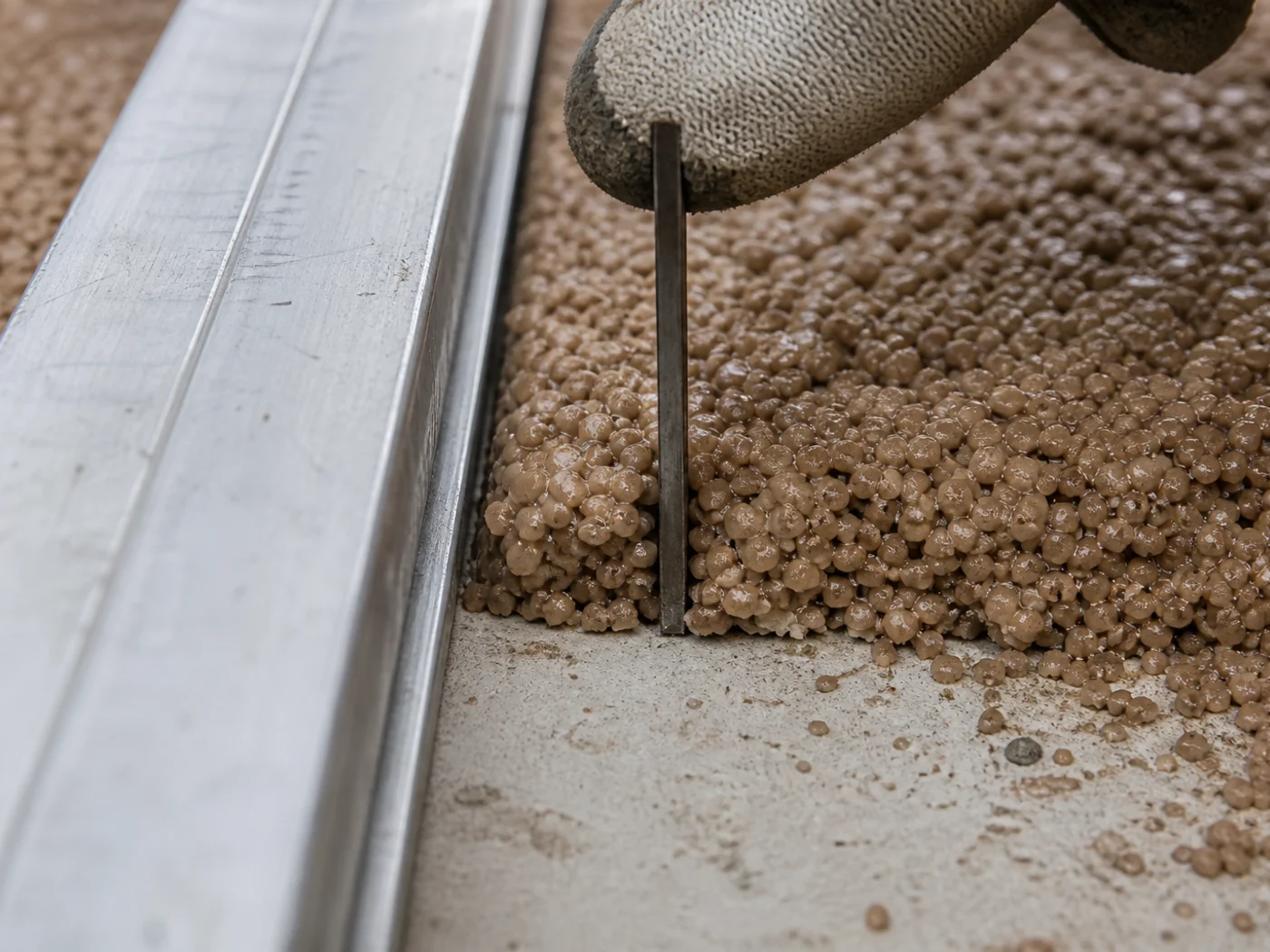
Thickness follows the base.
- Over a hard base of concrete, asphalt, metal or wood, tile of 0.4 to 1 inch is enough
- Over compacted soil or a sand bed, step up to 1.2 to 1.6 inches
- Under playground equipment, thickness follows the tested critical height rating rather than the base
Size follows the room. Large 40 by 40 inch modules cover open floor in exhibition halls and big retail spaces quickly. The 20 by 20 inch tile is the common size for walkways, patios and residential grounds. For curved paths, balconies, terraces, playgrounds and sports courts, a poured surface handles the geometry with far less cutting and waste.
How to spec a poured rubber surface
A poured surface is not a single product. It is a build, and the specification has to describe the build.
Name the total depth, the split between the SBR cushion layer and the EPDM wear layer, the granule size, the color and the binder type. A common outdoor build is an SBR base of 0.75 to 3 inches with an EPDM cap of 0.3 to 0.6 inch.
Depth is driven by use. Play areas are set by fall height, sports areas by the shock absorption the sport calls for, and walkways and pool decks by comfort underfoot rather than by any safety rating.
Once depth, layer split and granule are written down, poured and tile quotes can finally be compared on the same terms.
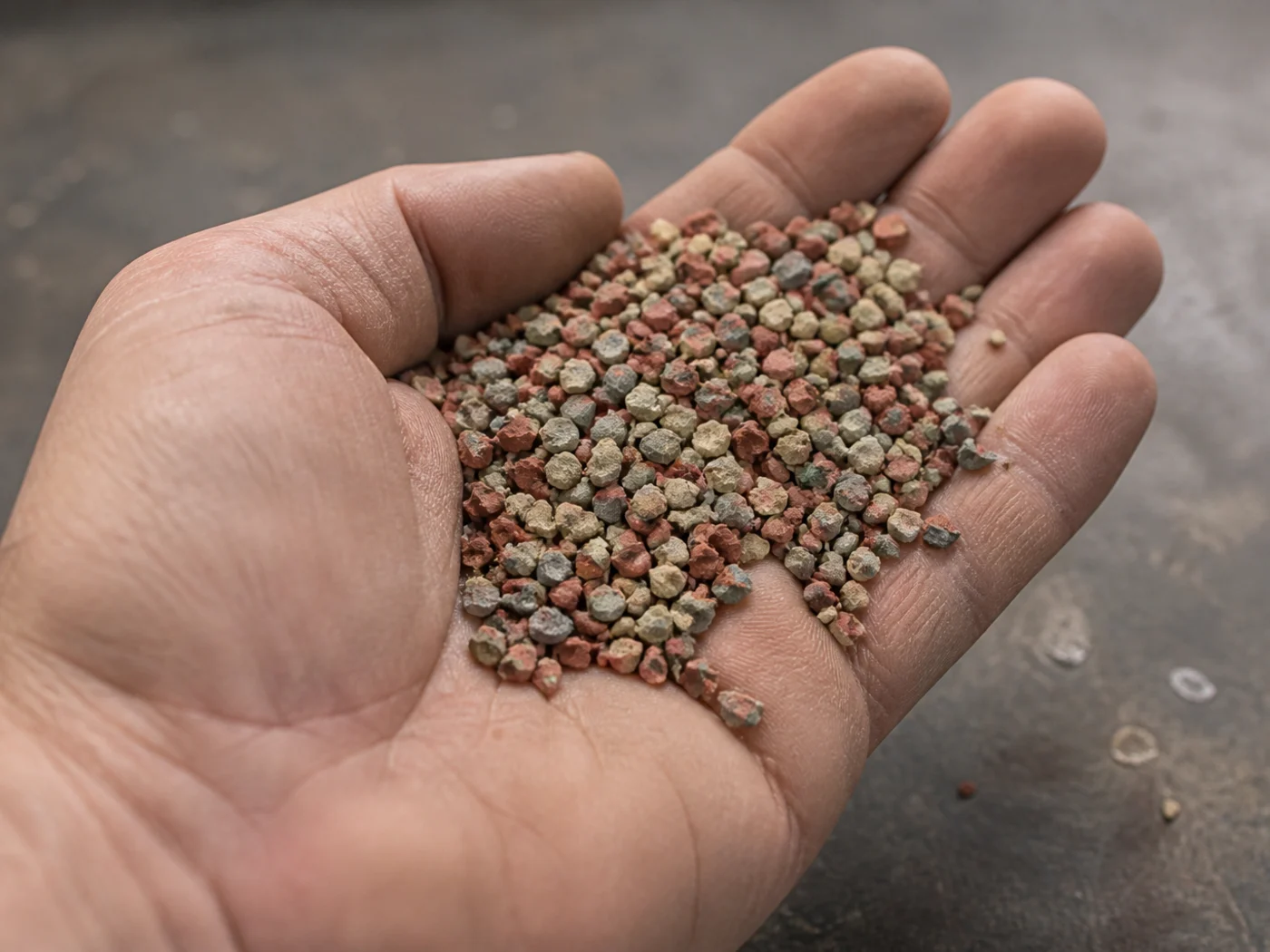 EPDM against SBR
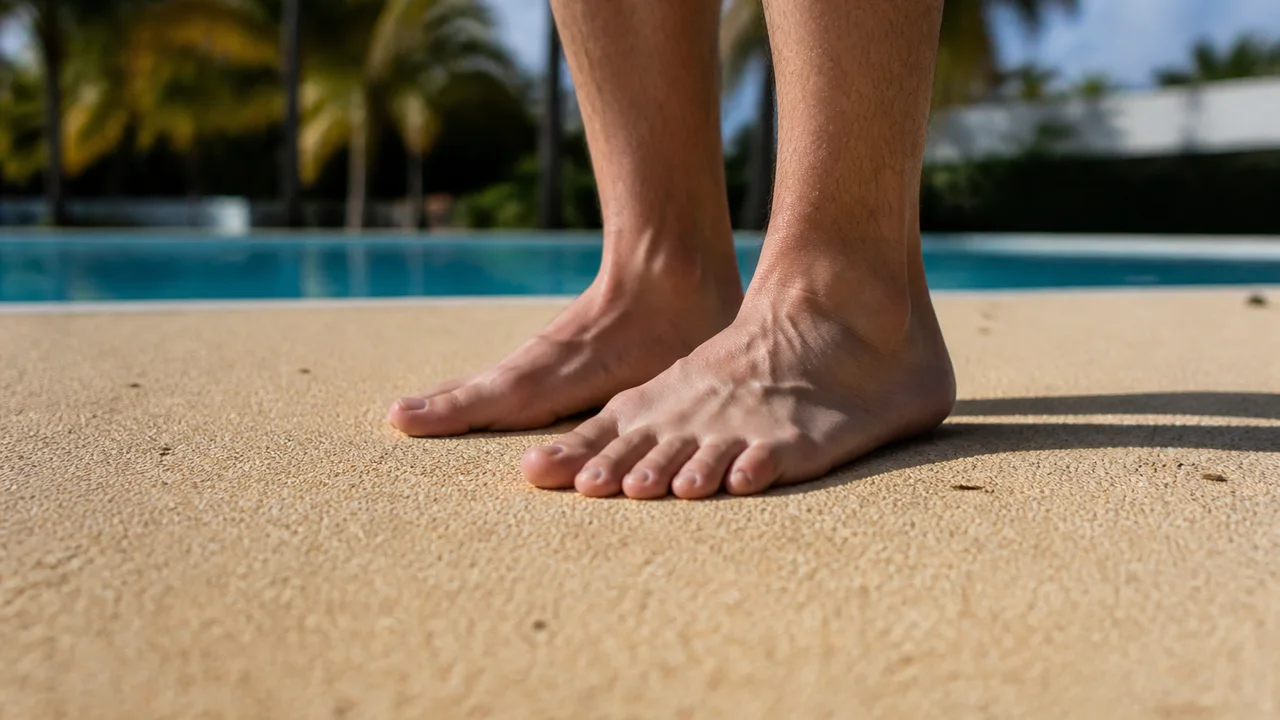 What stays coolest underfoot
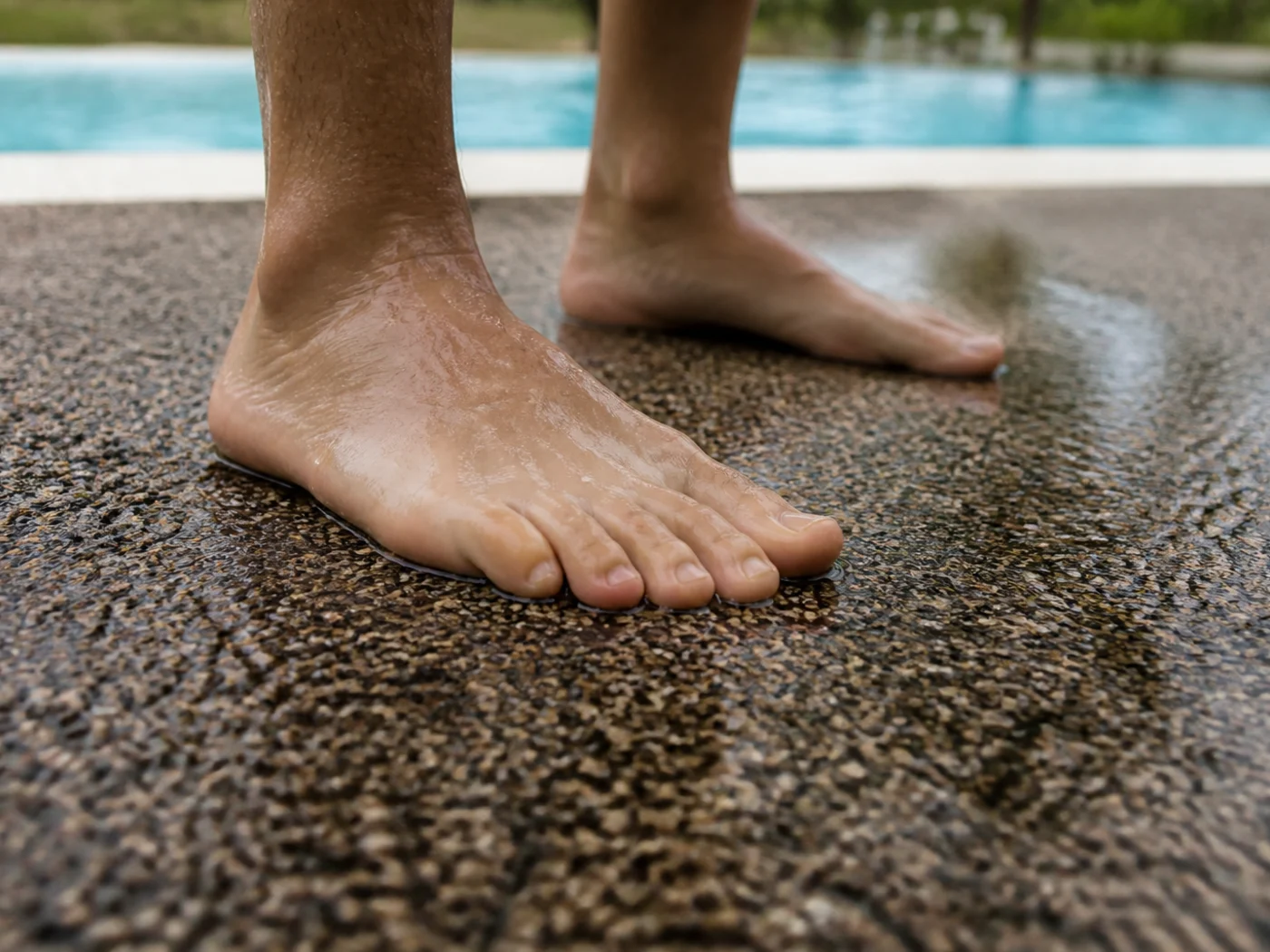 Grip when the deck is wet