Slip Resistance Around Pools
Written by the crew that installs it
Poured rubber is slip resistant around pools because it is porous rather than smooth. Water drains through the full 0.4 to 0.75 inch wear layer instead of sitting on top, and the bonded granule texture gives bare feet something to grip even under a film of water. It also runs far cooler than concrete, pavers or tile in direct sun, which is why most South Florida pool decks specify it.
Pool decks, lanais and splash pads in South Florida are wet, hot and walked barefoot for most of the year. A deck surface has to stay grippy when soaked, drain fast after an afternoon storm, and stay cool enough that nobody runs across it.
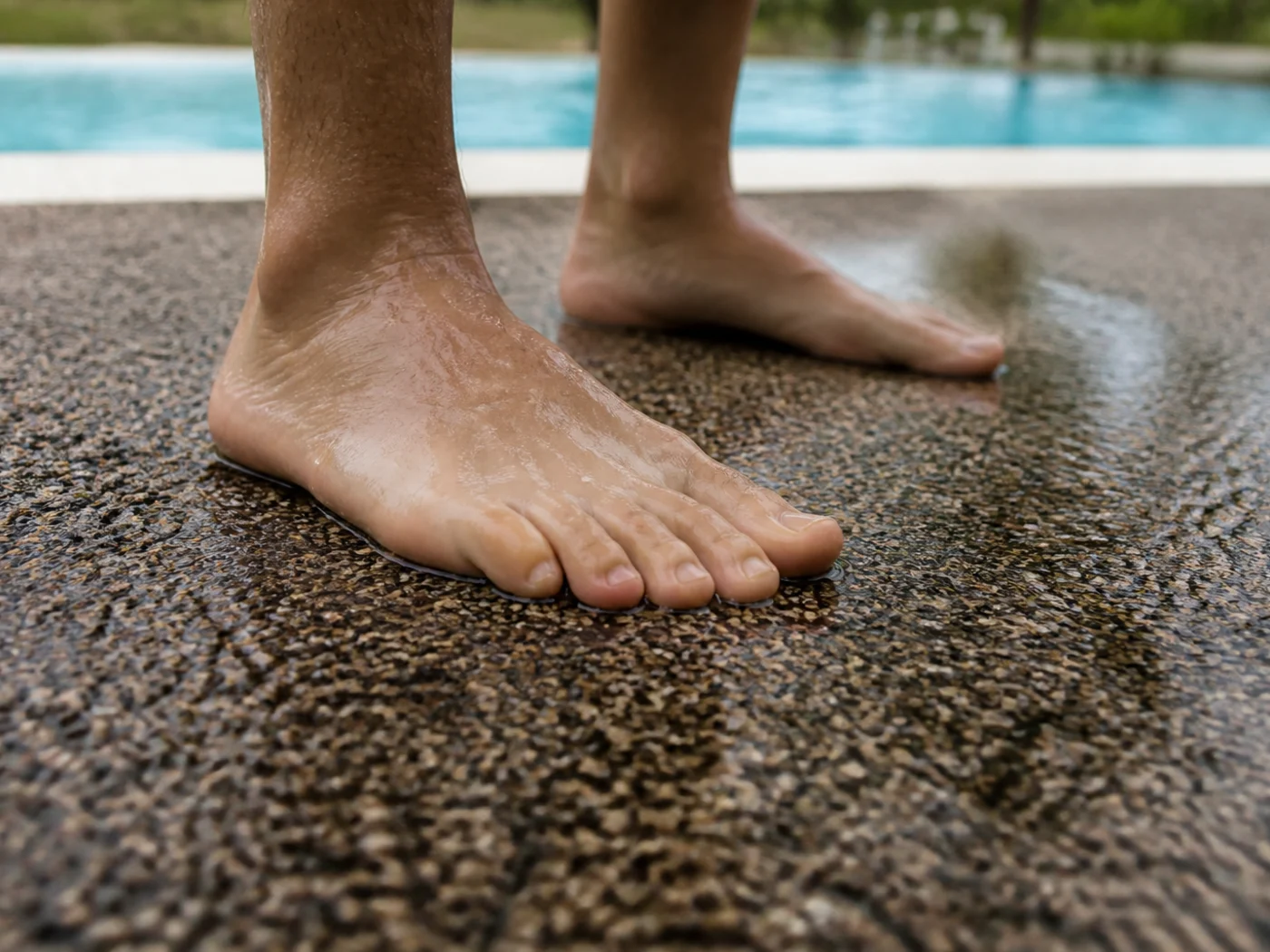
What makes a wet deck slip resistant
3 properties decide whether a wet deck is safe underfoot, and none of them is something you can add later with a coating.
The first is texture. A poured rubber surface is built from bonded granule, so the finished face is an open profile with thousands of small edges. Bare feet find grip on that profile even when the surface is running with water.
The second is drainage. The surface is permeable through its full depth, so splash out and rain pass through to the base instead of pooling. Standing water is what turns an otherwise sound deck into a hazard.
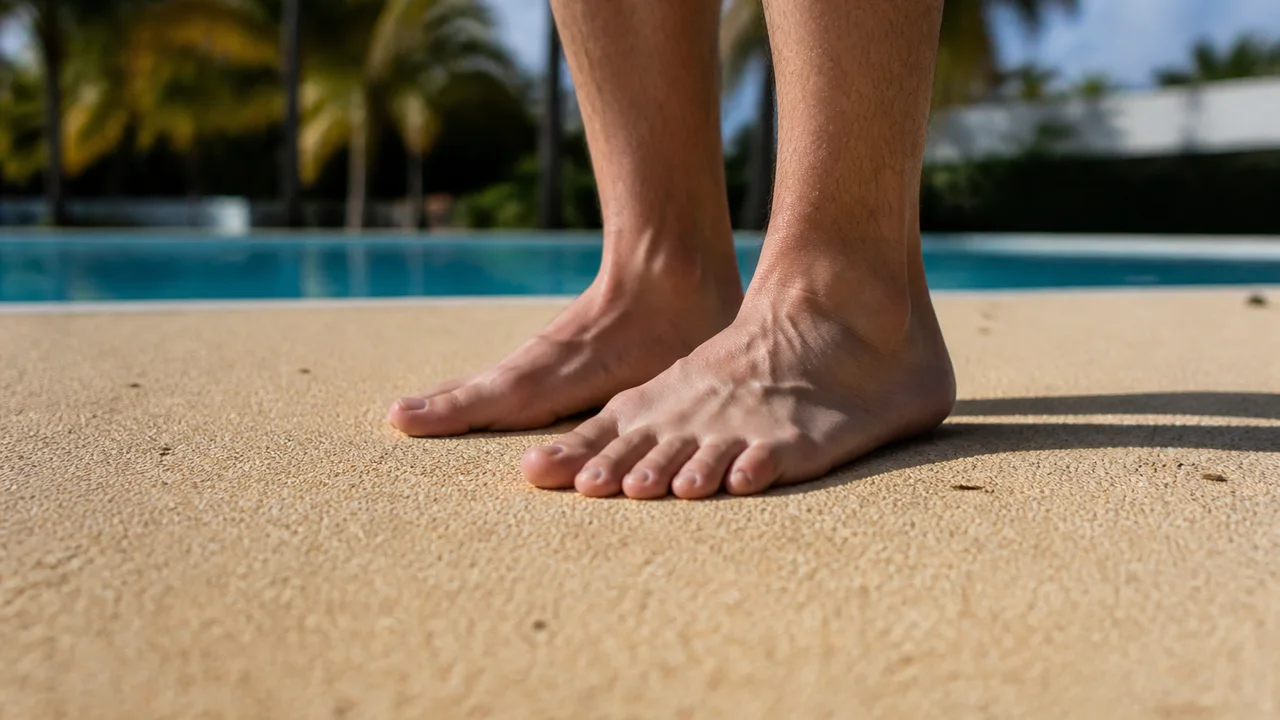
The third is temperature. A deck hot enough to hurt gets crossed at a run, and running is how most people fall around a pool. Rubber stays dramatically cooler than concrete, pavers or porcelain tile under the same sun.
How it compares with hard deck materials
The usual alternatives are adhesive abrasive strips, acid etched concrete, textured porcelain tile and anodized aluminum stair nosings. All of them look reasonable on paper.
Abrasive strips lift at the edges in Florida humidity and are unpleasant on bare feet. Etched concrete loses its profile as it wears and still stores heat. Textured tile traps water in its pattern and goes slick once sunscreen builds up in the grout lines.
Rubber surfacing keeps its grip because the texture is the material itself, not a treatment sitting on top of something smooth. There is nothing to wear off and nothing to peel.
How the surface handles falls
Around water the deck has a second job. When someone does go down, the surface decides how badly it ends.
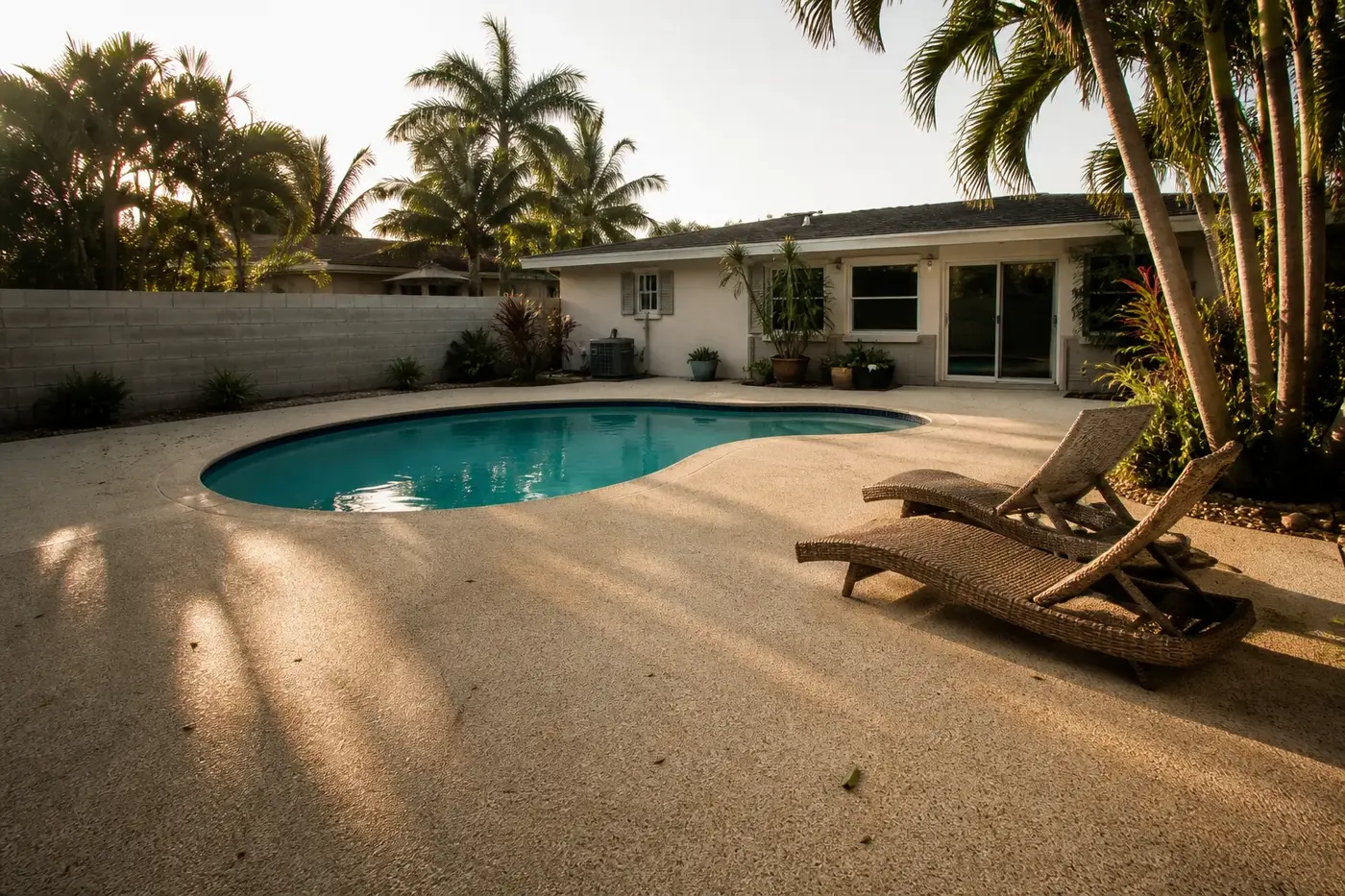
Poured rubber absorbs impact energy instead of reflecting it. Where a deck adjoins play equipment or a splash pad structure, that absorption is measurable under ASTM F1292, the Standard Specification for Impact Attenuation of Surface Systems Under and Around Playground Equipment. Testing yields a critical height rating, and that rating has to equal or exceed the fall height of the tallest structure on site.
The CPSC Public Playground Safety Handbook sets the layout rule, with the use zone extending a minimum of 6 feet in all directions from equipment. On a plain pool deck with no structures there is no rating to meet, but the same cushioning is why a slip leaves a bruise instead of a fracture.
What else the surface does
- Cushions impact across the whole deck rather than only at marked edges
- Comes in a wide color range, so the deck can be matched to the house, the coping and the pool tile
- Resists chlorine, salt water, sunscreen and year round UV without chalking
- Bridges hairline cracking in the concrete underneath and hides existing patchwork
- Goes down over a sound existing slab, so nothing has to be demolished or hauled away
- Drains through, so there is no grout line to scrub and no joint to hold algae
Where slip resistant surfacing goes
Rubber surfacing is used anywhere wet or bare feet meet a hard surface in a hot climate.
- Pool decks, coping surrounds and shallow entry steps
- Screened lanais and covered patios
- Splash pads and water play areas
- Outdoor stairs, treads and landings at homes and condo buildings
- Walkways between the pool and the house, where wet feet track water indoors
- Clubhouse and amenity deck entries in HOA and condo communities
- Any polished stone or tile approach that goes slick in a rain shower
The common thread is a smooth hard slab that people cross while wet. Those are the surfaces that send people to an emergency room, and they are all resurfaceable in place.
How a pool deck build is put together
A deck build is normally 0.4 to 0.75 inch of bonded granule over a prepared concrete slab. Steps, treads and splash pad areas usually go deeper, from 1.5 to 2.5 inches, because impact matters more where people land.
The slab is cleaned, cracks are routed and treated, and a primer is rolled on before the pour. Skipping the primer is the single most common reason a rubber deck lets go at the edges within 3 years.
Where an accessible route crosses the deck, ASTM F1951 is the relevant standard. It measures the effort needed to push a wheelchair across the finished surface and is cited alongside the ADA and ABA accessibility guidelines.
What it costs and how long it lasts
Installed pool deck and patio work in South Florida starts at about $8 per sq ft with base preparation included. A deck maintained normally lasts 10 to 15 years, and at the end of that it usually needs a fresh wear layer rather than a full rebuild.
Set that against demolition and new pavers at $25 to 40 per sq ft, or a thin roll on deck coating at $2 to 6 per sq ft that peels within 1 or 2 seasons and is slick the moment it gets wet.
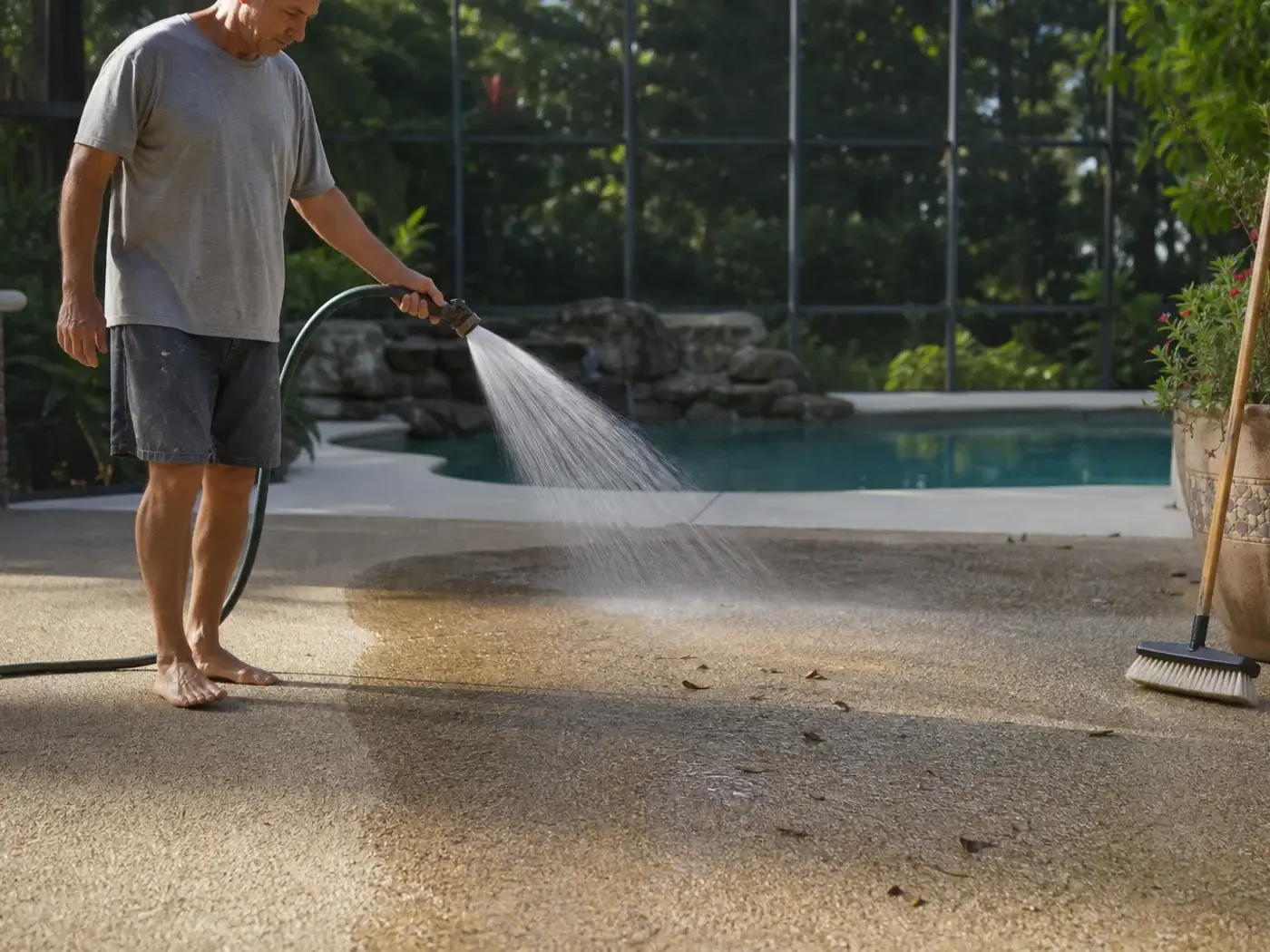
Maintenance is a rinse, an annual wash with mild soap and a stiff non metal brush, and the occasional patch. Nothing needs sealing or refinishing on a schedule.
 What stays coolest underfoot
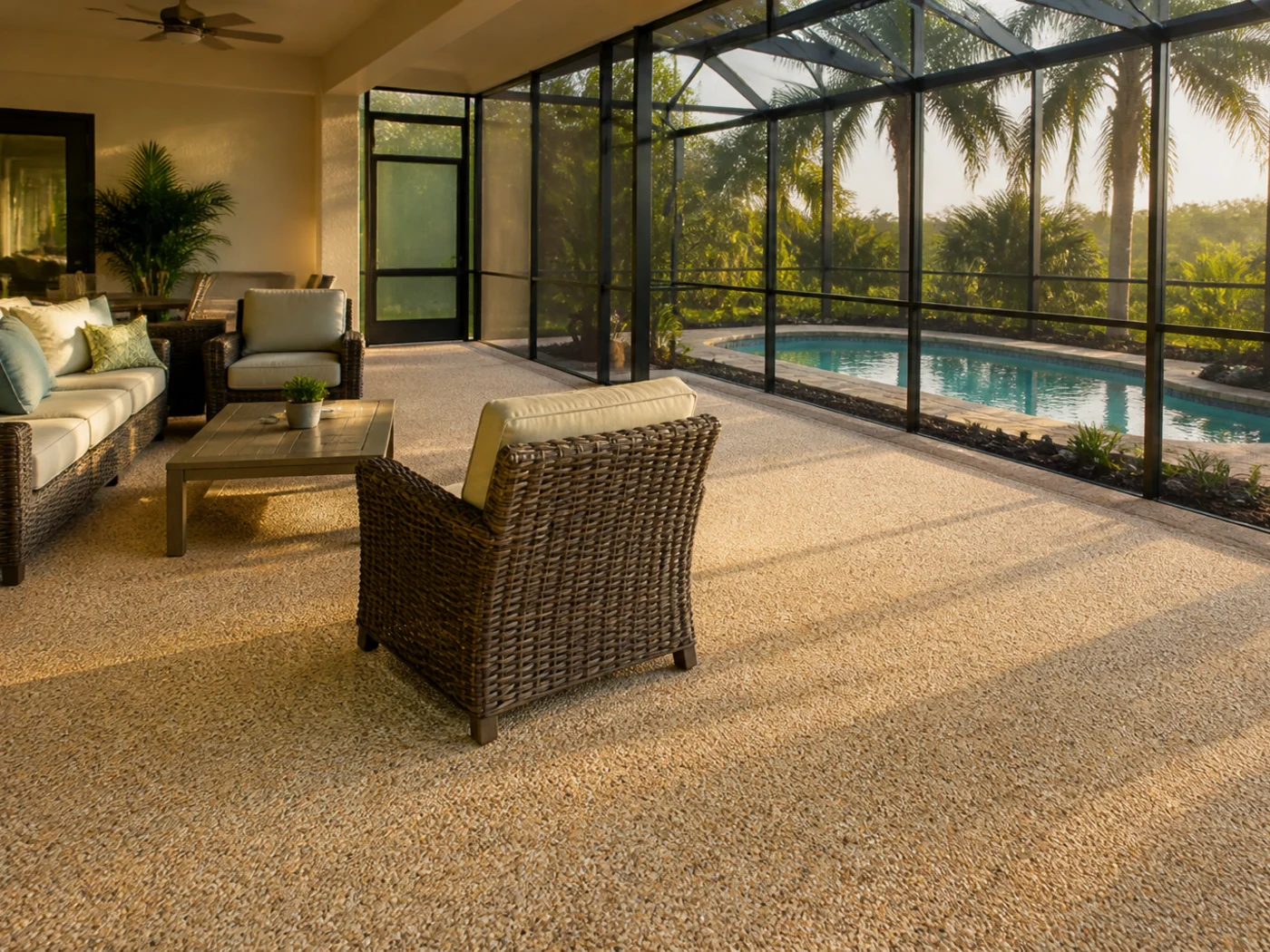 Patios and lanais