Stone Carpet for Patios and Lanais
Written by the crew that installs it
Stone carpet suits South Florida patios and lanais because it is permeable, seamless and grippy when wet. A typical residential pour runs about 0.4 inch deep over concrete, drains straight through instead of ponding, and lasts 10 to 15 years outdoors. The substrate needs 1 to 2 percent of fall away from the house and a moisture reading at or below 4 percent before any work starts.
A patio or lanai takes daily furniture load, bare feet, sunscreen, salt air and a summer storm most afternoons. The surface has to drain fast, stay cool enough to stand on and keep its color under year round sun.
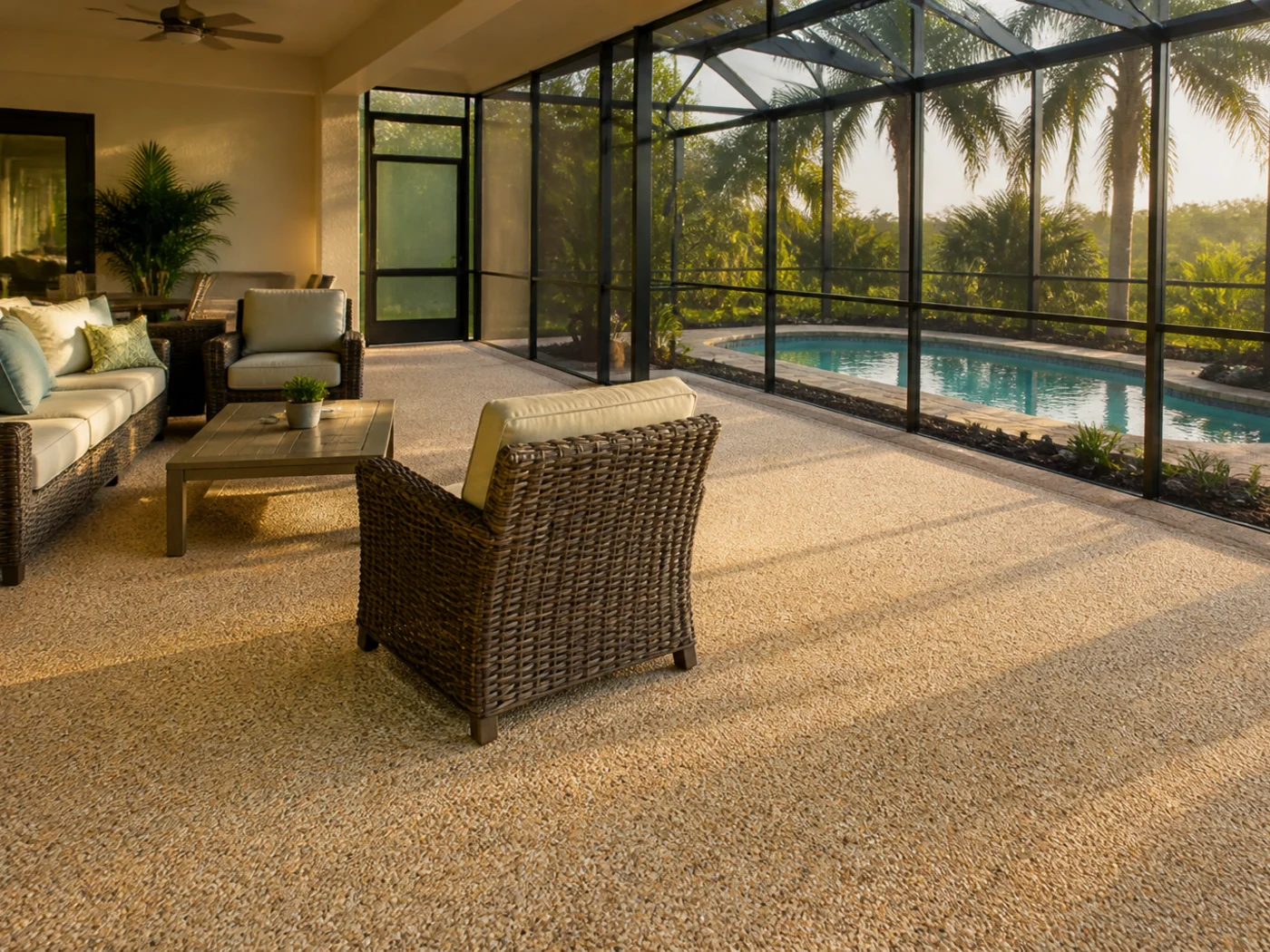
Stone carpet is natural aggregate poured wet and locked into a clear polyurethane binder. It cures as one continuous sheet, which is what removes the joints and the drainage problems that come with them.
Why stone carpet suits a patio or lanai
The surface is permeable. Rain and pool splash pass through the voids between the stones rather than sheeting across the top, so a lanai clears within minutes of a storm instead of holding puddles at the low corners.
Texture comes from the stone itself, which gives usable grip barefoot and wet. That is the property that matters most on a screened lanai where the floor stays damp after every rain.
Light colored aggregate reflects rather than stores heat, so the surface runs cooler underfoot than dark pavers or sealed concrete through the middle of the day.
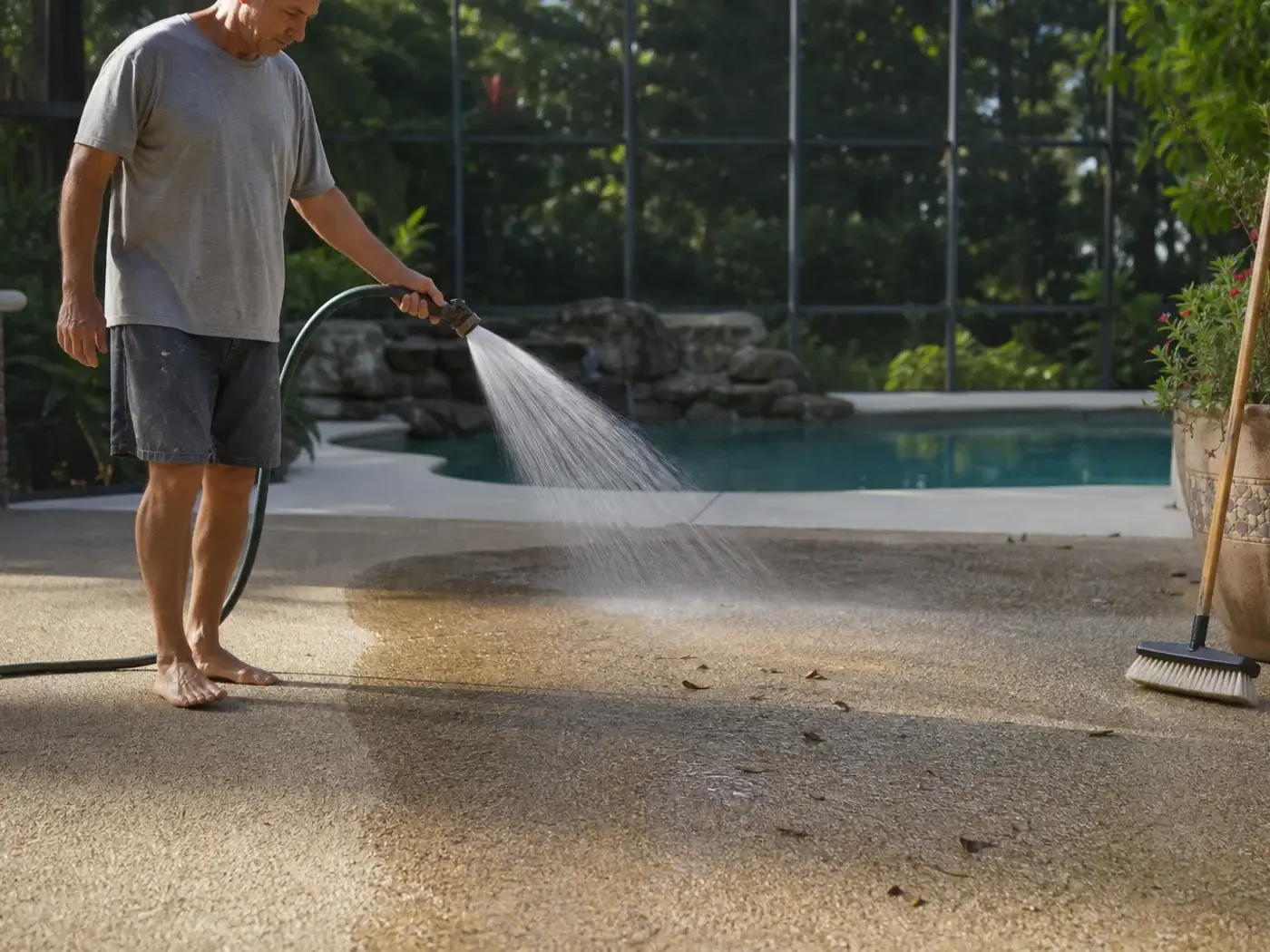
There are no joints, which removes the weeds, ants and shifting slabs that come with a paver deck. Maintenance is a rinse with a hose or a low pressure wash, and normal service life outdoors is 10 to 15 years.
Which aggregate to choose for a lanai
The rock type sets the look and the price. The size grading sets drainage and comfort, and 0.08 to 0.2 inch covers most residential patios.
Marble chip
The lowest cost option and the most uniform. Colors run from white through grey to near black, and the even grading reads as a calm flat field, which suits minimalist and traditional patios equally.
Quartz sand
The middle of the range on price. Quartz offers a wider color set and a finer control over the finished tone, and it holds color well under direct sun. It is the usual choice where a specific shade has to match a house or pool tile.
River pebble
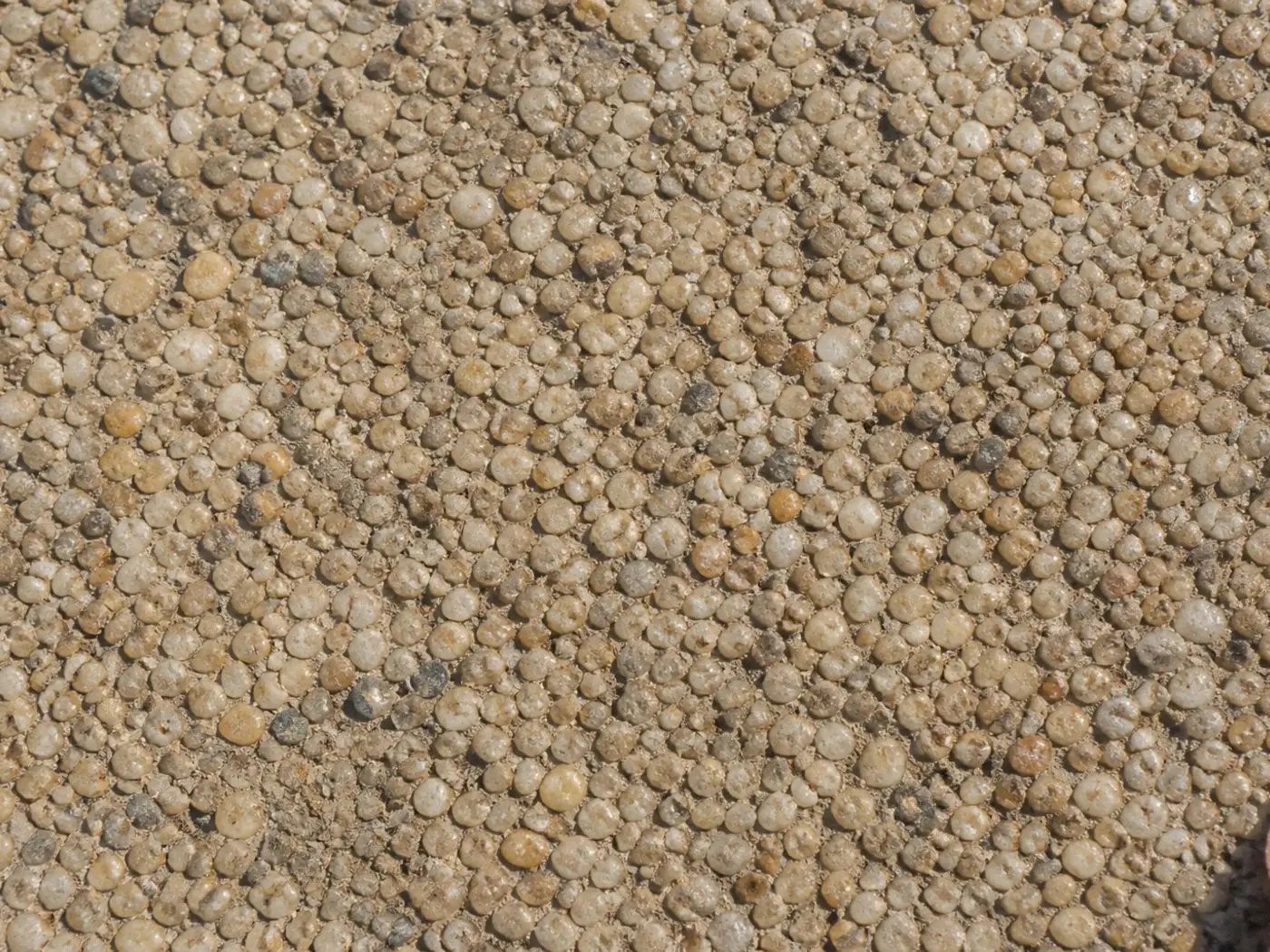
The highest cost of the 3 and the most natural in appearance, with rounded stones and visible variation across the pour. Rounded pebble is also easy on bare feet, which is why it turns up on pool surrounds and Mediterranean style patios.
How to prepare the patio substrate
Substrate work decides whether the deck lasts. Stone carpet is thin and rigid, so it copies whatever sits below it, cracks and hollow spots included.
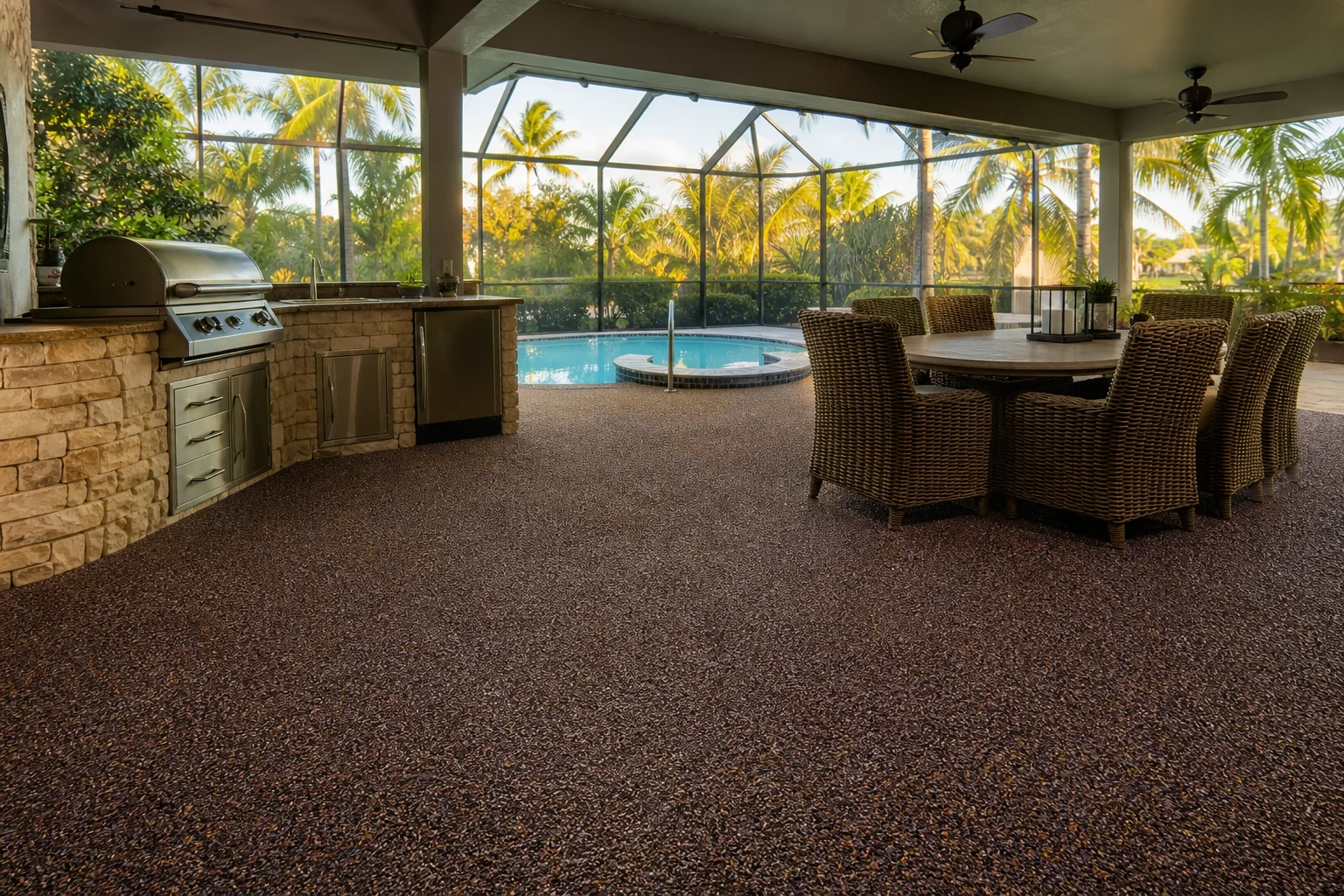
- Assess the concrete slab or existing tile and mark out hollow, cracked or spalling areas for repair
- Grind or shot blast the surface, then vacuum off all dust, grease and loose material
- Build 1 to 2 percent of fall away from the house, roughly 1 inch of drop across 8 feet
- Confirm substrate moisture at 4 percent or lower, with at least 28 days of cure on new concrete
- Apply a polyurethane or epoxy primer and let it set before the pour
Existing tile can stay in place if it is well bonded and sounds solid. Where it is not, removal is cheaper than a delamination repair 2 years later.
Which mistakes ruin a patio install
4 faults account for most early failures on residential patios and lanais.
- Pouring over a damp substrate. Moisture above 4 percent breaks the bond and the surface lifts at edges within a season
- Leaving the deck flat. With no fall, water sits against the bond line and stains the underside of a light aggregate
- Using an aromatic binder outdoors. It ambers under ultraviolet light and the shift is permanent on white marble chip
- Pouring below 50 degrees F or above 90 degrees F. Cold slows the cure below full strength, heat collapses the working time
All 4 are decided before the first batch is mixed, which is why a substrate inspection and a written binder specification are worth more than any product claim.
What a lanai installation involves
A residential patio or lanai is usually a 2 to 3 day job, and most of that time is preparation rather than the pour itself.
Day 1 covers grinding, crack repair, any leveling screed needed to build slope, and priming. The pour follows once the primer has set, and a typical 400 square foot lanai is placed in a single session so the whole floor cures as one sheet.
Cure times govern the rest. Foot traffic can return after about 24 hours, furniture after 72 hours, and full chemical cure completes over the following week.
Sizing happens on site, since aggregate quantity depends on the pour depth and substrate condition rather than on floor area alone. Physical samples in the actual light of the space are the reliable way to settle a color, because aggregate reads differently under a screened roof than it does in a catalog.
 Stone carpet, the whole thing
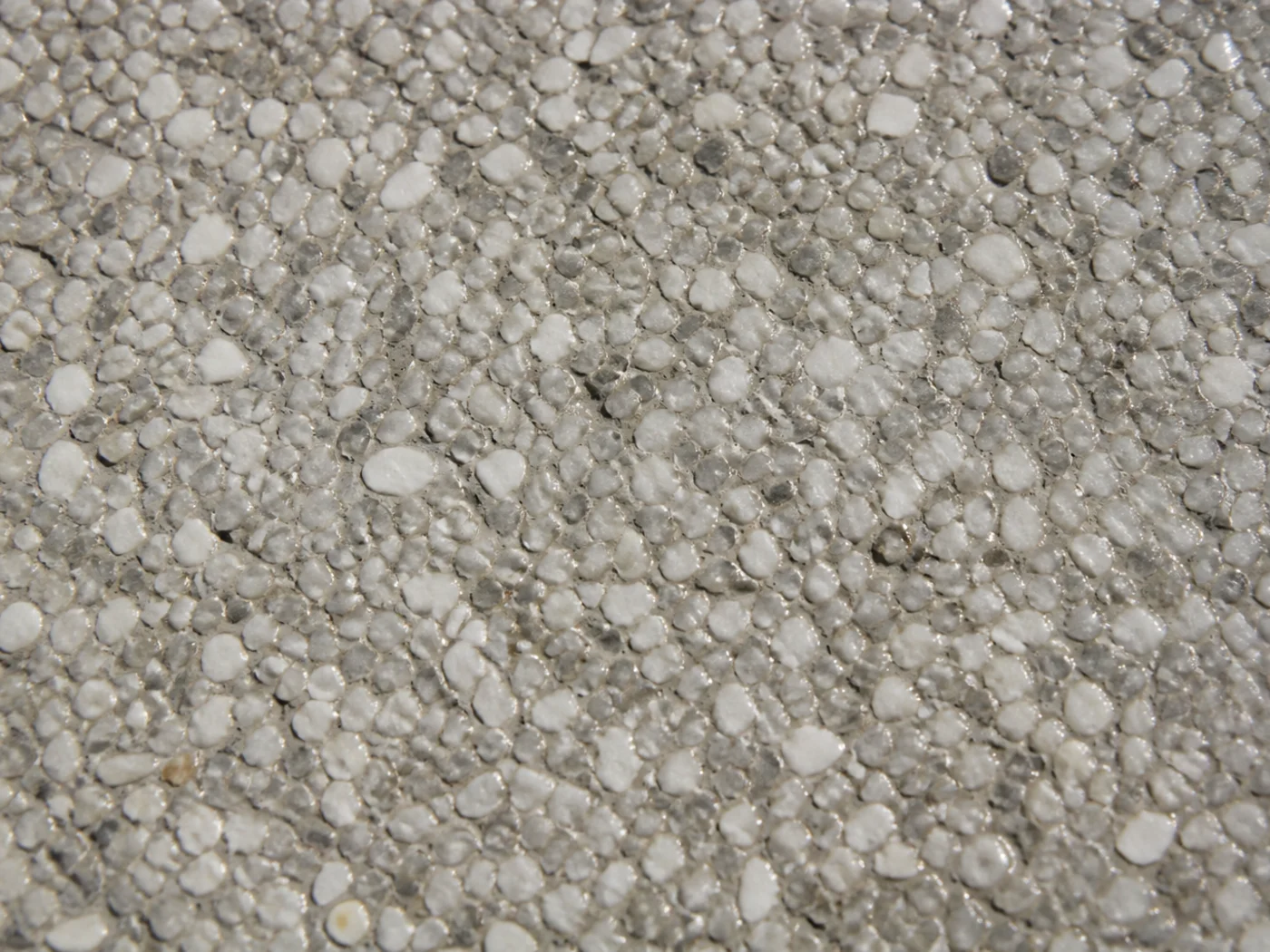 Choosing the stone aggregate
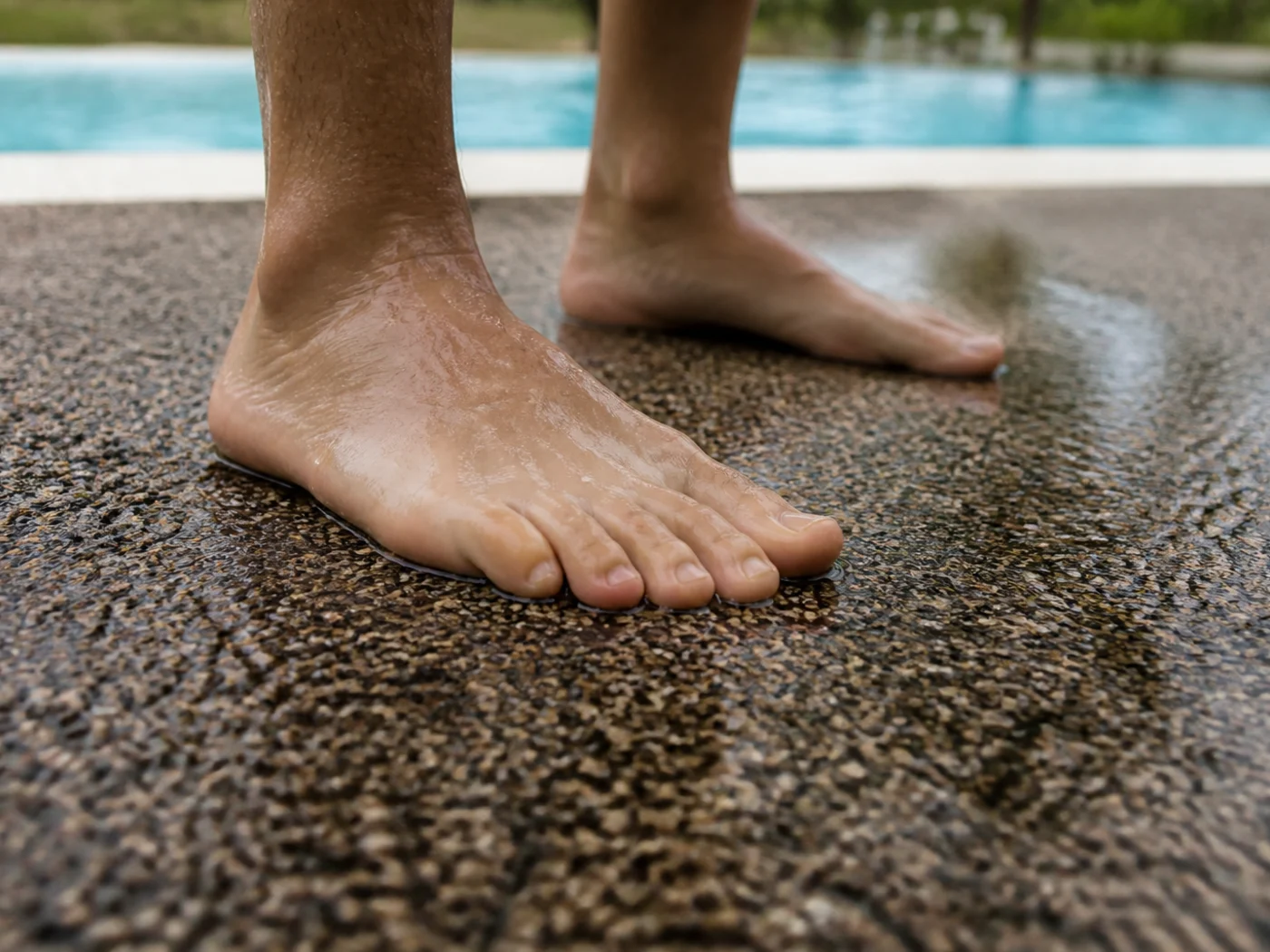 Grip when the deck is wet