Choosing the Right Stone Aggregate
Written by the crew that installs it
For most stone carpet work the practical aggregate size is 0.08 to 0.2 inch, laid at a finished depth of about 0.4 to 0.6 inch. Finer stone down to 0.04 inch gives a smoother indoor floor and uses more resin. Coarser stone up to 0.3 inch drains faster and suits open decks. In South Florida the second decision is color, because pale stone runs 20 to 30 degrees F cooler underfoot than dark stone in full sun.
The aggregate is the part of a stone carpet everyone sees and walks on. Size, shape, quality and color decide the texture, the drainage, the resin consumption and how the floor feels barefoot in August.
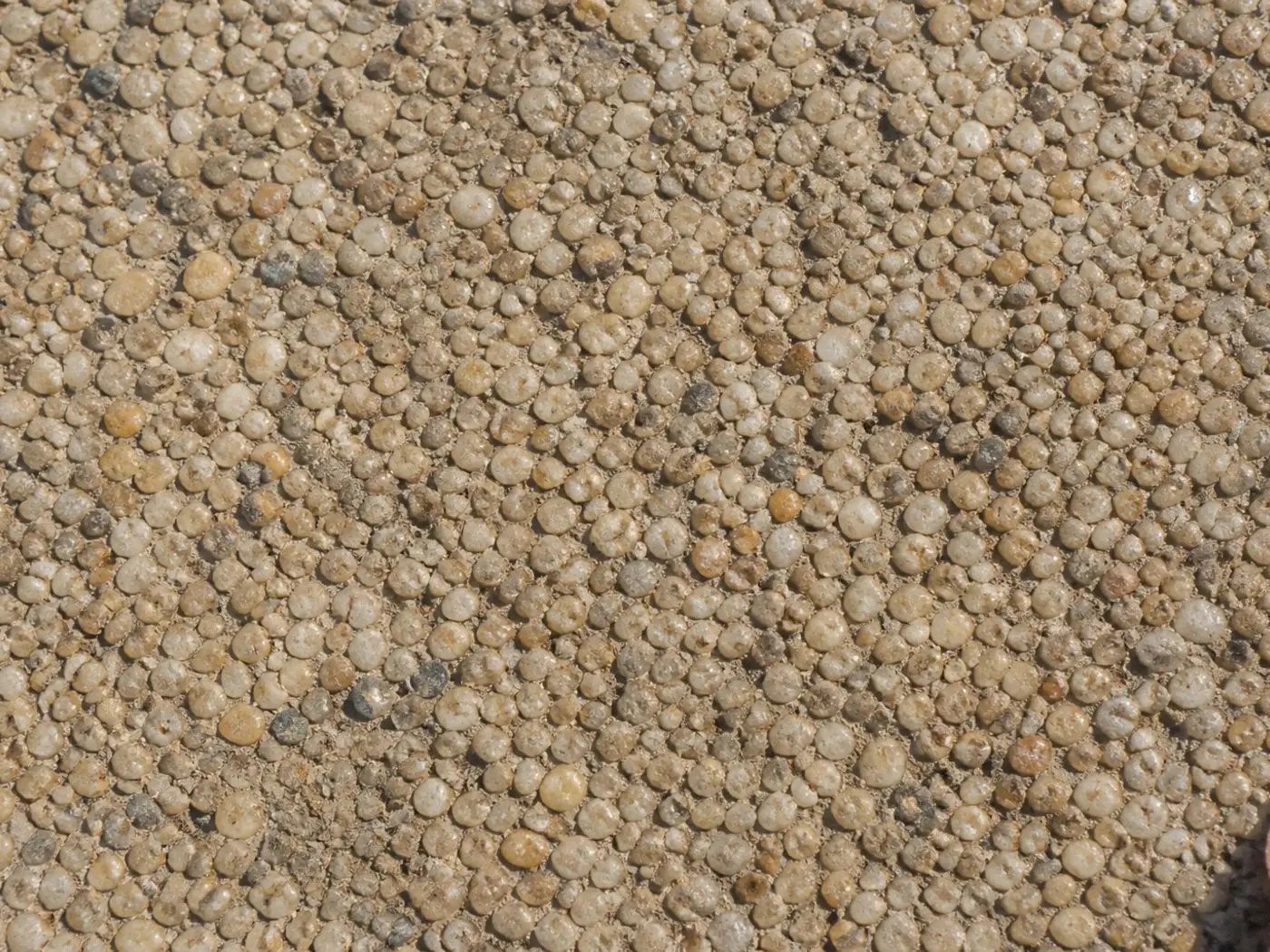
Stone carpet installs at roughly 8 to 14 dollars per square foot in South Florida, and the aggregate choice moves that number as much as the size of the job does.
What stone is used in a stone carpet
4 aggregates cover almost every stone carpet installed here, and each one has a job it does better than the others.
Marble chip is the decorative standard. It comes in the widest color range, breaks with clean faces that catch light, and holds its color for the life of the floor.
Quartz sand is the hardest of the group and the usual pick for commercial floors, entryways and anywhere carts roll daily. The grains are uniform, which gives a tight even surface.
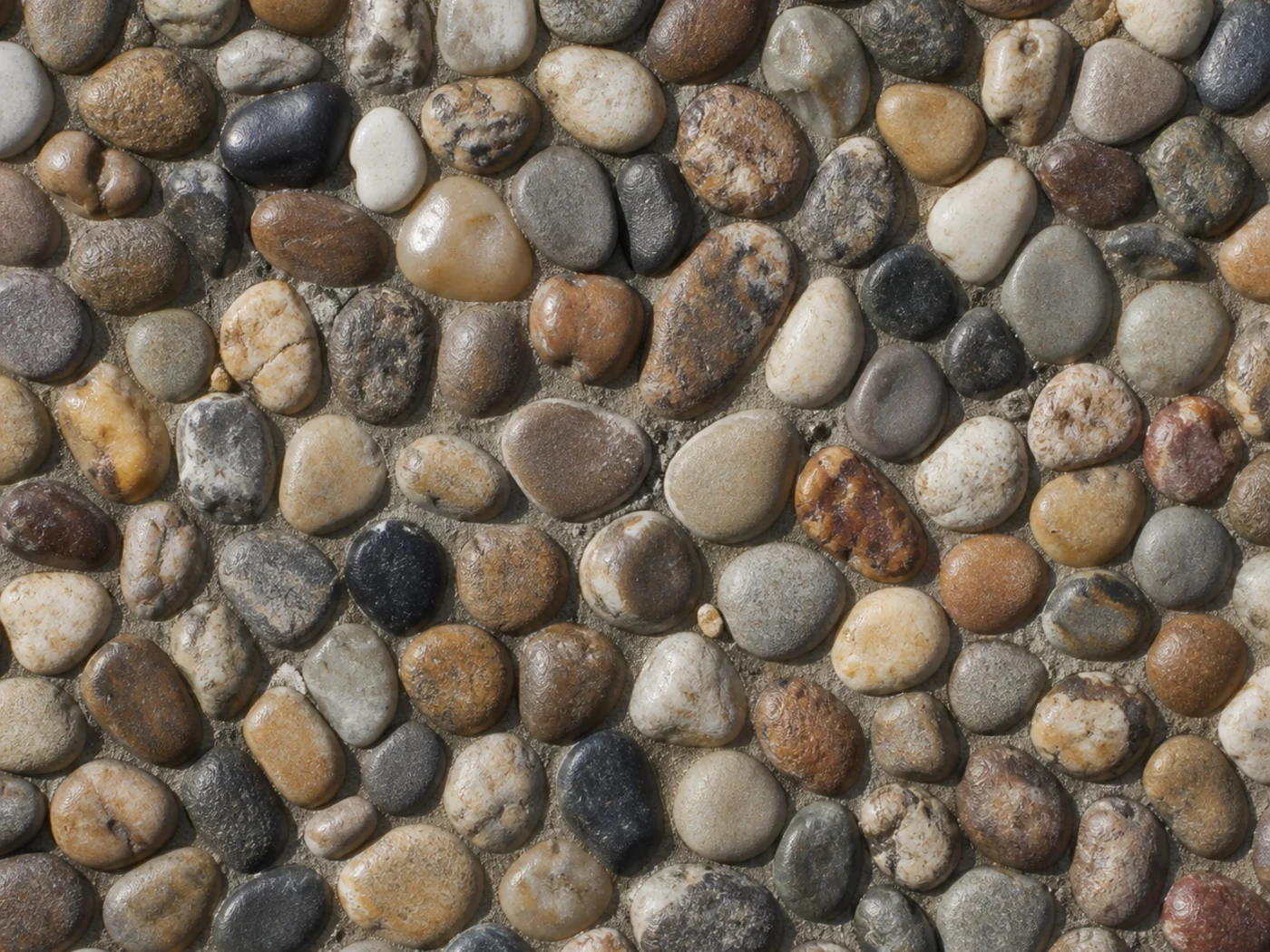
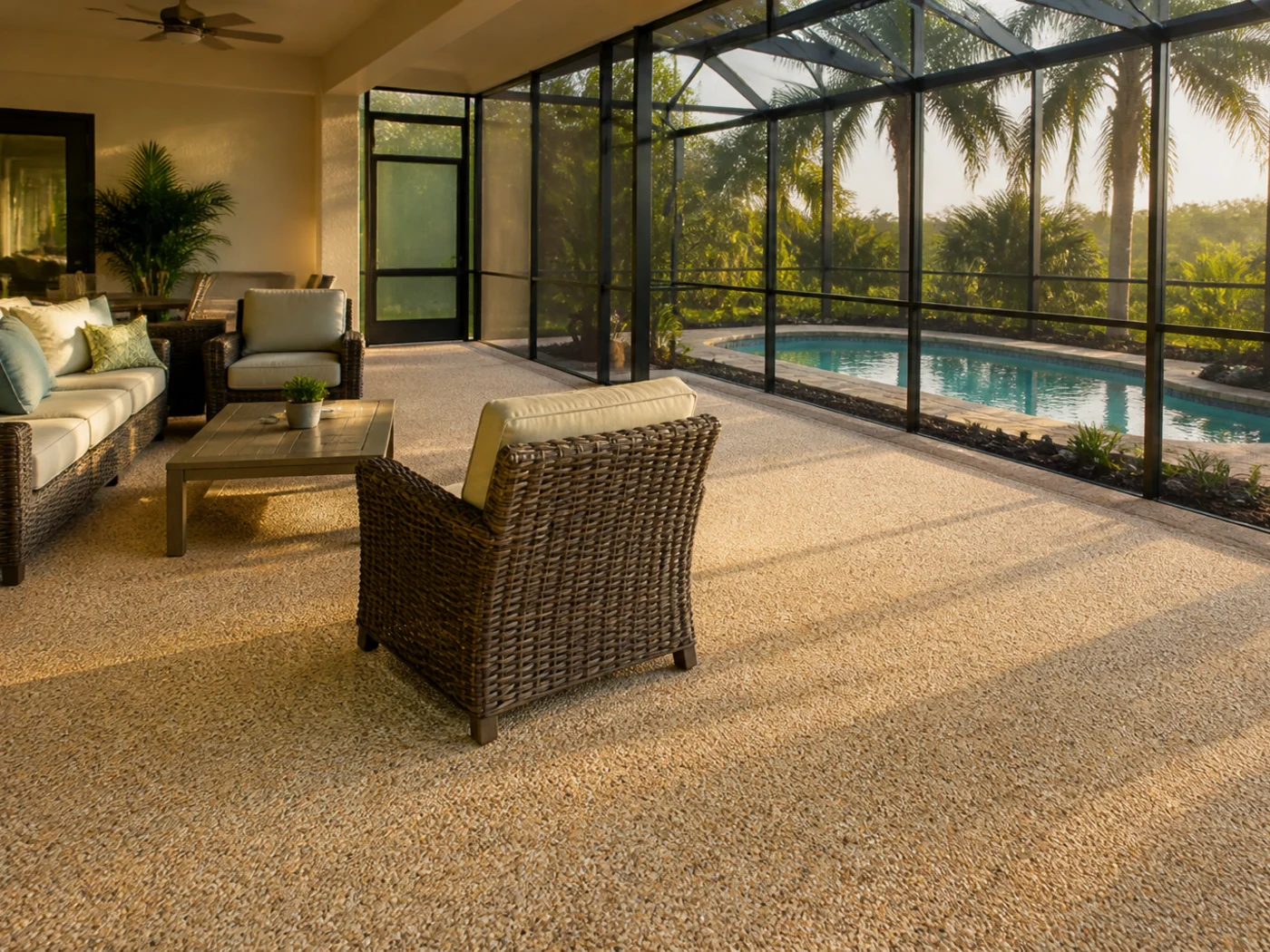
River pebble is rounded rather than crushed, so it reads soft and natural. It is the common choice for patios, pool surrounds and landscape edges.
Crushed granite sits between marble and quartz on both price and hardness, and its angular faces give the most traction of the 4.
| Aggregate | Shape | Best for |
|---|---|---|
| Marble chip | Crushed | Widest color range, decorative work |
| Quartz sand | Uniform grains | Commercial floors and entryways |
| River pebble | Rounded | Patios, pool surrounds, barefoot comfort |
| Crushed granite | Angular | The most traction of the 4 |
Marble chip is the decorative standard, quartz the hardest, river pebble the softest underfoot and crushed granite grips best. Mid grade stone at 0.08 to 0.2 inch covers most Florida jobs.
Which aggregate size to choose
Size is the first specification on any stone carpet, because it sets texture, drainage and how much resin the job consumes.
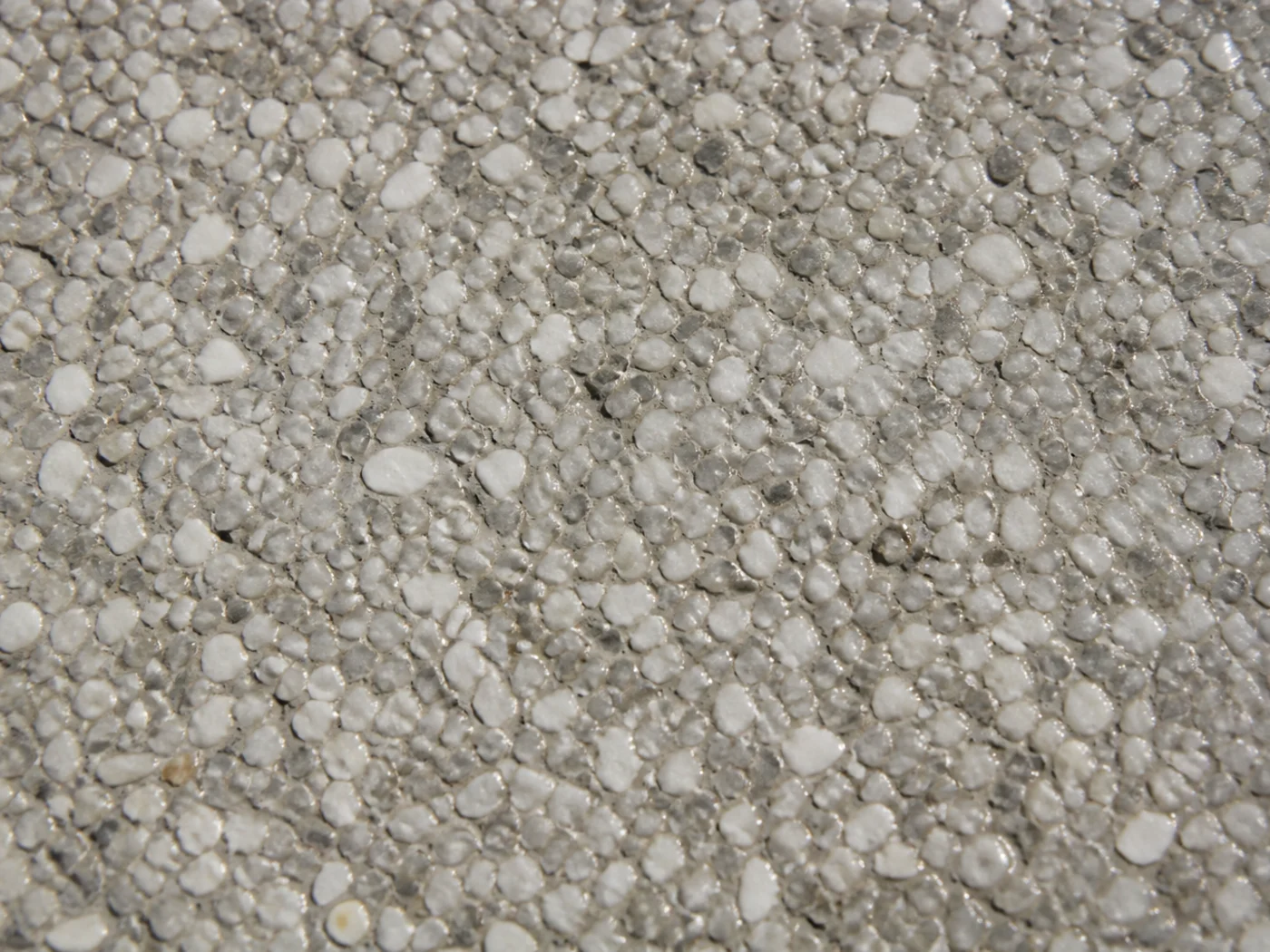
Fine stone at 0.04 to 0.12 inch
The smoothest finish available in this system and the easiest to sweep or mop. It reads almost as a solid floor from standing height. It suits indoor rooms, showers and covered entries. It uses the most resin of the 3 grades.
Mid stone at 0.08 to 0.2 inch
The default on most jobs. It balances a comfortable barefoot texture against enough void space to drain, and it works indoors and outdoors without changing the build.
Coarse stone at 0.16 to 0.3 inch
Pronounced texture, the fastest drainage and the most grip when wet. It is specified on open pool decks, ramps and paths, and it is the least comfortable of the 3 to kneel or lie on.
How stone shape changes the surface
Shape matters as much as size and gets far less attention. Aggregate arrives either rounded by water or crushed by a mill, and the 2 behave differently once resin locks them in place.
Rounded pebble packs loosely, leaves more void space and feels smooth underfoot. It is comfortable barefoot and gentler on knees and elbows, which is why it shows up around pools and on patios where people sit on the deck.
Crushed chip has angular faces that interlock. That gives higher compressive strength, better grip when the surface is wet, and a slightly sharper texture. It is the right call for ramps, walkways and any slope.
Mixing shapes in 1 pour is a mistake. The 2 shapes settle at different rates in the trowel and the finished surface ends up with patchy texture.
How much binder each size takes
Resin coats surface area, and smaller stone has far more surface area per pound. That single fact drives the material cost of a stone carpet.
Fine aggregate typically needs 10 to 12 percent resin by weight of the mix. Mid grade sits around 9 to 11 percent, and coarse stone can be bound at 7 to 9 percent. Across a 400 square foot deck that spread is worth several hundred dollars in material.
Finished depth follows the stone as well. A workable rule is 3 to 4 times the largest stone diameter, so a fine floor lands near 0.4 inch and a coarse outdoor deck near 0.75 inch.
Under resining to save money is the most expensive shortcut in this trade. The floor sheds stone, lifts at the edges and cannot be patched without the repair showing.
How to judge aggregate quality
Aggregate has to be washed, kiln dried and screened to a single grade before it reaches the mixer. Any of those steps skipped shows up in the finished floor.
Dust is the main enemy. A film of fines sits between the resin and the rock, so the bond forms against powder instead of stone. The result is cloudy patches and aggregate that rakes loose in the first year.
Moisture is the second. Damp stone reacts with a curing polyurethane and leaves foam or bubbles inside the slab.
Grading is the third. A bag holding a wide spread of sizes packs unevenly, so the small stone fills the voids that were supposed to carry drainage and the surface loses permeability.
Rub a handful together and check the palm. Clean stone leaves a clean hand.
How to choose stone for outdoor use
Outdoor stone in South Florida is chosen for drainage, sun and salt before it is chosen for looks.
- 0.08 to 0.2 inch or 0.16 to 0.3 inch for open drainage
- marble, quartz or granite rather than soft or porous stone
- aliphatic binder, since aromatic resin ambers in sun
- pale or mid tone color to hold surface heat down
Drainage is the reason poured stone carpet works around a pool. A correctly built surface moves water straight through the void space between stones, so puddles do not stand and the deck is usable minutes after a storm.
Salt spray and pool chemistry rule out limestone and soft sedimentary stone within a few feet of the water. Marble, quartz and granite all handle it.
How stone choice affects surface heat
Barefoot comfort is a real specification in Florida, not a preference. Surface temperature on an unshaded deck at 2pm is set mostly by color and secondly by texture.
Pale beige, white and light gray aggregate typically run 20 to 30 degrees F cooler than charcoal or black under the same sun. On an afternoon that puts dark concrete near 150 degrees F, that gap is the difference between walking across a deck and hopping.
Texture helps as well. A coarse surface holds less contact area against the sole of a foot and sheds heat faster once shade arrives, so a 0.16 to 0.3 inch deck feels cooler than a fine one of the same color.
Anywhere children or dogs use the deck barefoot, color should be settled before the design is settled.
How to choose stone for indoor floors
Indoors the priorities invert. Drainage stops mattering, sun stops mattering, and cleaning and comfort take over.
Fine aggregate at 0.04 to 0.12 inch is the usual answer. It gives a nearly flat surface that takes a mop, and it can be sealed with a clear topcoat so nothing lodges in the voids.
Quartz sand is the durable option for commercial interiors, and marble chip is the decorative one for residential rooms, lobbies and showers.
Sealed indoor stone carpet is no longer permeable, which is exactly what is wanted on a floor over living space. It also means the substrate has to be dry and tested before the pour, since trapped moisture now has nowhere to go.
Indoor floors can safely use aromatic binder, because the ultraviolet exposure that ambers it is not there.
How color choice changes the result
Color comes from the stone itself, not from pigment, so it does not fade. What changes is how the floor lives with dirt and sun.
Light stone shows organic debris, leaf stain and algae sooner, and needs rinsing more often on a shaded north side. Dark stone hides all of it and pays for that in heat.
Blends are the practical middle. A mix of 2 or 3 tones disguises everyday dirt, hides the joint where 1 batch meets the next, and keeps surface temperature moderate.
Always look at a cured sample outdoors before ordering. Wet stone, dry stone and stone under a clear topcoat read as different colors, and a chip viewed indoors is not what lands on the deck.
What to take away
Mid grade stone at 0.08 to 0.2 inch, crushed for grip or rounded for comfort, covers the majority of jobs in South Florida. Move finer for indoor smoothness and coarser for drainage on open decks.
Buy stone that is washed, dried and single graded, keep the resin at the percentage the size calls for, and choose the color for heat before choosing it for style.
Those decisions are locked in before the first bag is opened, and they set how the floor looks and performs for the next 10 to 15 years.
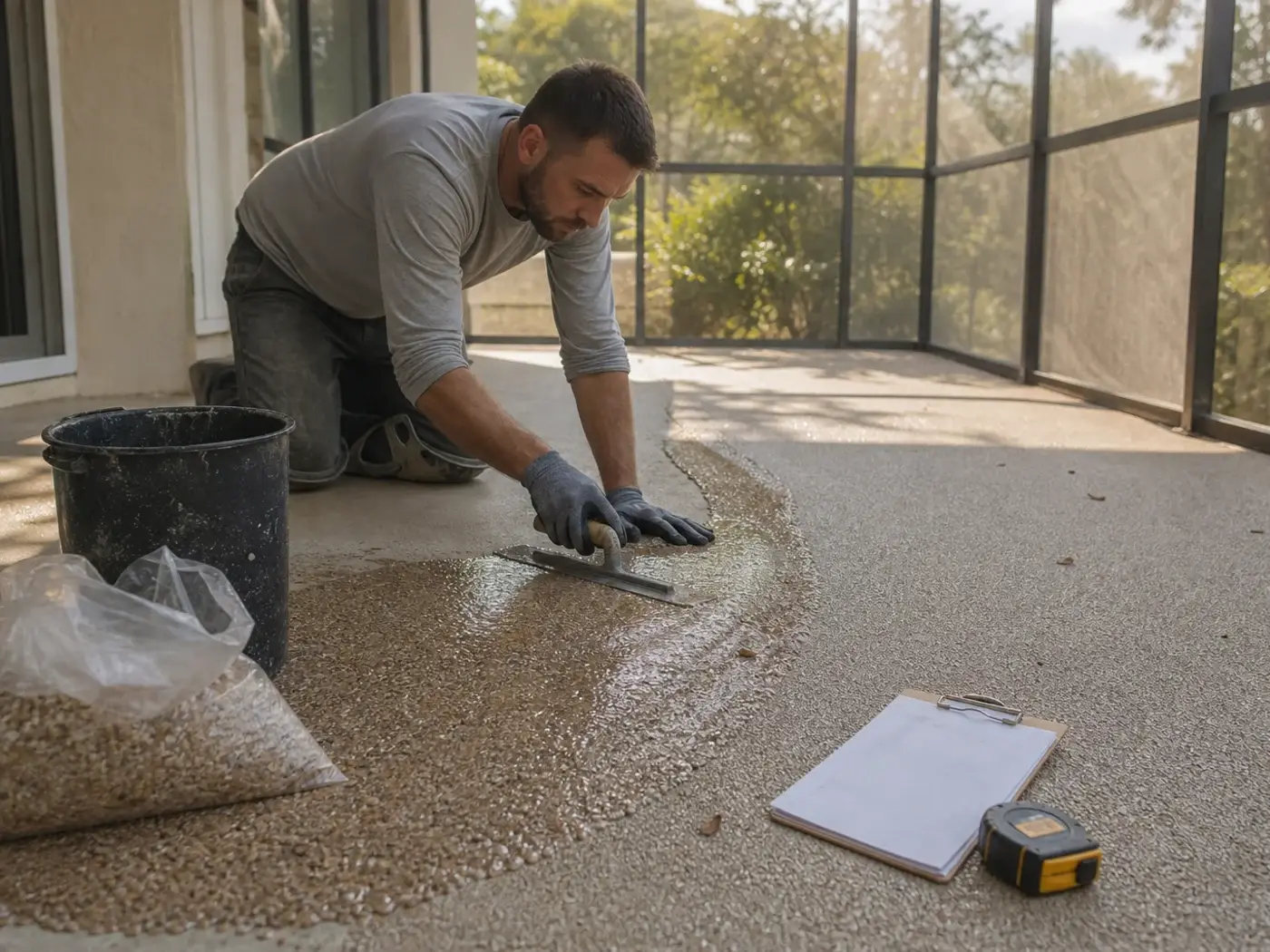 What stone carpet costs here
 Patios and lanais