Stone Carpet, The Complete Guide
Written by the crew that installs it
Stone carpet is natural stone aggregate bound with polyurethane resin and troweled out as a seamless surface, normally 0.3 to 0.6 inch thick over a concrete slab. It drains through its own structure, holds a natural grip when wet, and lasts 10 to 15 years outdoors when an aliphatic UV stable binder is used. Installed cost in South Florida runs about $8 to 14 per sq ft.
Stone carpet is a decorative surface made from graded stone aggregate, either river pebble, quartz sand or marble chip, locked together by a polyurethane resin and laid without joints.
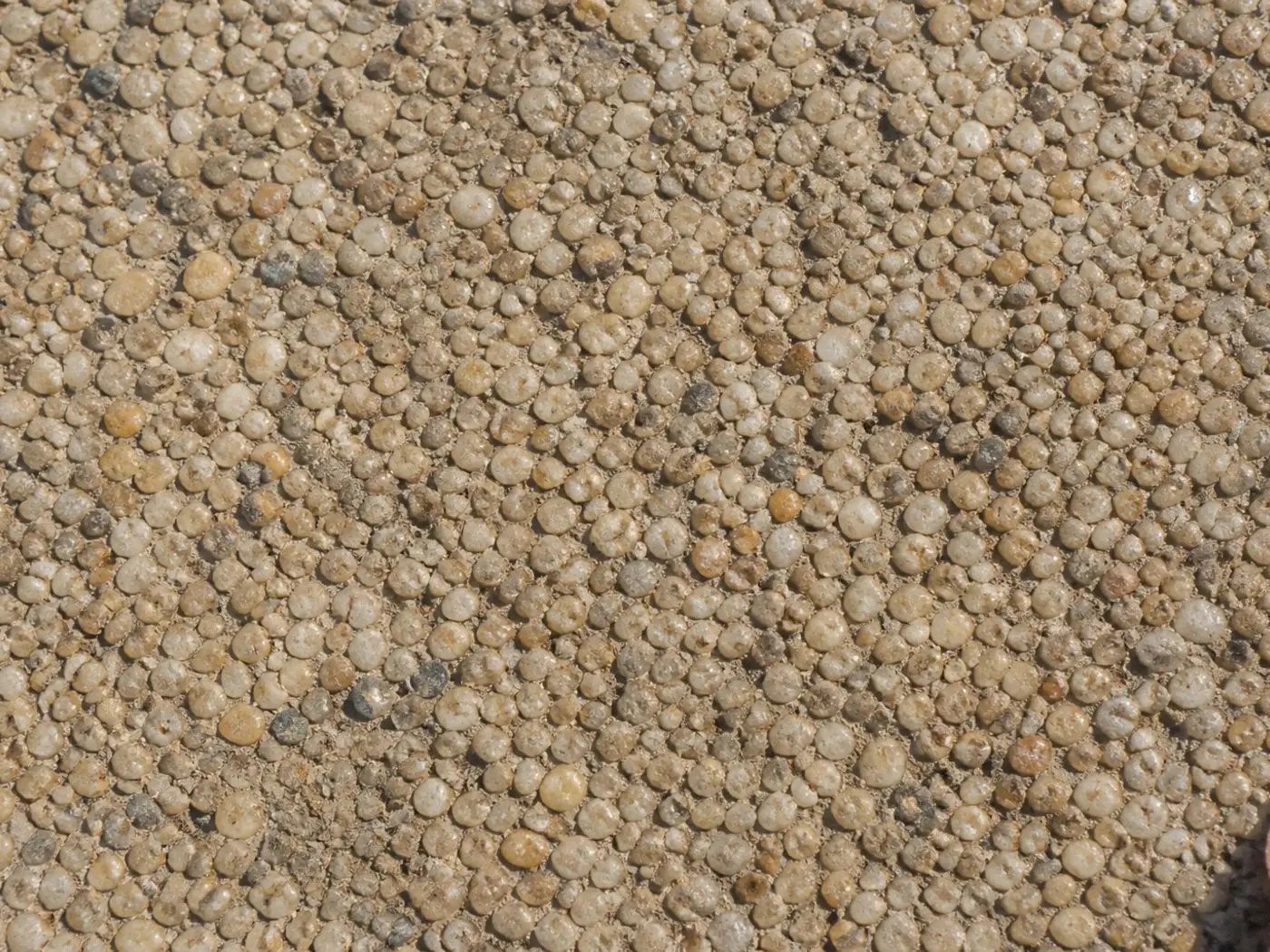
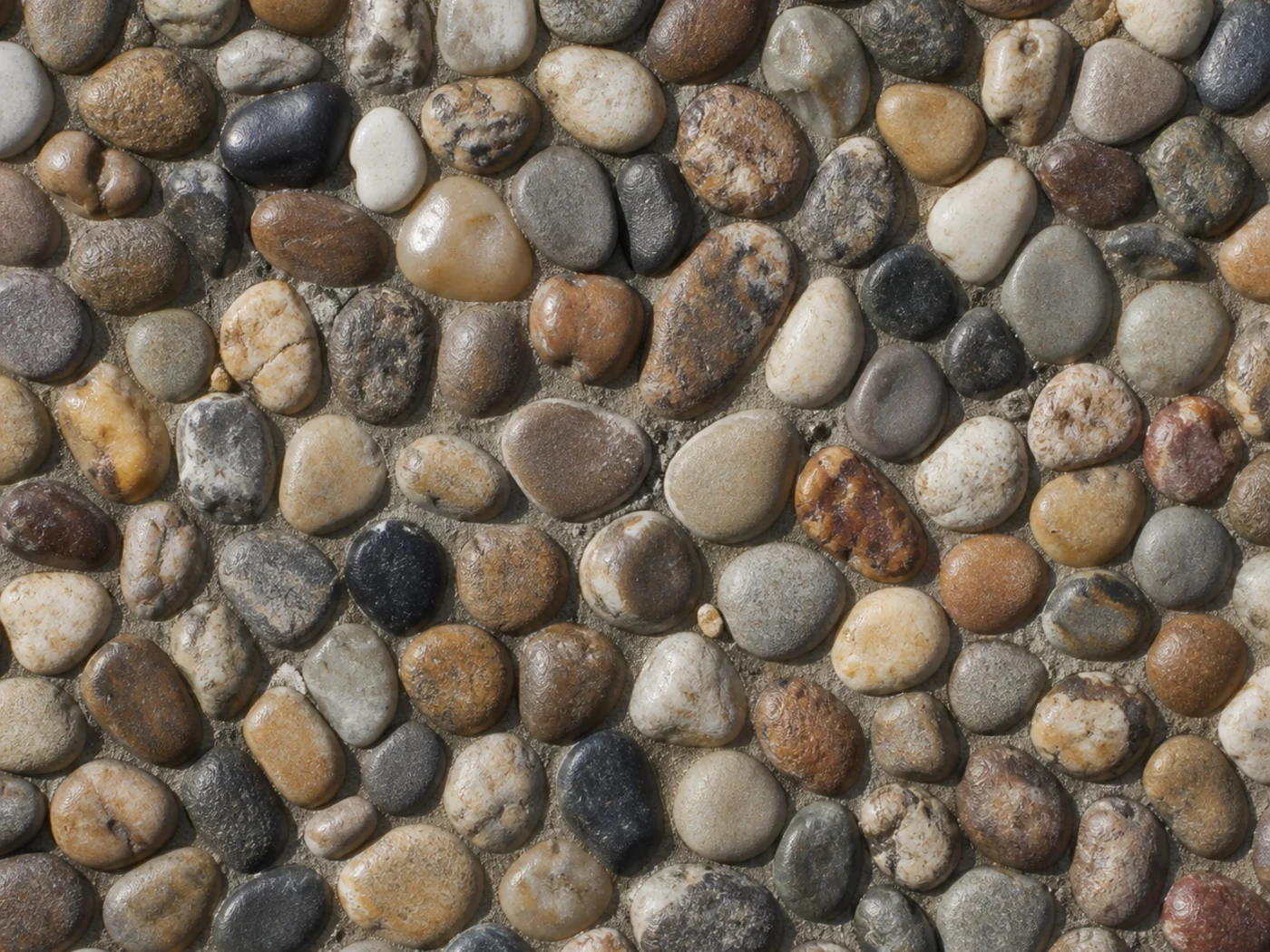
The result is a strong seamless face that handles mechanical loads, weather and foot traffic. It is now common on residential patios, commercial entries and public walkways because it manages durability, slip resistance and appearance in a single layer.
This guide covers what stone carpet is, where it is used, which materials go into it, how it is installed, and what it takes to keep it looking new.
Why stone carpet suits Florida decks
South Florida is hard on decking. UV load runs high all year, afternoon storms flood a surface in minutes, and salt air and pool chemistry attack anything that holds water at a joint.
Stone carpet answers all 3 conditions with the same property. The surface is porous, so rain passes through the aggregate to the slab and drains away instead of pooling on top. Nothing sits long enough to grow algae, and there is no grout line to scrub.
Natural stone also stays cooler than dark pavers and does not spall the way a thin cement topping does. With a UV stable aliphatic binder, a light colored stone carpet holds its clarity for 10 to 15 years in full sun.
What stone carpet is
Stone carpet is built from 3 components and nothing else.
The first is a mineral aggregate, most often quartz sand, marble chip or river pebble, graded to a consistent size so the finished face is even.
The second is a polyurethane binder, a single component or 2 component resin that coats every grain and glues the aggregate into a matrix. Aliphatic resins resist UV. Aromatic resins do not and belong indoors.
The third is the substrate, normally concrete, a cement screed or a prepared draining base.
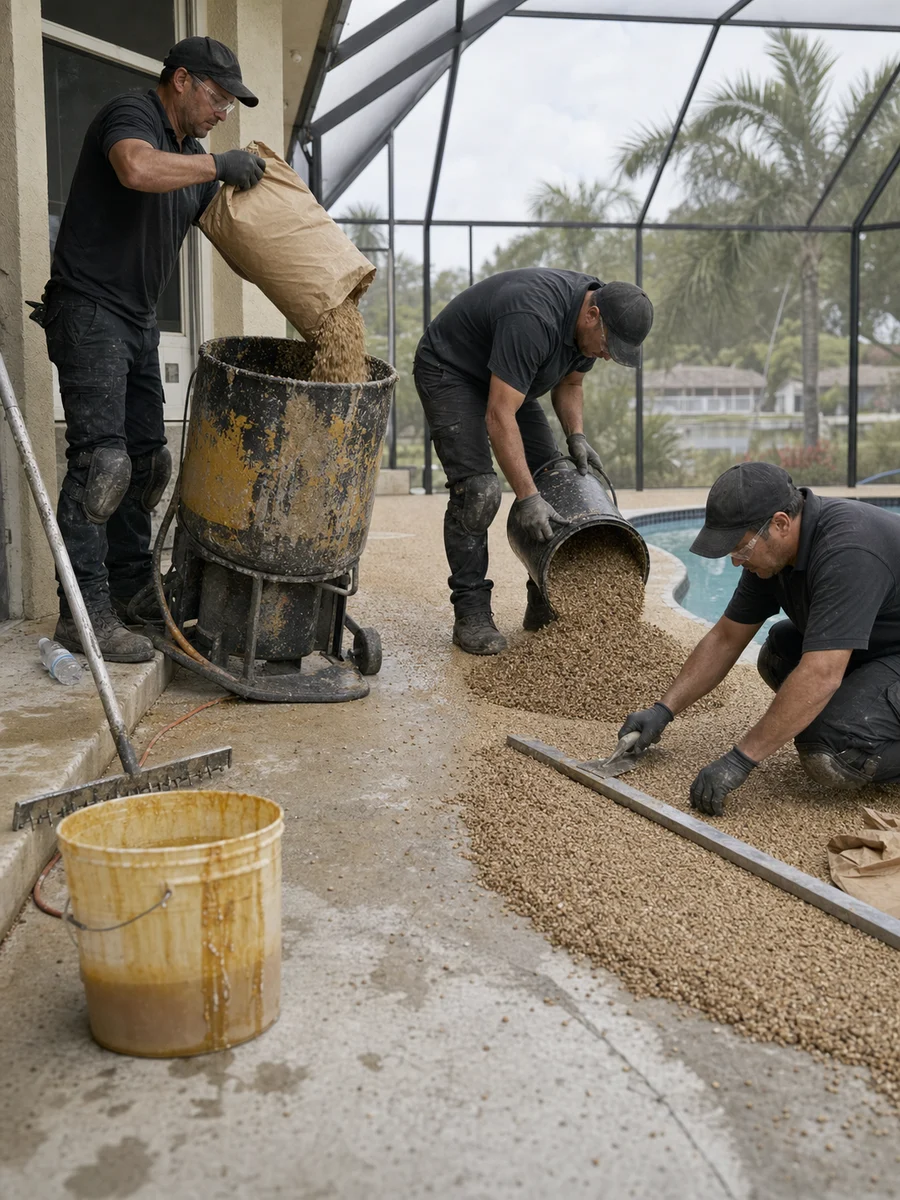
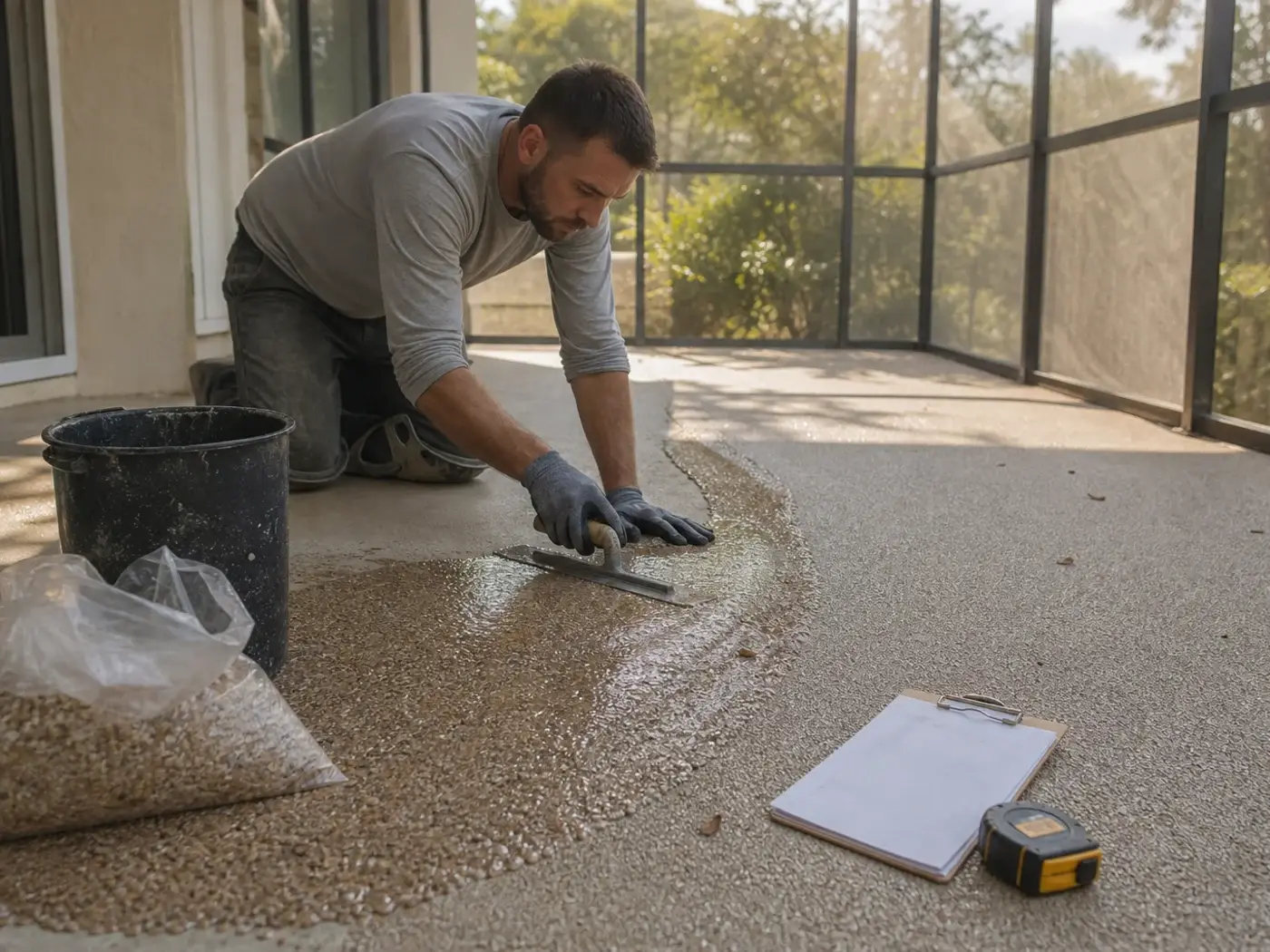
Aggregate and resin are mixed on site in a set ratio, spread across the substrate and troweled flat. Once the resin cures, the loose stone has become a single monolithic sheet with no seams anywhere in it.
What the 3 components do
Each component controls a different property, which is why substituting one of them changes the finished surface more than people expect.
The aggregate sets appearance, texture and grip. Stone size decides how coarse the surface feels underfoot and how much light it scatters, and stone color decides everything about how the deck reads.
The binder sets durability. It carries the load between grains, controls flexibility as the slab moves, and determines whether the surface yellows in sun. On outdoor work in Florida this is the component worth paying for.
The substrate sets whether any of it lasts. A sound, dry, primed slab gives the resin something to hold. A dusty or damp one guarantees a bond failure regardless of what goes on top of it.
How thick a stone carpet is poured
Build depth follows aggregate size. The rule of thumb is roughly 3 times the largest stone, so the aggregate can interlock rather than sit in a single loose layer.
A fine 0.08 to 0.16 inch quartz build finishes at about 0.3 inch. A medium 0.16 to 0.3 inch marble chip build finishes at 0.4 to 0.5 inch. A coarse river pebble build at 0.3 to 0.5 inch stone finishes closer to 0.75 inch.
Thicker is not automatically better. Beyond about 0.75 inch the resin demand climbs sharply and the added depth buys nothing in wear resistance, since traffic only ever touches the top grain.
Stairs and treads are the exception and are usually built at the coarse end, because a deeper interlock resists the edge chipping that stair nosings take.
Where stone carpet is used
Stone carpet works anywhere a hard surface has to look good and stay walkable.
Outdoors it is used on patios, balconies, entrance areas, stairs, walkways, pool surrounds and public plazas. The drainage is the reason. A surface that sheds water through itself does not need a slope built into it and does not ice up a lanai floor with standing puddles.
Indoors it appears in shopping centers, hotel lobbies, office buildings, corridors and exhibition halls, where the draw is a seamless floor that takes heavy footfall and cleans in a single pass.
The one place to be careful is a floor that sees standing grease or frequent chemical spills. A commercial kitchen or a workshop bay wants a sealed system rather than a porous one.
What stone carpet does well
It has no seams
There are no joints, grout lines or tile edges, so there is nothing to lift, nothing to crack and nothing to trap dirt. Cleaning is a single pass rather than joint work.
It carries load
The cured aggregate matrix handles heavy foot traffic, rolling loads and furniture without denting. On a properly prepared slab it also bridges hairline cracking underneath.
It handles weather
The finished surface resists moisture, temperature swings and, with an aliphatic binder, constant UV. Water drains through rather than sitting in the structure, which is what breaks most outdoor surfaces.
It grips when wet
The exposed stone profile creates a natural texture. Bare feet find purchase on it even under water, which is why it is specified on pool decks and stair treads.
It lasts
Installed correctly, a stone carpet runs 10 to 15 years or more before it needs attention, and repairs are local patches rather than a full replacement.
What materials go into a stone carpet
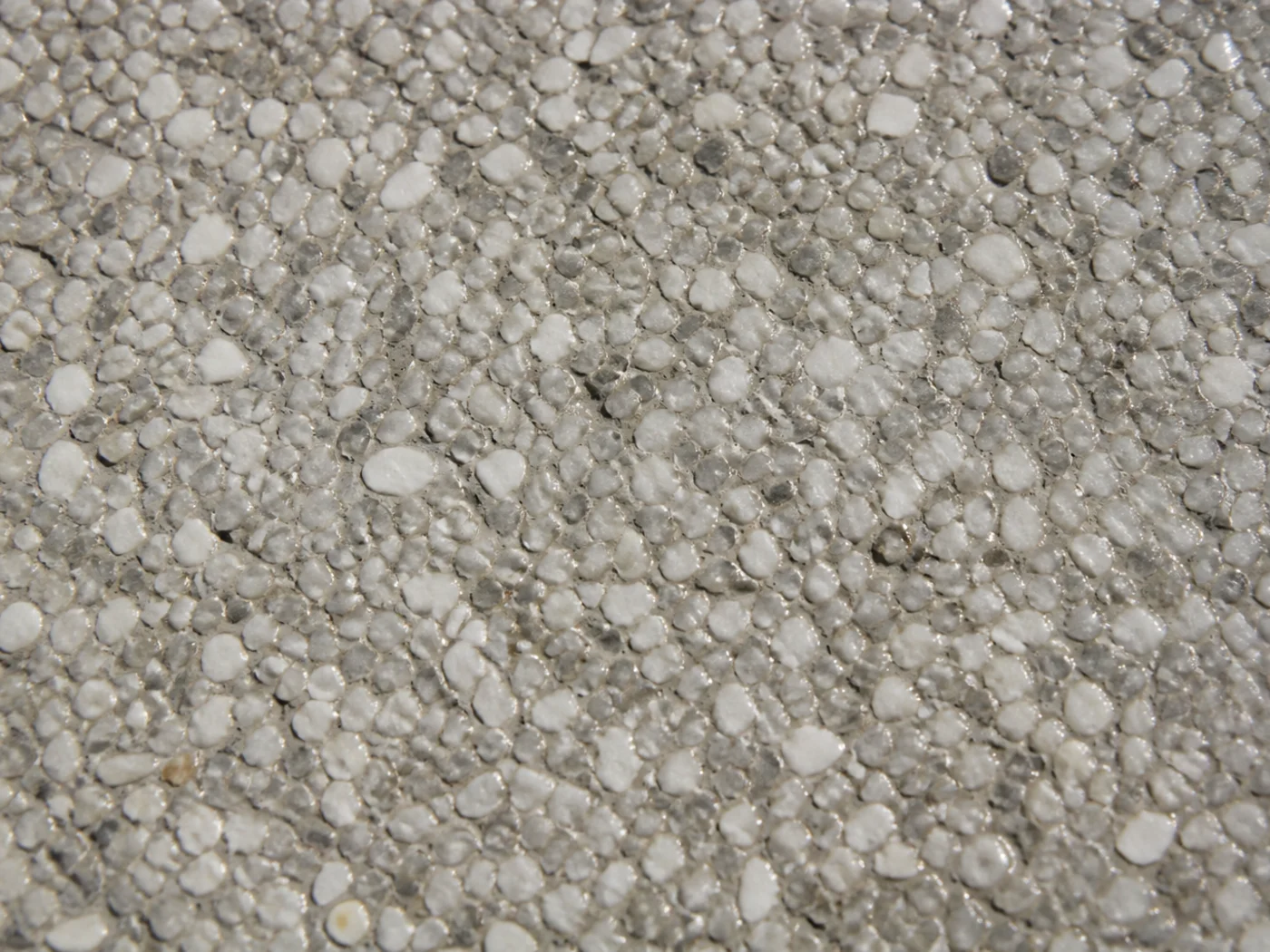
Stone aggregate
Quartz sand is the hardest of the common aggregates. It grades to a uniform texture and is the usual pick for interior floors that need a smooth, quiet face.
Marble chip is the decorative workhorse. It comes in the widest color range, blends well, and is the standard choice for designed exterior surfaces.
River pebble is rounded rather than crushed, so it reads as natural stone and gives the most pronounced texture. It costs the most and is used where the surface is a feature.
Aggregate from 0.08 to 0.5 inch covers almost every job.
Polyurethane binder
The binder is the part of the system that decides how long the surface survives.
Aromatic polyurethane delivers strength, good adhesion to the substrate and useful elasticity, and it is the cheaper option. It is not UV stable and will yellow outdoors, so it belongs on interior work.
Aliphatic polyurethane resin is the outdoor grade. It resists UV, stays clear rather than ambering, and protects the color of light aggregates through years of direct sun. In Florida it is the only sensible specification for anything uncovered.
How stone carpet is installed
Installation runs through 5 stages, and the first one decides the outcome.
1. Substrate preparation
The base has to be structurally sound, dry, and free of dust, laitance and old coatings. Concrete is the usual substrate. Cracks are routed and filled, and any spalled area is rebuilt before anything else happens.
2. Priming
A polyurethane or epoxy primer is rolled on to seal the slab and give the binder something to grip. Skipping this is the most expensive shortcut in the whole process.
3. Mixing
Aggregate and binder are combined in a forced action mixer at a fixed ratio. Too little resin leaves loose stone. Too much floods the voids and kills the drainage.
4. Application
The mix is spread across the primed slab and troweled to an even depth. The crew works to the pot life of the resin, so a large area is planned in bays with wet edges kept live.
5. Curing
The resin cures and locks the aggregate in place. Foot traffic is possible after several hours to a few days depending on the binder, humidity and temperature.
What goes wrong during installation
Almost every stone carpet failure traces back to 4 causes, and none of them is the stone.
- Poor substrate preparation. A dusty, damp or unprimed slab produces delamination within the first year, usually starting at the edges
- The wrong binder. An aromatic resin used outdoors yellows within a season or 2 and takes the aggregate color with it
- Incorrect mix ratio. Under resined batches shed loose stone underfoot, over resined batches seal the surface and stop it draining
- Low grade materials. Unwashed aggregate carries dust that blocks adhesion, and cheap resin goes brittle in Florida heat
All 4 are avoidable by following the manufacturer specification for the specific system rather than a generic method. Ask an installer which binder they use outdoors and why, since the answer says most of what needs to be known.
How to care for stone carpet
Maintenance is genuinely light. There is no sealing schedule, no waxing and no grout to service.
Rinse the surface with a hose as needed and sweep loose debris off it. Once or twice a year, work it over with a stiff non metal brush and a mild soap solution to lift sunscreen, body oil and organic film.
A pressure washer is fine below about 1,500 psi with the wand held at least 12 inches back. Higher pressure at closer range will start pulling grains out of the matrix.
Because the structure is open, the surface dries within minutes of a storm and does not hold the moisture that grows mildew. Avoid acid based concrete cleaners and solvents, which attack the binder rather than the stone.
What to take away
Stone carpet combines natural stone appearance with a seamless, draining, slip resistant surface that survives the South Florida climate.
The 2 decisions that matter are the binder and the slab preparation. Specify an aliphatic UV stable resin for anything outdoors, insist on a properly primed base, and the finished surface will run 10 to 15 years with almost no upkeep.
Everything else, meaning stone type, size and color, is a design choice rather than a durability one.
Common questions on stone carpet
What is a stone carpet
A seamless decorative surface of natural stone aggregate, whether quartz, pebble or marble chip, bound with polyurethane resin. Once cured it forms a strong wear resistant sheet suitable indoors and out.
Where can stone carpet be used
Patios, balconies, entrance areas, stairs, pool surrounds, walkways, shopping centers, hotels, offices and public spaces. It performs well in high traffic areas because there are no joints to fail.
Can stone carpet be installed outdoors
Yes, and it is one of the better outdoor surfaces available. Specify an aliphatic UV resistant polyurethane binder. Built that way it handles moisture, temperature swings, salt air and intense sun without yellowing.
What binder is used for stone carpet
A 2 component polyurethane resin. It bonds the aggregate to itself and the whole system to the substrate. Outdoors the aliphatic grade is preferred because it resists UV and stays clear.
Which aggregate size works best
The common grades are 0.08 to 0.2 inch, 0.16 to 0.3 inch and 0.2 to 0.4 inch. Finer stone gives a smoother, quieter surface. Coarser stone gives more texture, more grip and a stronger decorative effect.
What substrate stone carpet needs
Concrete or a cement screed. It has to be structurally sound, dry, dust free and clear of cracks or delaminating patches. Substrate preparation is the single largest factor in how long the surface lasts.
How long a stone carpet lasts
With quality materials and correct installation, 10 to 15 years or more. Actual life depends on binder grade, traffic intensity and exposure, with UV and standing water doing most of the damage.
Is stone carpet slippery
No. The exposed stone profile creates a natural texture that stays grippy when wet, which is why it is used on patios, stairs and pool decks rather than in spite of them.
Can stone carpet be repaired
Yes, locally. The damaged area is cut back and cleaned, then filled with a fresh mix of matching aggregate and binder. With a good material match the patch is close to invisible.
Does stone carpet need special care
No. Rinse it, sweep it, and wash it once or twice a year with a brush and mild soap. The open structure dries fast and keeps its appearance without sealing or refinishing.
What stone carpet costs per sq ft
Installed work in South Florida runs about $8 to 14 per sq ft, with marble chip builds at the lower end and river pebble at the upper end. Slab condition and total area move the rate within that band.
 What stone carpet costs here
 Stone carpet against pavers