Stone Carpet vs Pavers: 9-Point Comparison
Written by the crew that installs it
Pavers cost less to install and stone carpet costs less to own. Stone carpet is a seamless permeable pour that normally runs 10 to 15 years with rinsing as the only maintenance, while a paver deck runs 7 to 10 years before joints open, sand washes out and slabs settle. Across a 10 year horizon the 2 land close on total spend.
Pavers and stone carpet are the 2 surfaces most often compared for a South Florida yard, walkway, patio or lanai. They behave very differently once rain, foot traffic and time are applied.
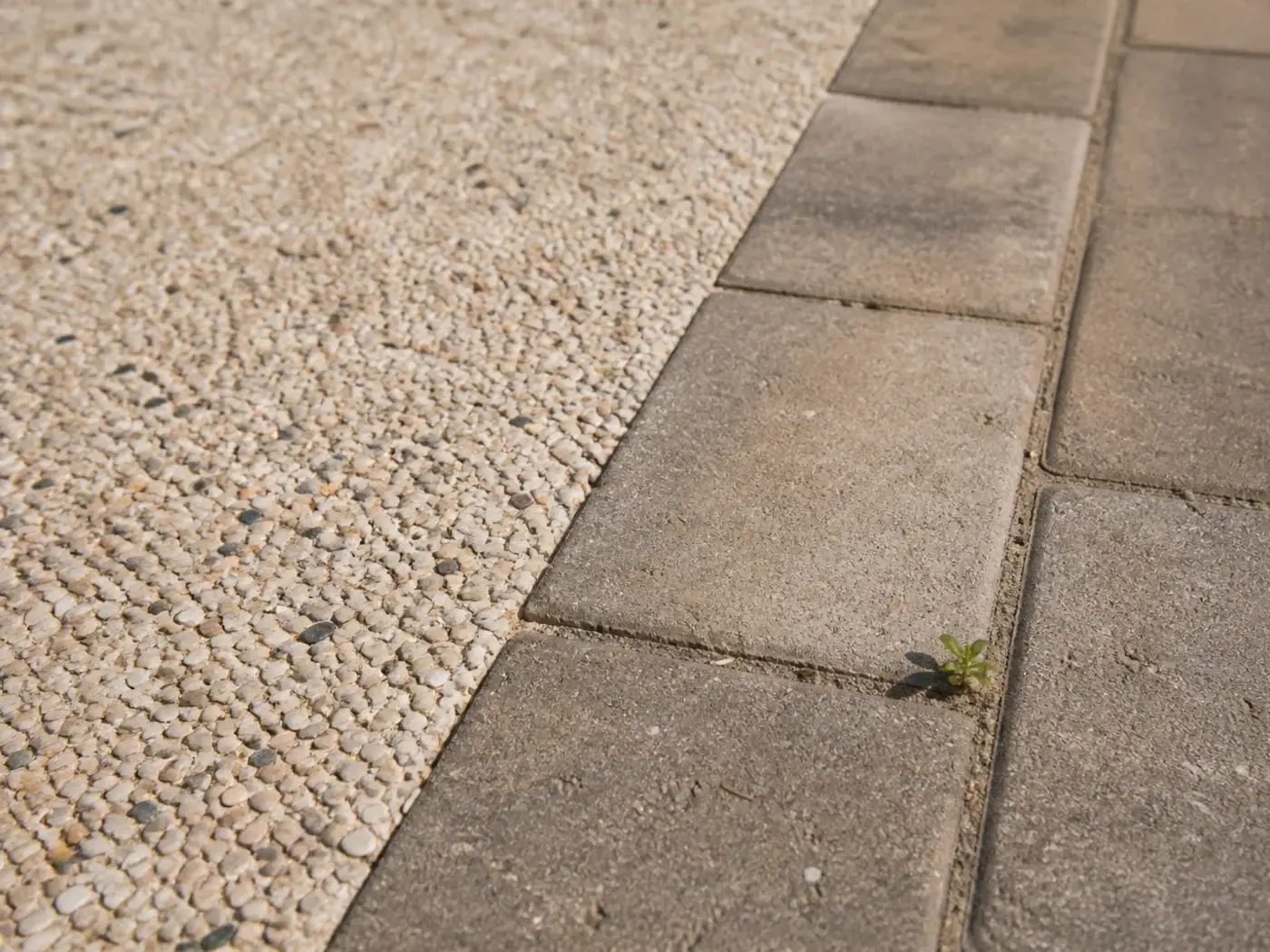
The comparison below covers 9 points that decide most residential jobs, from what the surface costs on day 1 to what it costs to keep 10 years later.
How the 2 surfaces compare
| Criterion | Stone carpet | Pavers |
|---|---|---|
| Material price | Higher up front | Lower up front |
| Installation | Poured in 2 to 3 days | Laid over a compacted base |
| Joints | Seamless surface | Joints host weeds and ants |
| Water permeability | Drains through, no puddles | Partial, only at the joints |
| Slip resistance | High, from the stone texture | Varies by paver type |
| Durability | 10 to 15 years | 7 to 10 years before settling |
| Repairs | Local patch, blends in | Slabs lifted and reset |
| Maintenance | Rinse with water | Weeding, resanding, releveling |
| Appearance | Natural and custom blended | Standard catalog shapes |
The table splits along 1 line. Pavers are individual units resting on a base, so everything they do well and everything they do badly follows from the joints between them.
How each surface handles Florida rain
Drainage is the point where the 2 surfaces separate most clearly in a climate that delivers a storm most summer afternoons.
Stone carpet is permeable through its whole area. Water passes between the stones and leaves through the substrate slope, so the surface clears within minutes and there is nowhere for standing water to collect.
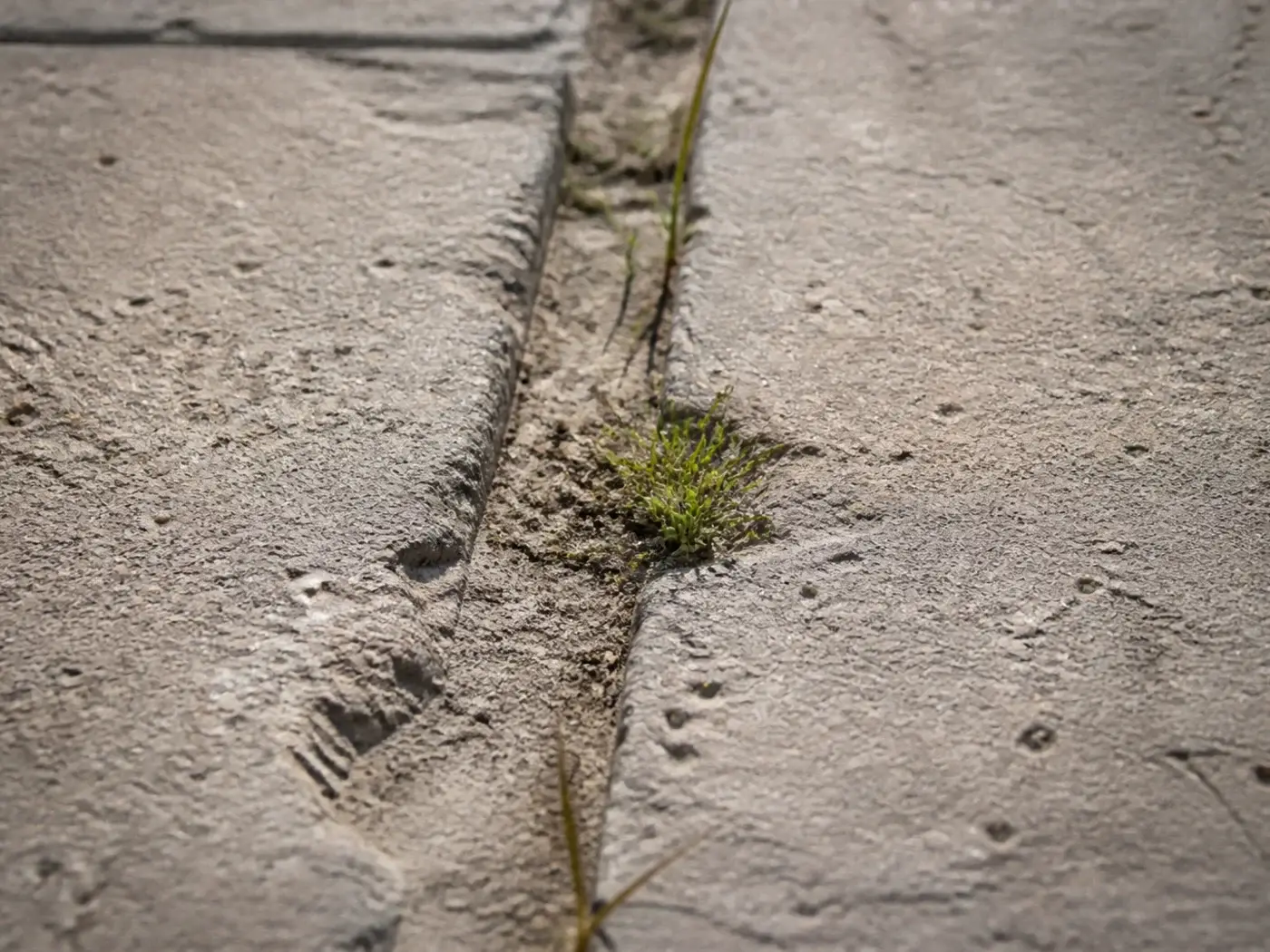
A paver deck sheds most water across the top and takes the rest through the joint sand. That works until the sand washes out, at which point the joints open, the base beneath starts moving and individual pavers begin to settle unevenly.
Joint loss is the normal aging path for pavers in South Florida, and it drives the 2 recurring maintenance tasks, resanding the joints and lifting and relevelling the units that have dropped.
What each surface costs to own
Day 1 pricing favors pavers. Concrete pavers are a mass produced unit and the installation is mechanical rather than chemical, so the entry rate per square foot is lower.
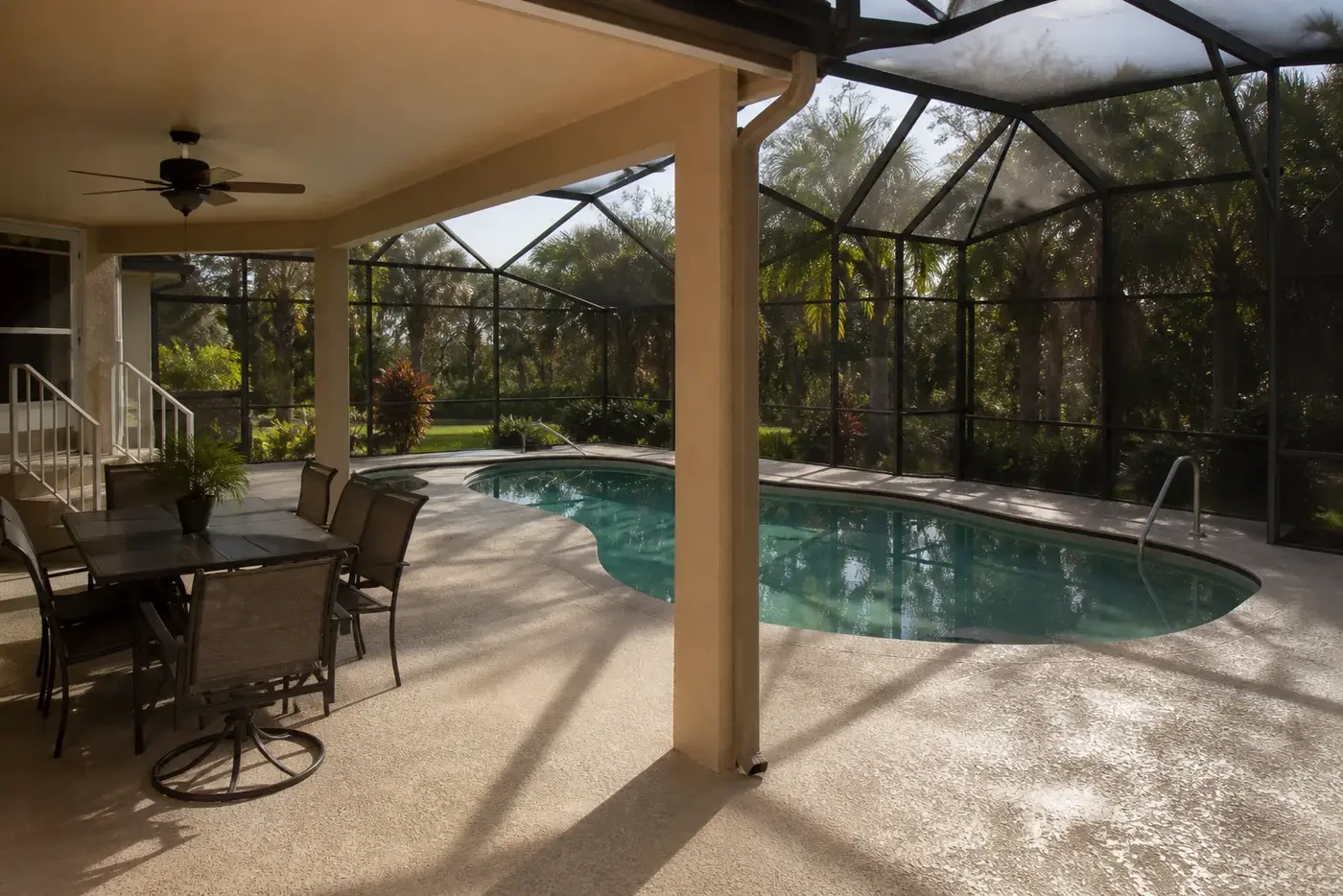
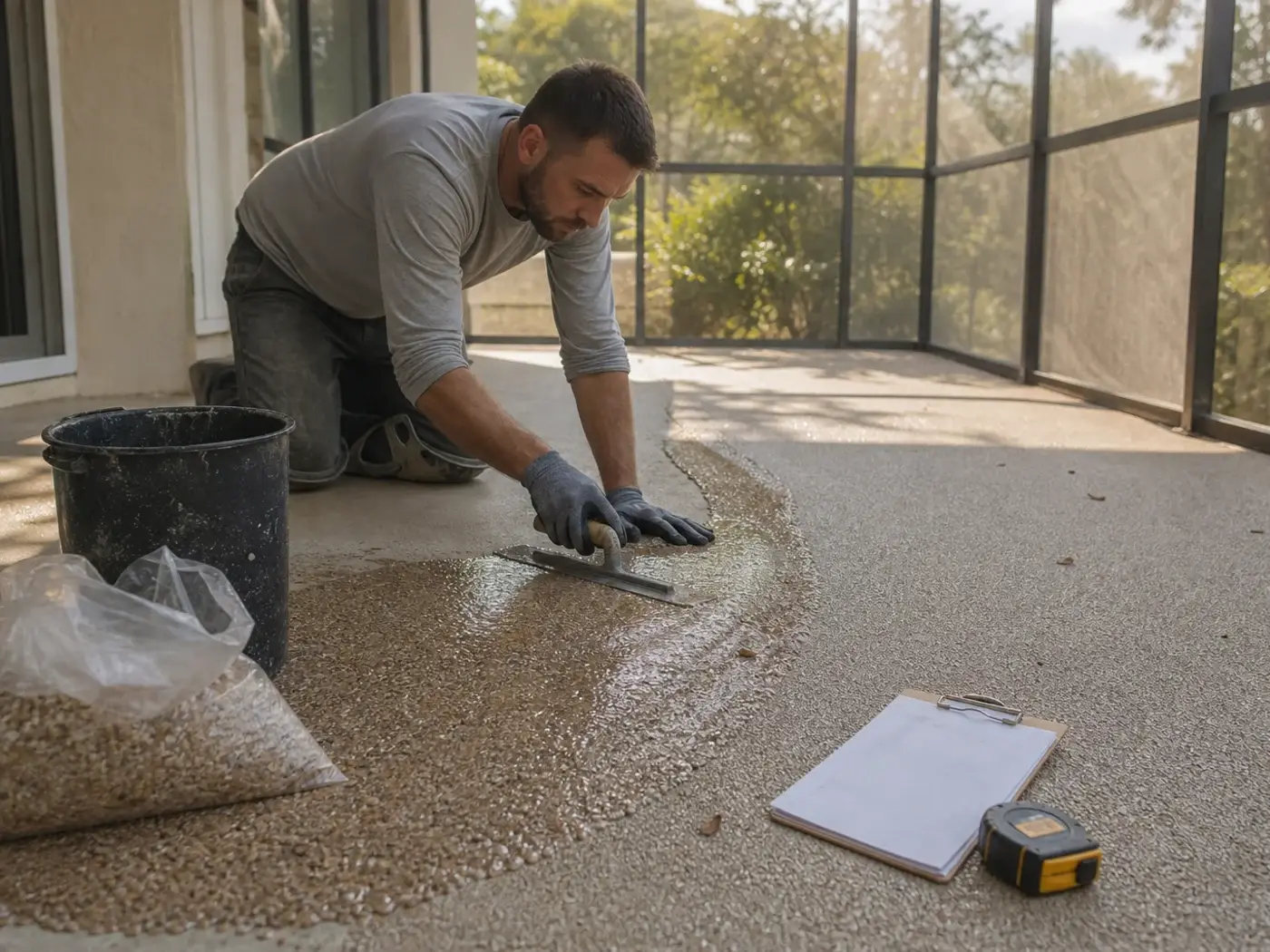
Stone carpet costs more to install because the aggregate is graded natural stone, the binder is an aliphatic polyurethane, and the substrate has to be ground, repaired, sloped and primed before anything is poured.
The gap narrows over the service life. A stone carpet deck normally needs rinsing and nothing else. A paver deck needs joint sand replaced, weeds pulled, and settled units reset, which is labor that repeats every few years.
At the replacement point the difference shows again. Pavers reach 7 to 10 years before a meaningful reset, stone carpet reaches 10 to 15 years before resurfacing, and a resurface bonds a fresh layer over the existing pour rather than demolishing it.
| Horizon | Stone carpet | Pavers |
|---|---|---|
| Day one price | Higher | Lower |
| Under 5 years | Behind on cost | Ahead on cost |
| At 10 years | The 2 converge | The 2 converge |
| Beyond 10 years | Normally ahead | Falls behind |
| Work that repeats | Rinse with water | Resanding, weeding, releveling |
| Replacement point | 10 to 15 years | 7 to 10 years |
Pavers are cheaper to buy and more expensive to keep. Past ten years stone carpet is normally ahead once resanding, weeding and releveling are counted against a surface that only needs rinsing.
When to choose stone carpet
- The yard needs a specific look, since color and aggregate are blended to order rather than picked from a catalog
- A seamless surface matters, with no joints for weeds, ants or trapped sand
- The area gets walked barefoot and wet, such as a pool deck, a lanai or entry stairs
- Drainage is a known problem and standing water has to clear fast
- The plan is to spend once and leave the surface alone for 10 to 15 years
Stone carpet also resurfaces existing concrete in place. Where a slab is structurally sound but stained or worn, pouring over it avoids the demolition and disposal cost that a paver conversion carries.
When to choose pavers
- The initial budget is fixed and the lower entry price decides the job
- The surface has to be lifted later, for example over irrigation, conduit or a utility run
- There is no sound concrete slab to pour onto and a compacted base is simpler to build
- A conventional catalog appearance is what the property calls for
The removable quality is genuine and it is the strongest argument for pavers. A driveway crossing a utility corridor or a walkway over a shallow service line is easier to open and close with units than with a bonded pour.
What to take away
Pavers are cheaper to buy and more expensive to keep. Stone carpet is more expensive to buy and close to maintenance free.
Over a horizon shorter than about 5 years, pavers usually win on cost. Over 10 years the 2 converge, and beyond that stone carpet is normally ahead once resanding, weeding and releveling are counted.
The deciding question is rarely price. It is whether the surface needs to come up again. If it does, pavers are the right tool. If it does not, a seamless permeable pour solves the drainage, the weeds and the settling in one step.
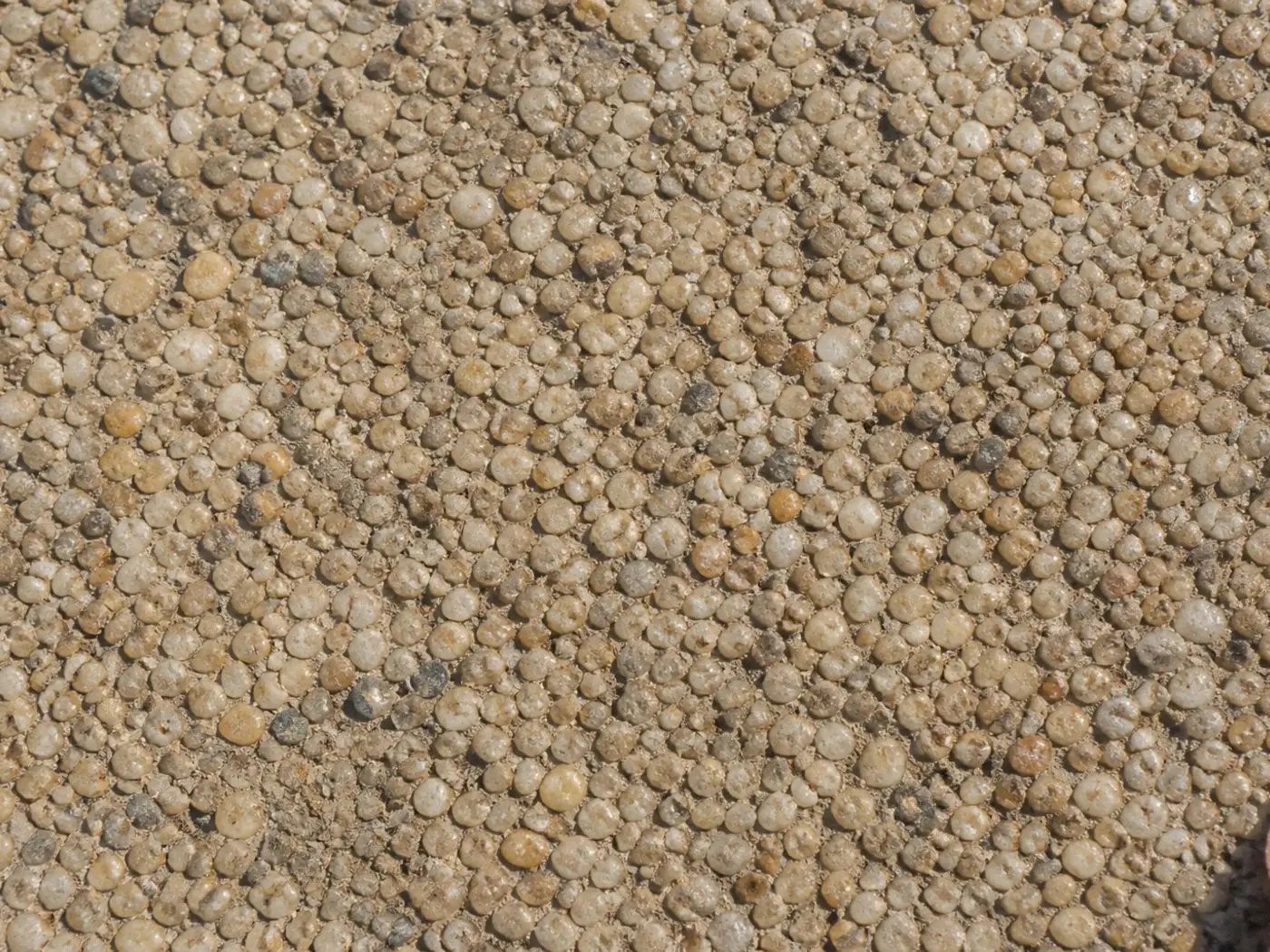 Stone carpet, the whole thing
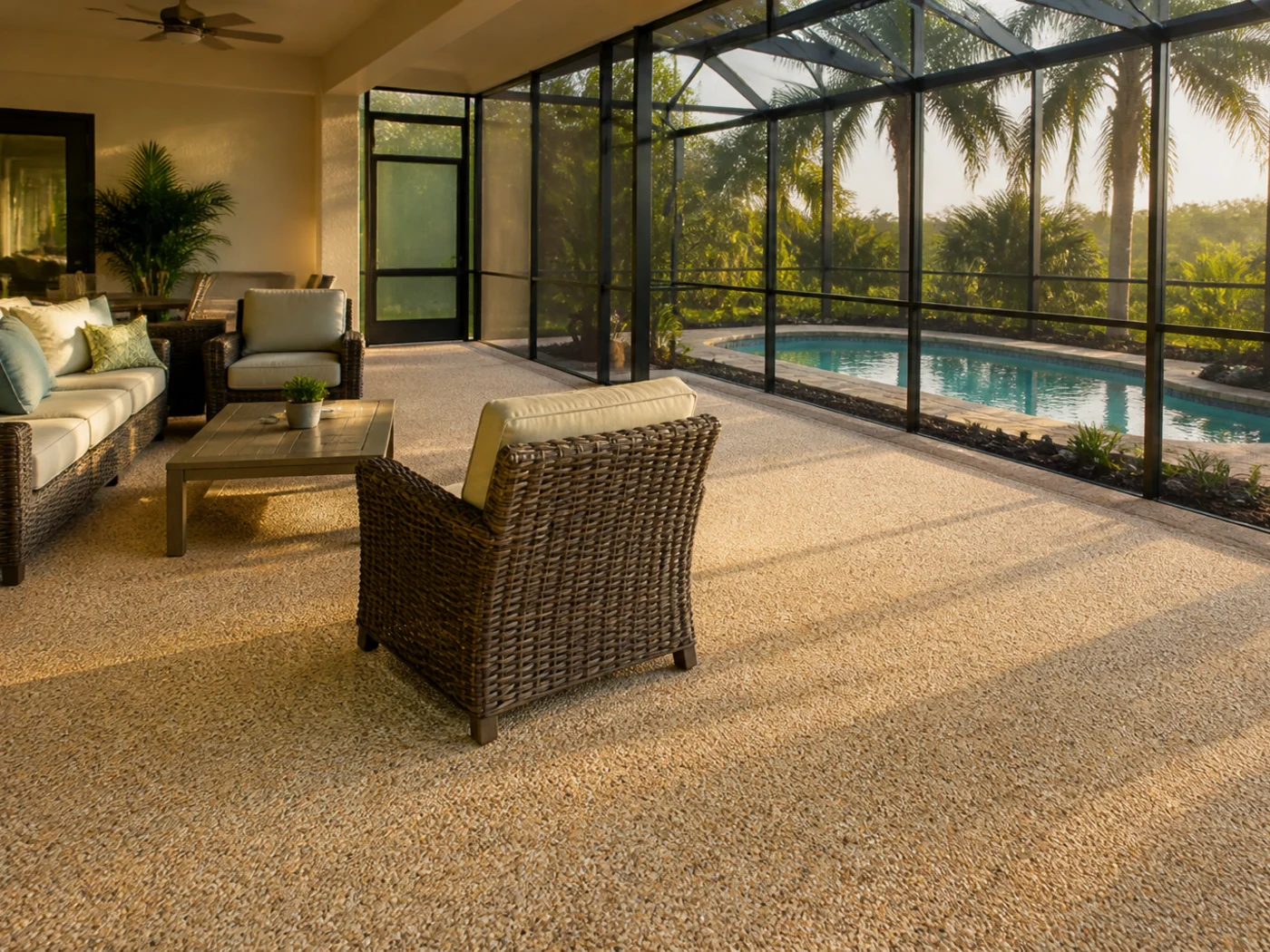 Patios and lanais