Pool Deck Paint in the Florida Sun
We do not sell or apply paint, so here is the honest version.
What deck paint does well
Paint earns its place in three situations. You are selling the house in the spring and the deck looks blotchy. You are replacing the whole deck within a couple of years and you just need it presentable. Or the slab is sound, shaded most of the day, and nobody walks it barefoot at noon. In those cases a good acrylic deck paint evens out patch repairs, hides rust runs and old stain lines, and knocks down the dust a chalky slab throws off. Grit additives give you some grip back. It goes down in a weekend, you can do it yourself, and if you hate the color you roll a different one over it next year. That is a real answer for a real budget, and no contractor should sneer at it.
Colors that run coolest
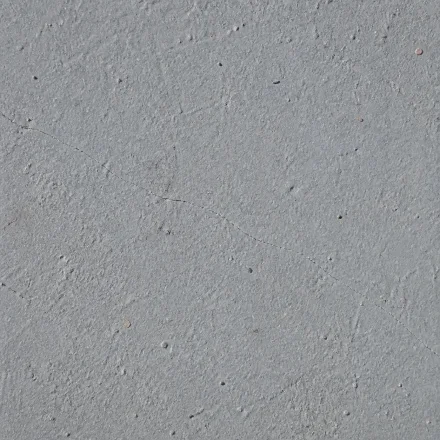
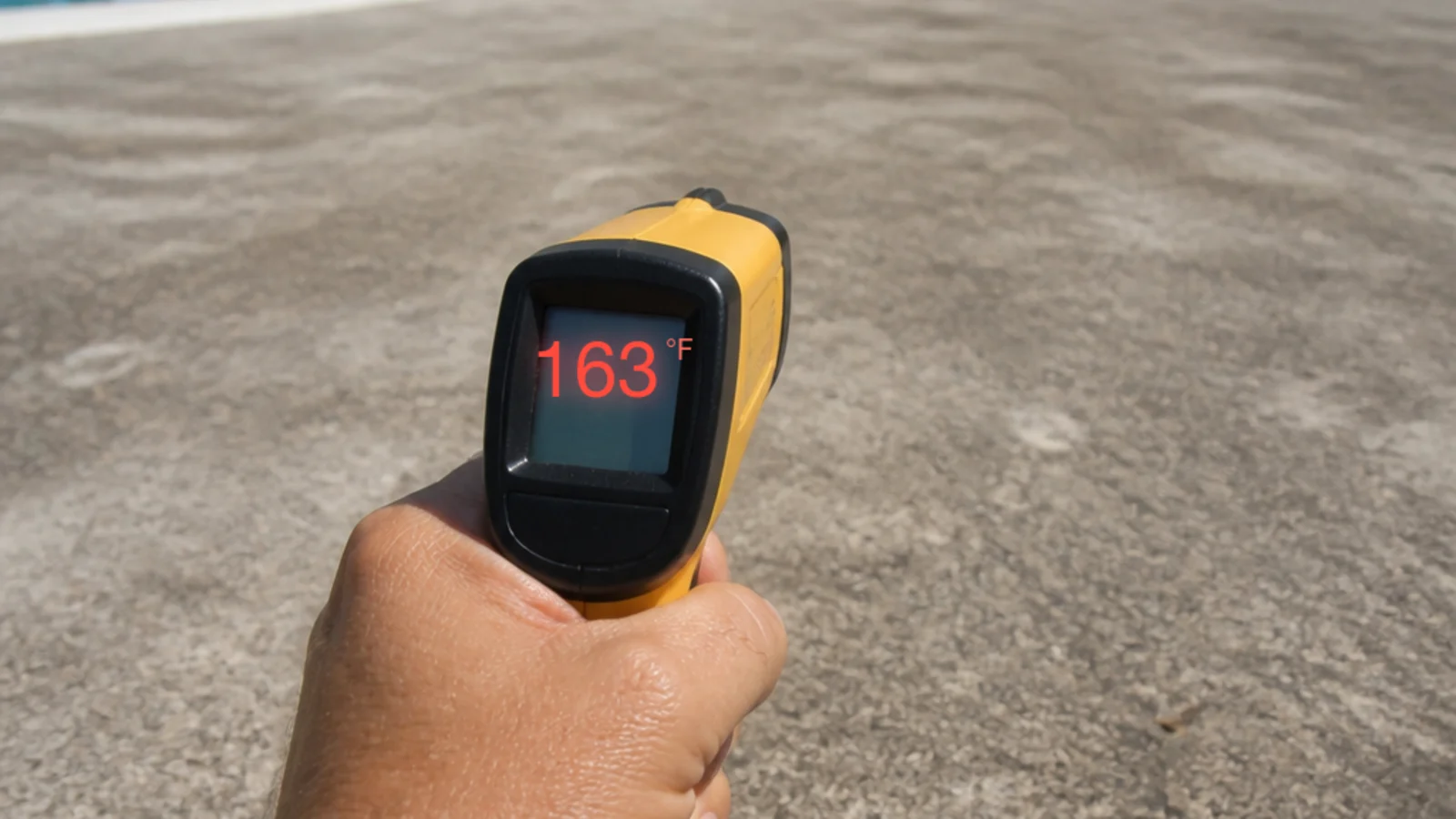
Shade beats brand every time. A pale sand, a soft gray or an off white reflects most of the sun that lands on it. Terracotta, charcoal and deep blue swallow it and hand it straight to your feet. Two buckets from the same shelf, same chemistry, same price, and the light one can be walked on at two in the afternoon while the dark one cannot. Understand the limit though. Paint is a thin film sitting on concrete, so the slab underneath still soaks up heat all morning and radiates it back through the film. Light paint takes the edge off a hot deck. It does not turn it into a cool deck. On a 91 F afternoon we have measured 155 F on bare concrete and 134 F on tile.
Why it peels down here
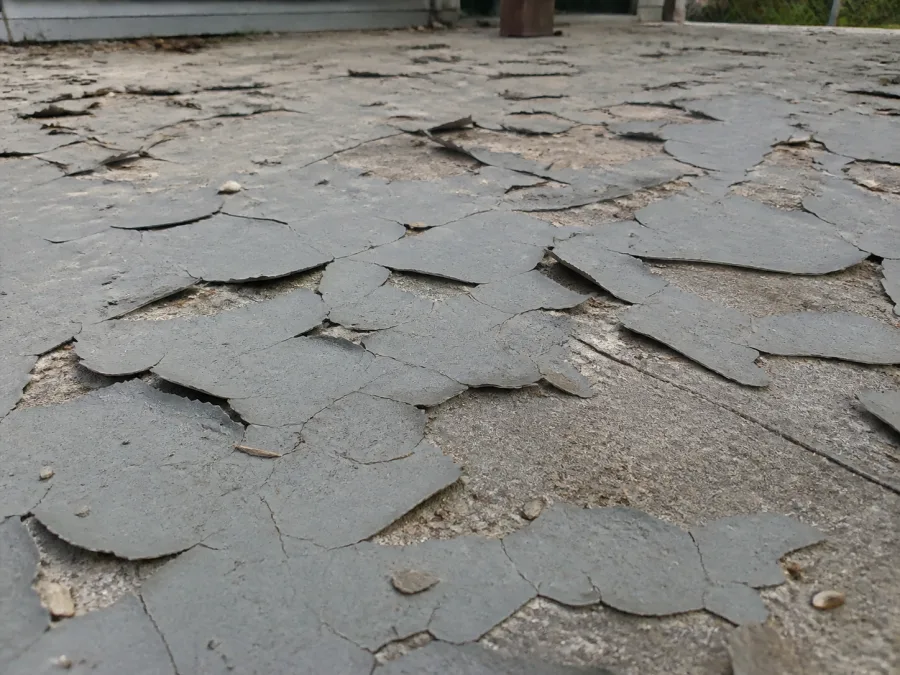
Three forces work on a pool deck film at the same time. Sun breaks down the binder from above until the color chalks off on a wet hand. Chlorinated water splashes over the coping every day, dries, and leaves salt in the film. And the slab pushes vapor up from below, because the water table here is high and a pool deck sits wet on its underside for months. That vapor has nowhere to go, so it collects at the bond line and lifts the paint in sheets. Then the cycle starts. You strip the loose paint, you patch, you roll two more coats, you lose a weekend and the deck is out of use again. Do that every second or third summer and the years add up faster than one good surface would have cost you.
Questions we get
Is there a pool deck paint that will not peel?
No. Every film on an outdoor slab in South Florida is on a clock, and the honest question is how long yours runs. You get the most out of it on a dry sound slab that was ground open first, with a primer chosen after a moisture reading, in a light color, and with the deck kept clear of standing chlorinated water.
What color pool deck paint stays coolest?
The lightest one you can live with. Off white, pale sand and light gray reflect the most, soft pastels come next, and anything in the terracotta to charcoal range cooks. Dirt shows more on a pale deck, and you will rinse it more often. Take that trade. Burned feet end pool afternoons faster than a few leaf marks do.
Does epoxy pool deck paint last longer?
Not in open sun. Most buckets sold as epoxy pool deck paint are water based coatings with a little epoxy in them, and even a true two part system ambers and chalks outdoors unless a sun stable topcoat carries the exposure. Add a gloss film that goes slick when wet and you have moved the problem, not solved it.
When should I stop repainting and resurface?
When you have painted twice and the third one is due, or when peeling comes back inside a season, or when the deck is too hot to cross barefoot. A poured rubber surface carries its color through the full thickness, so wear never exposes a different color underneath. Poured rubber starts at 8 dollars per sq ft installed and takes 1 to 3 days on site.
Do it yourself pool deck coating?
A roll on pool deck coating is genuinely a weekend job, and the rolling is not the hard part. Prep is. The slab has to be degreased, acid etched or ground, dust free and dry through its depth, and in South Florida a slab that looks dry can still be pushing moisture up from below. Coating over that is what causes the bubbles and sheets that peel by the second summer. Paint also cannot bridge a moving crack. If your deck is sound, shaded for part of the day and you just need it presentable for a season, roll it. If it chalks or sounds hollow, do not.
How much does it cost to shark coat a pool deck?
Knockdown acrylic overlays of that type are quoted in the same band as any spray deck in South Florida, roughly 2 to 6 dollars per sq ft, and that number is only honest if the slab under it is sound. Every acrylic overlay is a thin cement and acrylic layer bonded to concrete, so it inherits whatever the slab does. Over a chalking or drummy deck it fails with the deck, and the grinding that should have happened first shows up on the second quote instead. Poured rubber surfacing starts at 8 dollars per sq ft installed and is not on a 3 year repaint cycle.
Is liquid rubber deck coating any good?
Liquid rubber deck coating does 1 job well and it is not the job most people buy it for. It is a rolled on waterproofing membrane, so it seals a balcony, a flat roof deck or a hairline crack and keeps water out. It is not a wearing surface. Under bare feet, chair legs and Florida sun it scuffs, shows every roller lap and holds heat like the concrete underneath. Poured rubber surfacing is a different product, a troweled granule and binder layer many times thicker, and it measured 99 F in our field readings on an afternoon when bare concrete read 155 F.
What is the cheapest way to resurface a pool deck?
Rolling an acrylic or elastomeric deck coating is the cheapest route at 2 to 6 dollars per sq ft installed, and it buys you 1 or 2 Florida seasons. It works when the slab is sound, dust free and shaded for part of the day. It does not work over a chalking or drummy topping, because paint bonds to whatever it lands on and fails with it. Redone every 3 years, the cheap route passes the cost of one poured surface by the third round. Poured rubber surfacing starts at 8 dollars per sq ft installed with a 2 year workmanship warranty.
Before you buy another bucket, put your square footage into the numbers on the cost page.