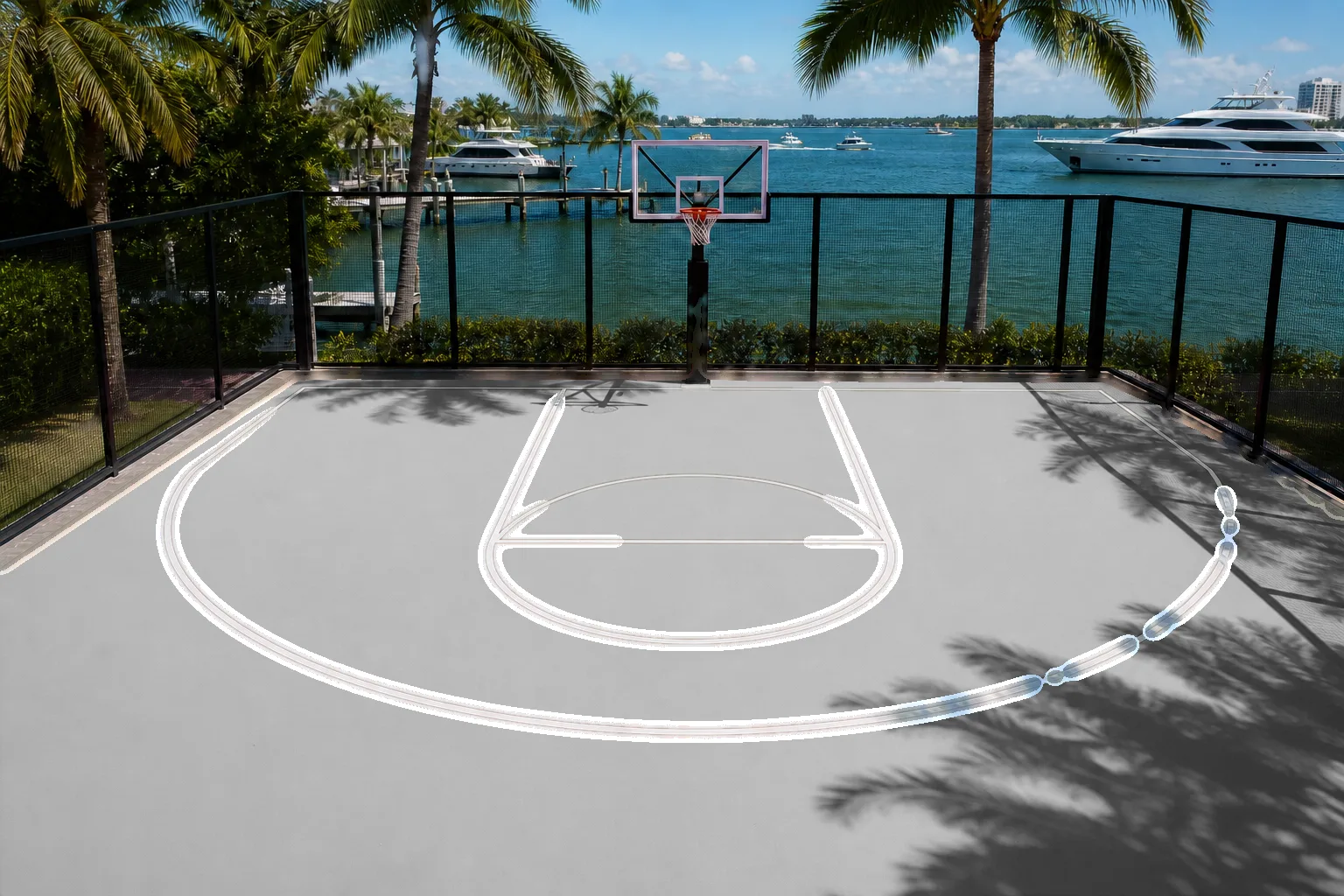
Sports surfaces
Full pour polyurethane, mixed on site
How a liquid system becomes one solid sports floor with no seams in it.
How a liquid system becomes one solid sports floor with no seams in it.
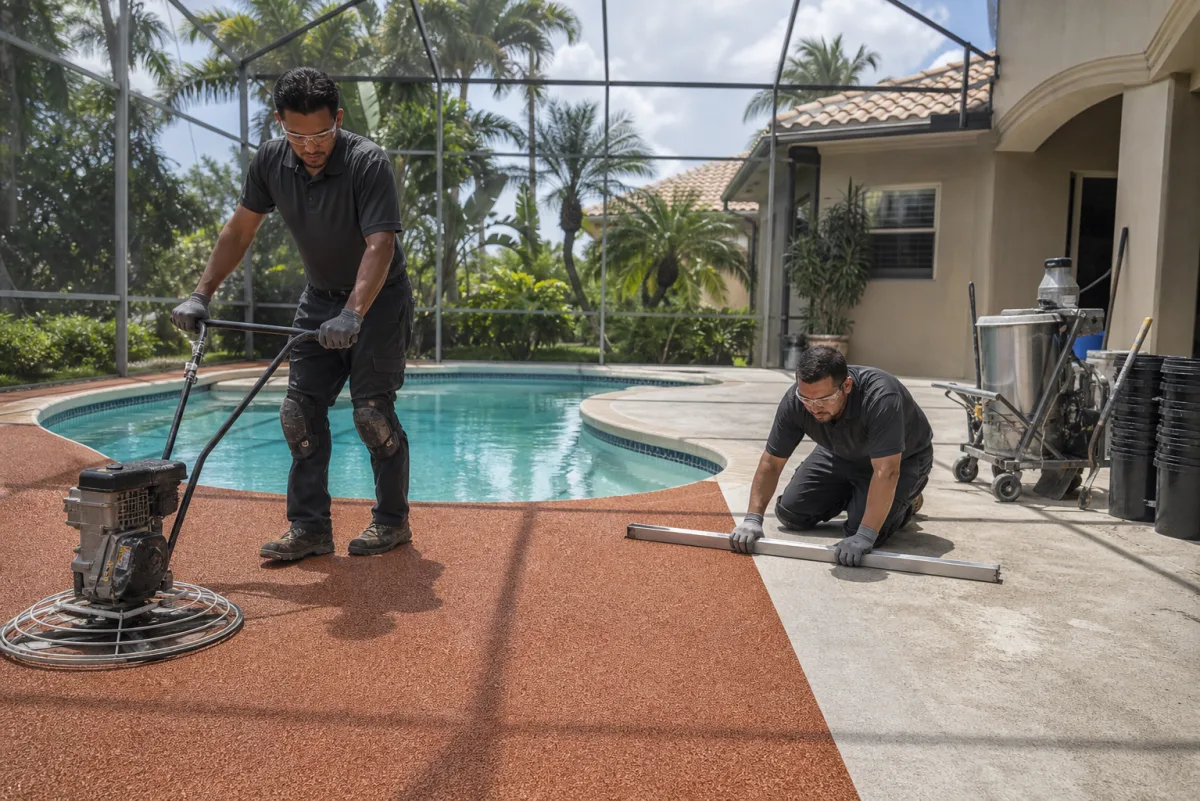
There is no roll of material on the truck. The system arrives as components and becomes a floor on your site. The mix goes down wet, gets pulled to depth with a screed, and is worked out to the edges before it starts to set. Once the reaction runs there is no going back, so the crew works in planned bays and keeps a wet edge across the whole area. That is why a pour has a start time and no break in the middle of it. What you end up with is a single piece of floor. No board joints, no tile edges, no strip of sealant to open up in the second summer. Around a drain, a post or a doorway the surface runs up to the detail and stops there.
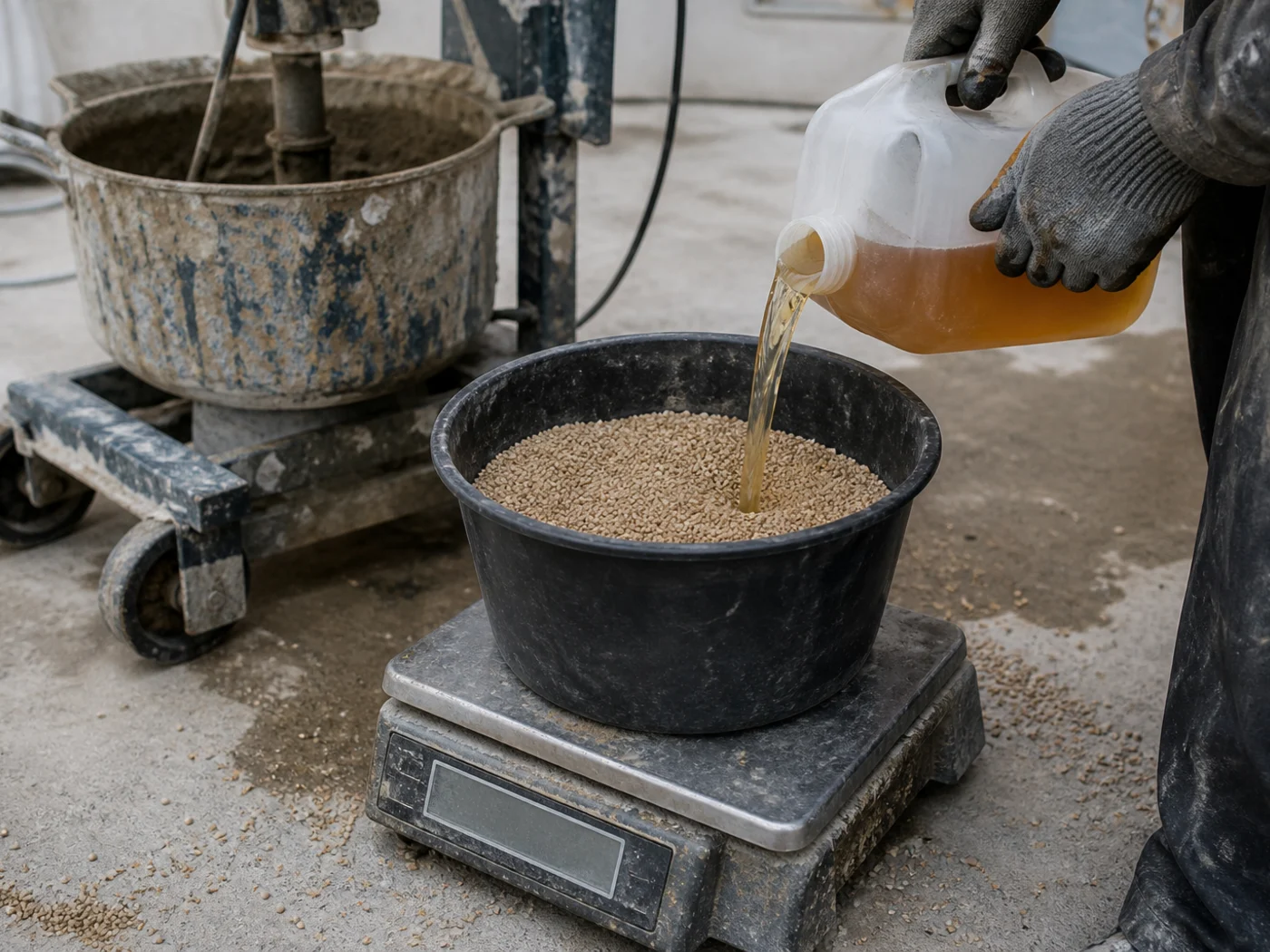
Everything the floor does later gets decided in the mixing bucket. Components are weighed, not eyeballed, and the ratio does not get adjusted to buy the crew a few more minutes of working time. Heat and humidity already shorten how long a mix stays workable, and a South Florida afternoon is about the least forgiving mixing environment there is. So we pour early, watch the weather, and stop rather than push a bad batch across a gym floor. A batch that is out shows up as a soft patch, a sticky spot or a shift in color, and none of those can be repaired invisibly afterward. Losing an hour costs far less than grinding out a bay.
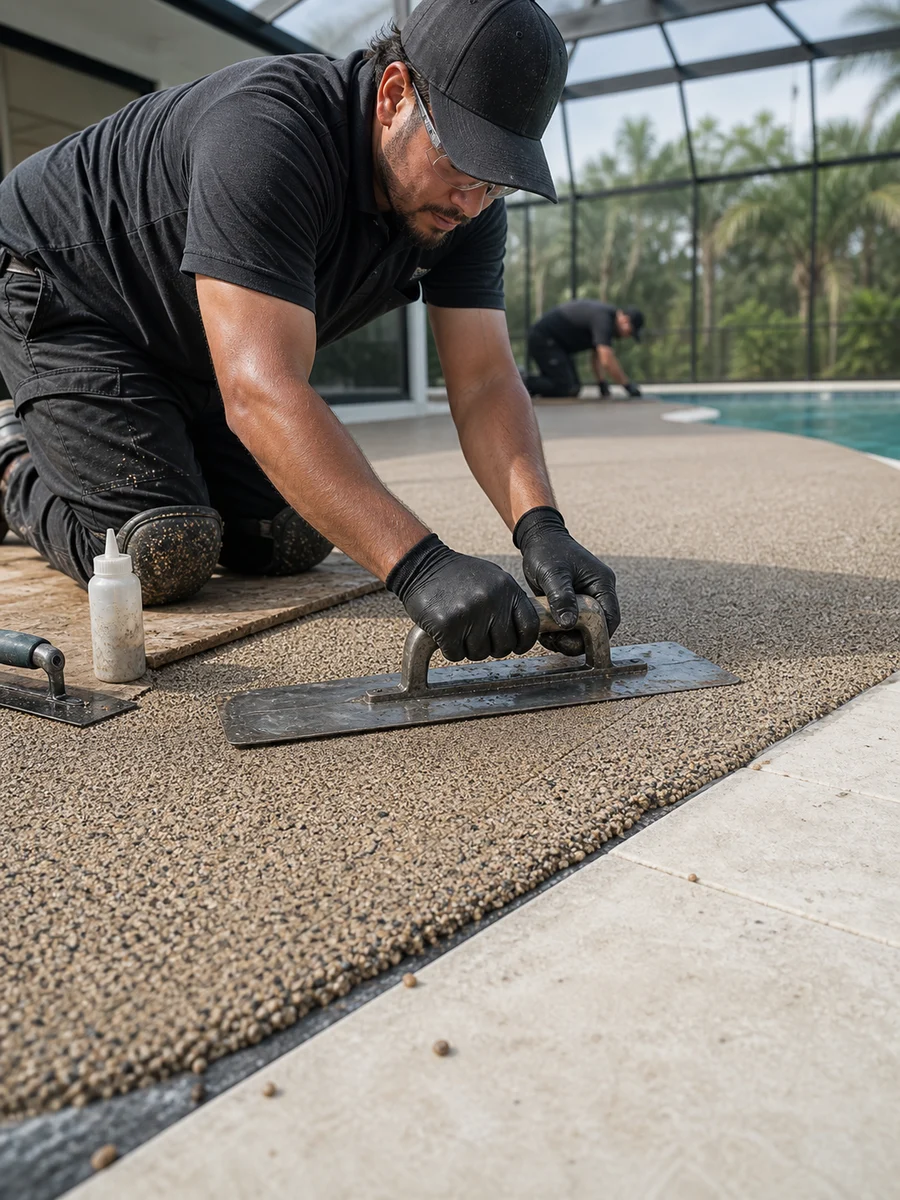
The finishing pass sets what you feel underfoot, and after that the floor needs time on its own. It takes 24 to 48 hours of curing before feet are allowed on it. Full use, rolling equipment and bleachers being dragged back in all wait a little beyond that, and you get those dates in writing rather than a shrug. Indoors we plan around the school day and the league calendar. Outdoors we plan around rain, because a shower landing on an uncured surface is the one thing nobody can fix afterward. Most jobs are 1 to 3 days on site, so the room comes back quickly. What we will not do is hand it over early to hit a date and watch you damage it in the first week.
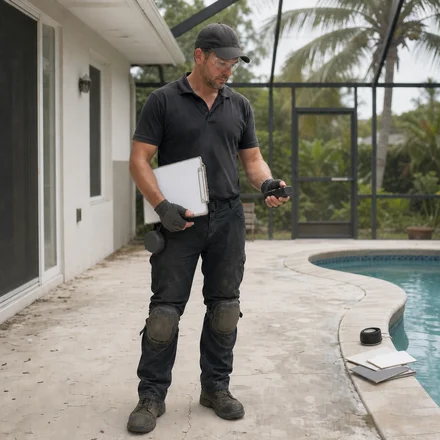 1
1We visit within 24 hours, measure and hand you a fixed price.
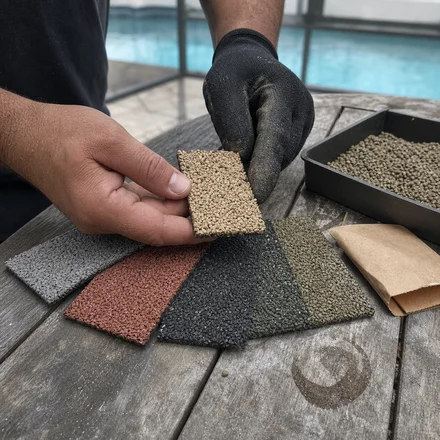 2
2Pick the blend and the depth. We repair the base so it holds.
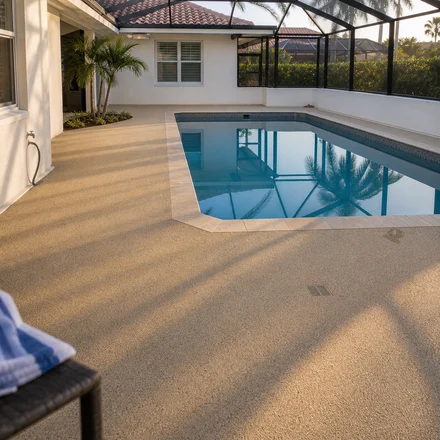 3
3Poured, cured and walkable in 24 to 48 hours.
A full pour is a solid elastic body laid to depth. A spray coat is a thin textured layer applied over a base build. The pour costs more and carries heavier daily traffic without wearing through to the layer below. Spray coats make sense on lighter use loops and tighter budgets. We tell you which one your site genuinely needs at the free measurement.
The area being poured has to be closed off and ventilated, and the rest of the building normally carries on as usual. There is an odor while the system cures and it goes as the floor hardens. We work out access, doors and airflow with your facilities staff before the day, and we schedule around lessons, games and cleaning crews instead of expecting them to schedule around us.
Yes, when it is built to the right depth for whatever rolls over it. Bleachers, ball carts and scissor lifts all get considered before the spec is set. What kills a thin system is a heavy point load parked in one spot for weeks. Tell us what moves across the floor and roughly what it weighs, and the depth goes into the quote in writing.
You can walk on it after 24 to 48 hours of curing, and we set the date for full play at handover based on how the pour went and what the weather did. The job itself runs 1 to 3 days on site. If there is a fixture or an event on a fixed date, say so at the free measurement and we build the schedule backward from that date.
For an outdoor loop where a full pour body may be more than your budget needs, compare it with track systems and spray coats.
Free on-site measurement within 24 hours. No obligation.