Pool Deck Surface Temperature Study, South Florida
Infrared readings from real decks our crew works on, taken the same afternoon in the same sun.
Updated September 2026
| Surface | Reading | Barefoot verdict |
|---|---|---|
| Light EPDM rubber blend | 99 F | stand on it all afternoon |
| Dark EPDM rubber blend | not measured | hotter than light, cooler than stone |
| Bare concrete | 155 F | burns bare feet in seconds |
| Ceramic tile | 134 F | kids sprint across it |
| Pavers | not measured | we have no reading yet |
| Kool deck acrylic topping | not measured | no reading of our own |
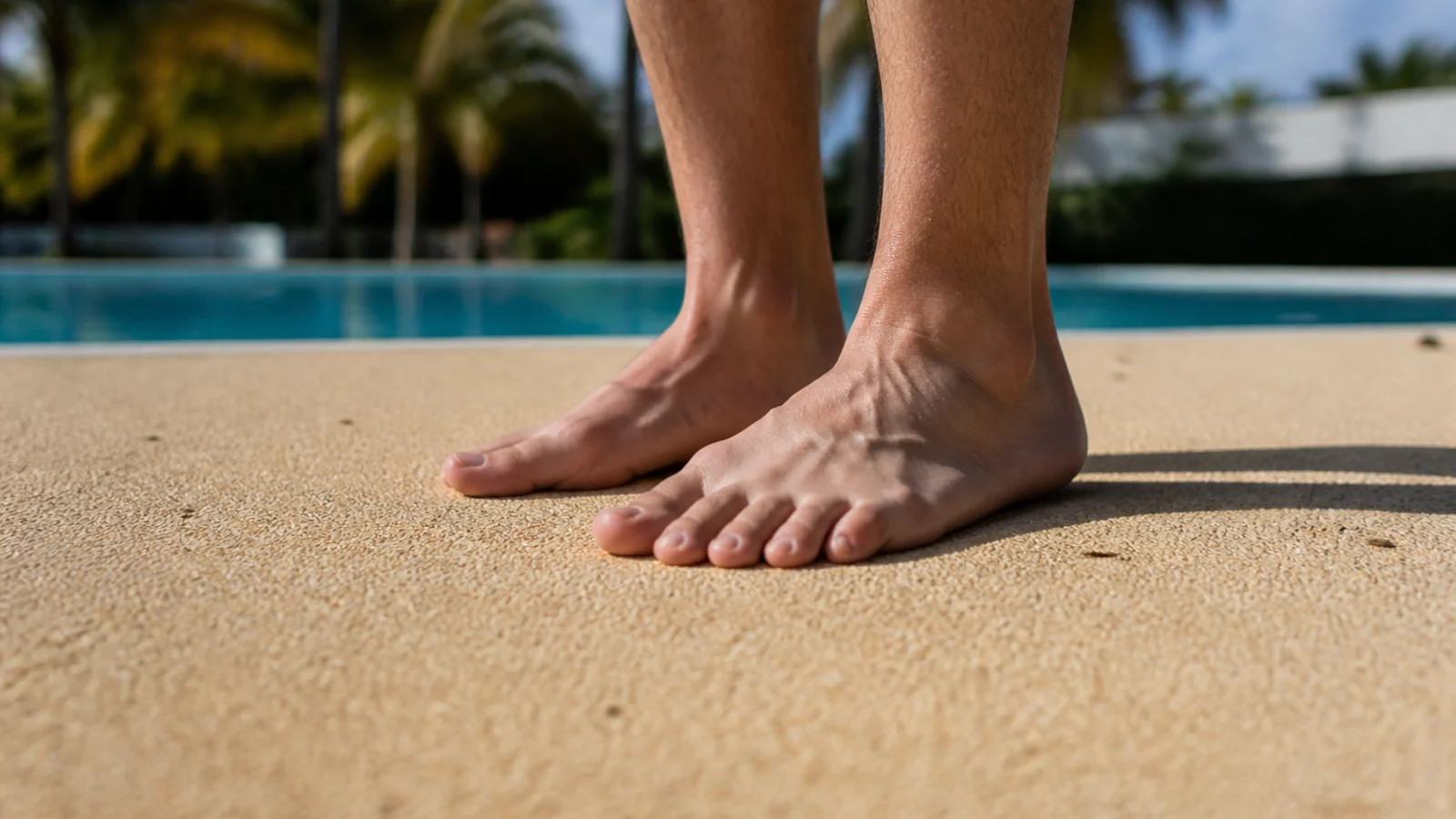
On a 91 degree South Florida afternoon, B-Cool Surfacing field measurements read 99 degrees on light EPDM rubber, 134 degrees on ceramic tile and 155 degrees on bare concrete, all in the same sun.
How readings are taken
We take the readings with a handheld infrared thermometer, the same type any homeowner can buy. Readings happen in early afternoon, when the sun is close to overhead and the deck has had hours to load up. Air temperature on the afternoon behind these numbers was 91 degrees. Every surface is read in full sun, on the same afternoon, within minutes of the others, so nothing is compared across different weather. The gun is held at the walking surface, pointed straight down, on dry material. These are field measurements taken by our crew on real South Florida pool decks during estimates and job walks. Not a laboratory. No climate chamber, no certification behind them. Just the number the gun shows on the deck you would walk on.
Limitations
These are typical field values, not laboratory constants. A deck reads differently by color, by cloud cover, by hour, by how long the sun has been on it and by what is underneath the surface. A light blend and a dark blend are not the same product. Read your own deck with your own thermometer at the same hour and compare.
Questions we get about deck temperature
How hot does a pool deck get in Florida?
On a 91 degree South Florida afternoon our crew read 155 degrees on bare concrete and 134 degrees on ceramic tile with an infrared thermometer. Light EPDM rubber on the same afternoon read 99 degrees. A pool deck in full sun runs far above air temperature, and the material decides how far. Concrete sat 64 degrees above the air. Rubber sat 8 degrees above it.
What is the coolest pool deck surface for bare feet?
Light EPDM rubber, at 99 degrees on our infrared thermometer against 134 for ceramic tile and 155 for bare concrete on the same 91 degree afternoon. 99 degrees is close to body temperature, which is why people stand on it barefoot without shifting their weight. Dark rubber blends run hotter, and we do not have a measured number for them, so we steer barefoot decks to light blends.
Is rubber pool deck surfacing cooler than pavers or tile?
Against tile, yes. Light EPDM rubber read 99 degrees where ceramic tile read 134 on the same 91 degree afternoon. Against pavers we have no reading of our own, so we will not quote one. Anyone who hands you a paver number without saying who held the thermometer and when is guessing. Ask them for the air temperature and the hour.
At what temperature does a pool deck burn your feet?
Long before it reaches 155. Skin starts objecting well below the 134 degrees we read on tile, which is why children sprint across a tile deck and stand still on a rubber one. We do not publish a burn threshold, because we measure decks, not skin. What we can tell you is that 99 degrees on light EPDM rubber is close enough to body temperature that nobody moves.
The full walkthrough of why surfaces heat differently is in the coolest pool deck surface guide.